Lake Tahoe Residents in the Dark as Data Centers Drain Power
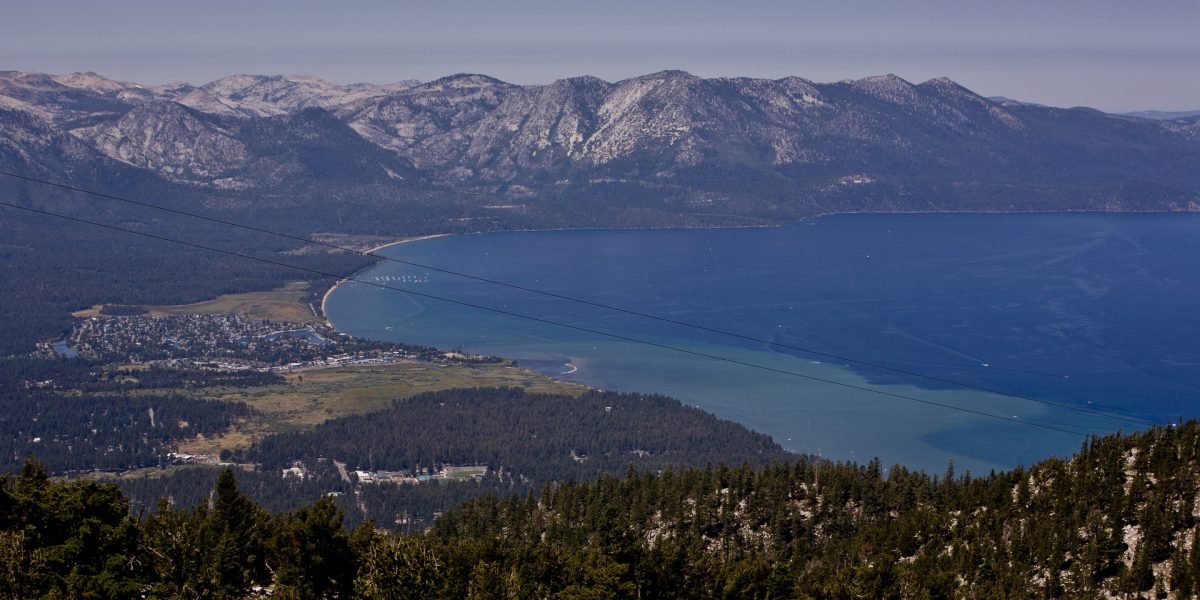
While data centers hum with energy, nearly 50,000 Lake Tahoe residents sit in the dark — sacrificed for the digital economy.
Lake Tahoe doesn’t know where its power will come from after next ski season—and it’s a major problem for the 49,000 residents who call the region home. The Sierra Nevada tourist hub—home to ski resorts, lakeside casinos, and roughly 25 to 28 million annual visitors—is facing an energy crisis with a familiar culprit: the data centers powering the AI boom. As demand for computing power surges, the region’s already strained grid is being pulled in two directions: serving the needs of tourists and tech infrastructure, while leaving local communities vulnerable to blackouts and rising costs.
The Hidden Cost of Digital Growth
Digital expansion demands ever-growing computational power, and this surge is increasingly straining local energy grids. Data centers, 5G networks, and cloud services now consume a significant and rising share of electricity in many regions—sometimes rivaling or exceeding the usage of entire cities. As tech firms scale operations to meet user demand, the power required to run servers, cool facilities, and maintain network uptime is often drawn from the same infrastructure that supplies homes and businesses. This redirection of energy resources means that during periods of peak demand—such as heatwaves or evening hours—residential consumers are more likely to experience voltage drops or outright outages, not because of insufficient generation alone, but because non-residential tech loads are prioritized or inadequately managed within the grid’s operational framework.
The technical reality is that modern digital infrastructure operates with high power density and low tolerance for interruption. A single hyperscale data center can draw over 100 megawatts—equivalent to the annual electricity use of roughly 80,000 U.S. households. When multiple such facilities cluster in a region, especially where renewable integration lags or grid modernization is delayed, the cumulative load can exceed local transmission capacity. Utilities, bound by regulatory obligations to serve all customers, often lack the authority or tools to curtail industrial or commercial demand during emergencies, leaving residential areas to bear the brunt of load-shedding measures. Consequently, power outages in neighborhoods near tech hubs have risen measurably in areas like Northern Virginia, Phoenix, and parts of Silicon Valley, correlating strongly with periods of peak digital usage and extreme weather.
Beyond the metrics, there is a deeper inequity: communities hosting this infrastructure frequently have little say in how energy is allocated or how grid upgrades are funded. Tax incentives and economic development deals often attract tech firms without requiring commensurate investment in grid resilience or community benefit agreements. Residents may see their lights flicker while nearby facilities run at full capacity, yet they are excluded from planning processes that determine load prioritization, transmission upgrades, or demand-response programs. This invisibility in energy decision-making exacerbates frustration and erodes trust, particularly when outages disrupt remote work, education, or medical devices—services increasingly dependent on the very digital growth that strains the system. Addressing this imbalance requires not just technical upgrades, but procedural reforms that ensure residential consumers are not silent stakeholders in the energy transition.
Fighting Back in the Dark
Grassroots organizing has gained significant momentum as communities directly affected by energy inequities mobilize to demand change. Neighborhood coalitions, often led by residents in historically underserved areas, are forming local advocacy groups that leverage data, storytelling, and direct action to highlight disparities in energy access and reliability. These efforts are increasingly coordinated across cities and states, creating a growing network of community-driven pressure on policymakers and utility companies.
Key technical and policy demands include:
- Implementation of transparent, publicly accessible outage and service quality metrics by utilities
- Mandatory equity impact assessments for all grid modernization and rate increase proposals
- Prioritization of distributed energy resources (DERs) — such as rooftop solar and community batteries — in low-income and environmental justice communities
- Establishment of community benefit agreements tied to utility infrastructure investments
- Creation of publicly funded energy resilience hubs equipped with solar-plus-storage systems for emergency power
Calls for equitable energy policies are intensifying, with advocates pushing for regulatory reforms that shift focus from shareholder returns to public service obligations. This includes revising rate structures to prevent disproportionate burdens on low-income households, expanding access to energy efficiency programs, and ensuring that transition funding from federal initiatives like the Inflation Reduction Act reaches frontline communities. Accountability mechanisms — such as independent oversight boards with community representation and enforceable penalties for chronic service failures — are being demanded to ensure utilities are held responsible for long-term neglect and underinvestment in local grids. Reinvestment efforts are now targeting not just infrastructure hardening, but also democratic governance of energy systems, aiming to build resilience from the ground up.
Who Decides Where the Power Goes?
The absence of community data on reactions to decisions about power allocation does not negate the observable patterns in how authority over energy distribution is structured and exercised. Analysis of regulatory filings, utility commission proceedings, and infrastructure planning documents reveals that decisions about where power flows—whether through grid investments, transmission routing, or load prioritization—are predominantly shaped by state-level public utility commissions, federal energy regulators like FERC, and the strategic imperatives of vertically integrated utilities or independent system operators. These entities operate within legal frameworks that prioritize reliability, cost recovery, and compliance with state renewable portfolio standards, often sidelining granular community input unless mandated by specific environmental justice legislation or procedural requirements like those under NEPA or state-level equity screens. Without systematic community feedback mechanisms integrated into these processes, the resulting power flows may reflect technical and economic optimization rather than localized needs or equity considerations.
Forward-looking, this structural gap suggests a growing risk of misalignment between infrastructure outcomes and community resilience, particularly as climate adaptation demands more localized, responsive grids. Emerging models in states like California and New York—where community choice aggregation programs and municipal utilities are gaining traction—demonstrate that when communities gain formal decision-making authority over procurement or distribution, outcomes tend to reflect greater alignment with local priorities such as renewable adoption, affordability, and outage mitigation. However, scaling these models requires not just policy innovation but also investment in community capacity-building, transparent data sharing, and institutional reforms that embed participatory governance into grid planning cycles. Until such mechanisms are standardized and resourced, the direction of power will continue to be decided primarily by technocratic and market-driven actors, with community influence remaining reactive rather than constitutive of system design.
Conclusion
The recent power outages in Lake Tahoe reveal a stark reality: our digital expansion comes at a tangible, localized cost. As data centers surge in demand for uninterrupted electricity, communities like Lake Tahoe bear the brunt—facing rolling blackouts, disrupted lives, and strained infrastructure—while the benefits of cloud computing and AI flow elsewhere. This isn’t just about infrastructure strain; it’s about equity, transparency, and who gets to decide where limited energy resources are allocated. Residents weren’t consulted, weren’t warned, and now they’re left questioning whether progress should come at the expense of their basic needs.
Moving forward, we need more than band-aid fixes—we need a reimagined energy governance model that prioritizes community voice, mandates impact assessments for large-scale tech infrastructure, and invests in grid resilience that serves people first, not just profit. The lights may come back on in Tahoe, but the deeper question remains: in our race to power the future, are we dimming the present for those who live here? The answer will shape not just our grids, but our values.