QuadRF's Tech Reveals Hidden WiFi and Drones in AR
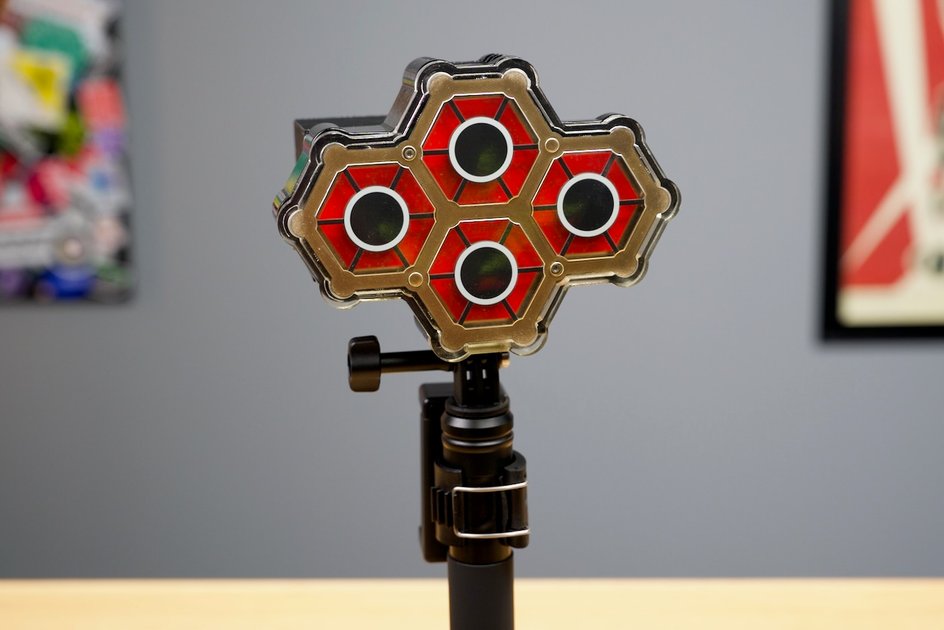
Imagine standing in a crowded café, your phone buzzing with notifications, and yet you're not quite sure which signals you’re picking up. Now, what if you could actually visualize those hidden WiFi signals and drones zipping overhead? That's the promise of QuadRF, an innovative piece of tech that’s shaking up how we perceive our digital surroundings.
At its core, the QuadRF is a phased-array radio, ingeniously built around a Raspberry Pi 5 and an FPGA board. This setup isn't just a fun DIY project; it offers picosecond-level timing for advanced signal processing and beamforming. When you connect it to a network, it goes beyond typical tools like Wireshark by streaming and decoding radio frequencies right before your eyes. You can even offload the data to a more powerful computer for deeper analysis. It’s a fascinating glimpse into a world we often overlook, filled with signals and interactions just waiting to be uncovered.
Does this mean we’re on the cusp of a new era in understanding our wireless environment, or is it just another tech novelty? Let’s dig into what QuadRF really brings to the table and how it can change the way we interact with technology around us.
Understanding QuadRF Technology
QuadRF is a handheld device that leverages a phased array system to detect WiFi signals and drones. Its compact design makes it portable, but it doesn't cut corners on functionality. The device operates in the 9-6 GHz range, displaying signal information through colorful overlays on an augmented reality interface. This allows users to visualize the signal strength and direction in real-time, although the user interface requires some manual adjustments for optimal performance, such as aligning the camera with the phased array and tuning the receiver gain.
The technology behind QuadRF employs a unique method of streaming intermediate frequency (I/Q) data over the Raspberry Pi's camera and display connectors. This approach capitalizes on the MIPI interface, which can handle over 5 Gbps of low-latency, full-duplex data transfer. This capability is crucial for rendering real-time visualizations of WiFi signals and drone activity, providing an intuitive way to monitor wireless environments.
Despite being handheld, QuadRF isn't designed to send signals. Its primary function is detection and visualization, making it a useful tool for security and network monitoring. The visualizer app offers a UI reminiscent of what you'd find in acoustic cameras, emphasizing the practical applications of this technology in various fields, from surveillance to drone management.
To help you understand how to configure and use QuadRF with a Raspberry Pi, here's a short example of how you might set up the device's interface:
sudo apt-get update
sudo apt-get install python3-opencv python3-numpy
This command installs OpenCV and NumPy, two libraries essential for processing the visual data captured by QuadRF, allowing for effective signal visualization and analysis.
Practical Applications and Use Cases
QuadRF is a versatile technology that can enhance various applications, particularly in urban planning, security, and drone monitoring. Its ability to visualize WiFi signals in augmented reality provides significant advantages in these fields.
In urban planning, QuadRF can be instrumental in assessing and optimizing wireless network coverage. Planners can use the augmented reality overlay to identify areas with weak signals, represented as colorful blobs on their screens. This visualization helps them make informed decisions about where to place new infrastructure or improve existing networks, ensuring that connectivity meets the community's needs. By aligning the camera with the phased array and adjusting the receiver gain, users can achieve precise measurements that guide their planning efforts.
Security applications benefit from QuadRF as well. For instance, it can be employed to monitor WiFi signals in sensitive areas, detecting unauthorized devices or unusual activity. The real-time feedback provided by the AR interface allows security personnel to respond quickly to potential threats. This aspect is crucial in environments such as airports or government buildings where maintaining a secure network is paramount.
In the realm of drone monitoring, QuadRF offers capabilities that enhance situational awareness. For example, when a drone is equipped with QuadRF technology, operators can visualize the WiFi signals in real-time, which helps in managing connectivity and ensuring that the drone remains under control. The use of a handheld device, while not powerful enough to send signals over long distances, still enables effective monitoring in close range.
Consider this simple Python example that simulates how one might visualize WiFi signals using QuadRF data in an AR application:
import matplotlib.pyplot as plt
import numpy as np

x = np.random.rand(100) * 100  # X coordinates
y = np.random.rand(100) * 100  # Y coordinates
signal_strength = np.random.rand(100) * 100  # Signal strength values

plt.scatter(x, y, c=signal_strength, cmap='viridis', s=100, alpha=0.6)
plt.colorbar(label='Signal Strength (dBm)')
plt.title('WiFi Signal Strength Visualization')
plt.xlabel('X Coordinate')
plt.ylabel('Y Coordinate')
plt.show()
This code generates a scatter plot that visualizes signal strength across an area, similar to what QuadRF could display on a laptop screen. The color gradient helps users quickly identify strong and weak signals, reinforcing the practical utility of QuadRF in real-world applications.
Augmented Reality in Action
The emerging use of augmented reality (AR) in compliance testing for electromagnetic compatibility (EMC) is intriguing. It suggests a shift towards integrating AR tools into regulatory processes, potentially making testing more interactive and efficient. However, while this could simplify how engineers visualize and assess compliance, I think it might also introduce complexities. The reliance on AR could lead to overconfidence in the technology, overshadowing traditional testing methods that have proven reliable over time.
The community response highlights the tool's potential to monitor remote-controlled drones, which raises interesting implications for airports. This could create a new marketing avenue for those facilities, positioning them as tech-forward and safety-conscious. However, the overlap with existing acoustic camera interfaces suggests that while AR can enhance monitoring capabilities, it’s just one part of a broader ecosystem. Passive radar options remain a viable alternative, and their established presence shouldn't be downplayed.
I see a genuine uncertainty around how AR will coexist with these existing technologies. Will users gravitate towards the novelty of AR, or will they stick with traditional methods that provide a clearer picture of compliance? The dynamic between these tools and how they're employed in real-world scenarios will be worth watching.
Conclusion
The QuadRF is intriguing, but it also raises questions about practicality and accessibility. While the ability to visualize WiFi signals in augmented reality is a novel feature, the user interface feels clunky and might deter less tech-savvy users. The promise of integrating this technology into broader projects, like Martin McCormick’s Moon-scale antenna array, is exciting, but it’s still in its early stages. At $499 for the basic kit, it’s not exactly a casual purchase.
I’m left wondering whether the QuadRF will deliver on its potential beyond the initial buzz. Is there a real demand for an advanced tool like this, or will it remain a niche product for enthusiasts and researchers? It’s a compelling glimpse into the future of radio technology, but whether it’s a breakthrough or just a clever gadget remains to be seen.