Apple M6 chip: First 2 nm consumer processor unveiled
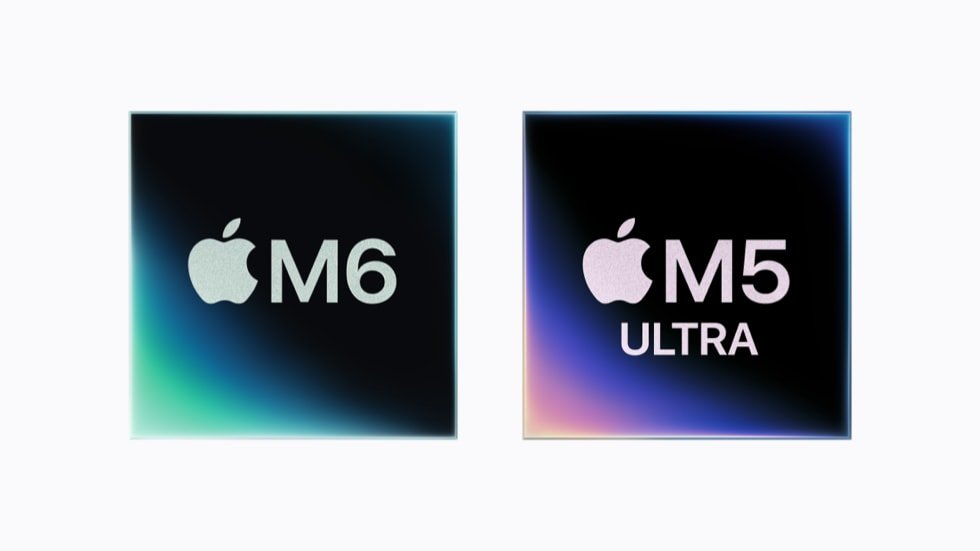
Apple didn’t just announce chips yesterday—it quietly dropped the first 2 nanometer consumer processor and a quad-die monstrosity that makes last year’s M3 look like a warm-up lap. The M6 is Apple’s first outing at 2 nm, and it’s packing a 12-core CPU, a 12-core GPU, and a Dual 16-core Neural Engine that’s clearly meant to chew through AI workloads like they’re popcorn.
Then there’s the M5 Ultra, which isn’t just an upgrade—it’s Apple’s first quad-die architecture. Four silicon dies stitched together into one processor. That’s not a refinement; it’s a flex. The question isn’t whether these chips will run your MacBook cooler or faster. It’s how soon we’ll see the first half-baked benchmarks where someone tries to render video on one and the laptop starts floating off the desk.
Technical Overview
Apple’s M-series chips are known for pushing local AI compute further with each generation. The M5 Ultra in the Mac Studio ramps up to 80 GPU cores,each with a dedicated Neural Accelerator,and delivers up to 4.5x the peak GPU compute of its predecessor. That’s not just a spec bump; it’s enough bandwidth,2 TB/s of unified memory,to keep heavy workloads like LM Studio Bionic and MATLAB simulations running without stuttering.
The M5 Ultra’s memory subsystem matches its compute. With 2 TB/s of memory bandwidth, it can shuffle data between the CPU, GPU, and Neural Engine fast enough to handle models that would grind a typical workstation to a halt. Apple’s developer frameworks,Core AI, Core ML, Metal, and Xcode,are built to exploit this directly, bypassing the usual overhead of trying to coax performance out of generic GPU drivers.
Then there’s the M6, Apple’s first 2 nm chip. It’s not just a shrink; the larger transistor budget lets them add features like a GPU with 50% higher geometry rates for complex graphics. That matters if you’re rendering 3D simulations in MATLAB or pushing visualizations to the Studio Display at resolutions that would make lesser hardware beg for mercy.
There’s a real tension here, though. One developer I talked to put it bluntly: “I know they are a phone company, but I think they should focus on local models software, not only hardware.” The hardware is undeniably impressive,no one else is shipping 2 nm chips with this much bandwidth,but the software story around local AI models is still catching up. Usable RAM amounts in late October didn’t magically double, and frameworks that can fully exploit these cores are still maturing. The hardware is ready; the tooling is playing catch-up.
Industry Impact
The jump to 2 nm isn’t just a shrink. It’s a power budget reset. Apple’s marketing will focus on the 50% higher bandwidth and 32-core Neural Engine, but the real shift is thermal. A 12-core CPU with that transistor density needs aggressive clock gating to stay within a laptop’s envelope. The question isn’t whether the M6 can run Stable Diffusion faster—it’s whether it can do it without tripping the fan curve of a MacBook Pro. That’s why the unified memory bump to 512GB matters less for model size and more for keeping data hot in a package that can’t grow any taller.
M5 Ultra’s quad-die design reads like Apple hedging bets. The 1.2TB/s bandwidth increase is impressive on paper, but local AI inference performance is still gated by framework support. Critics calling for better software aren’t wrong—the gap between hardware specs and what developers can actually ship is wider than the die-to-die interconnect. Apple has the silicon muscle to run 70B-parameter models locally, but unless they open up the Neural Engine’s compiler or drop some GPU compute primitives into Metal 5, most teams will still default to sending prompts to the cloud. I don’t see that changing this year, even with the new hardware.
The bigger risk isn’t whether the chips can compute—it’s whether Apple can charge for it. The unified memory bump pushes the Ultra into territory where even pro users will pause at the price tag, and the AI angle only justifies that cost if the workflows are already there. Right now, most creative apps treat GPU compute like a nice-to-have; they’re not built around sustained 100W+ thermal bursts. Until that changes, the M6 and M5 Ultra will feel like overkill in a MacBook and like a missed opportunity in a Mac Studio.
Conclusion
Apple’s first 2 nm chip isn’t just a process shrink—it’s a gamble on whether users will notice or care. The numbers are impressive enough: 2TB/s of memory bandwidth, a 12-core CPU that’s bigger and meaner than its predecessor, and that Dual 16-core Neural Engine, all packed into a package that’s supposed to feel like a “giant leap” in everyday tasks. But giant leaps in silicon don’t always translate to giant leaps in experience. The M6 might run MATLAB simulations faster, but does that matter if most users aren’t running MATLAB? The same goes for the M5 Ultra’s quad-die architecture—it’s a marvel of engineering, yet the only people who’ll truly appreciate it are the ones already pushing the limits of what a Mac Studio can do.
The real test isn’t in the specs or the press release quotes, but in whether Apple can convince developers to build software that actually uses these chips the way they’re meant to. Core AI and Metal are fine tools, but the history of tech is littered with architectures that never found their killer app. Maybe this time will be different. Or maybe we’ll look back in two years and wonder why we ever thought 2 nm alone was the answer to anything.