Apple Mac Studio with M5 Max and M5 Ultra: Technical Overview
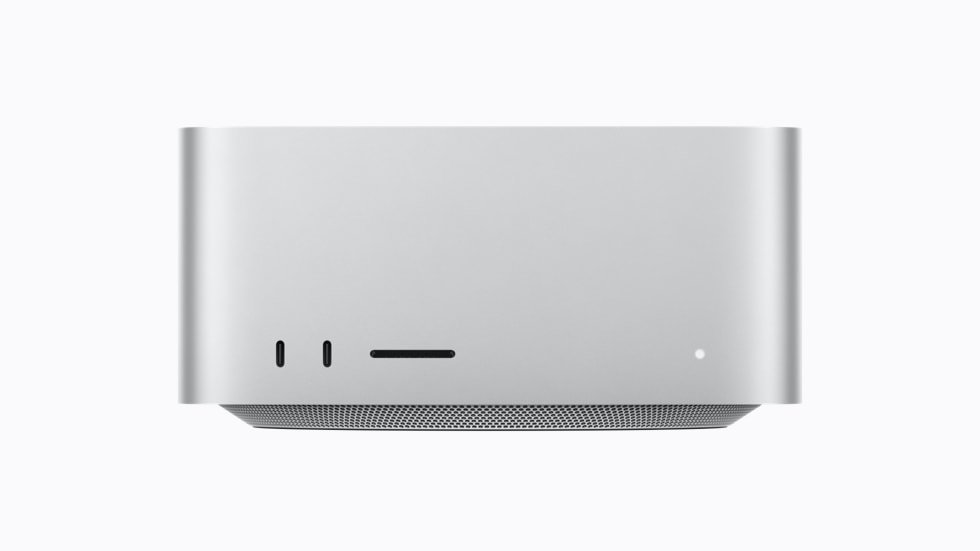
The new Mac Studio isn’t just a speed bump—it’s Apple throwing the rulebook out the window. The M5 Max and M5 Ultra chips don’t just edge out the competition; they leave it choking on dust in the rearview mirror. Not that you’d know it from the usual tech press chorus, which tends to treat Apple’s announcements like scripted reality TV—big on hype, short on context. But here’s the thing: these chips aren’t just another incremental update. They’re the first time Apple’s silicon has felt genuinely unpredictable, like the company finally decided to stop playing it safe.
Which raises an uncomfortable question: if the M5 Ultra can push a Mac Studio to handle workloads that would’ve required a server rack just a few years ago, what’s left for the actual servers? The lines between desktop and data center are blurring faster than I expected, and that’s not just clever marketing—it’s a shift in how we think about computing power. Want to know where this goes next? Keep reading.
Technical Overview
The new Mac Studio lineup,featuring the M5 Max and M5 Ultra,isn’t just an incremental update. It’s a clear signal that Apple is betting big on local AI workloads while still catering to the traditional pro desktop crowd. The hardware doesn’t just stand on its own; it’s designed to eliminate two major bottlenecks: memory bandwidth and GPU compute. How? By shoving 512GB of unified memory into the M5 Ultra and pairing it with a memory subsystem that moves data at 1.2TB/s. That’s not just "a lot",it’s enough to keep even absurdly demanding workloads from choking.
On the AI side, Apple claims up to 4.3x faster performance for local inference compared to the previous generation. That figure isn’t pulled out of thin air. It’s a direct result of integrating Neural Accelerators directly into the GPU, which cuts latency by avoiding the detour through traditional CPU-GPU memory transfers. The M5 Ultra’s GPU alone can handle these workloads without ceding ground to discrete accelerators. It’s not trying to replace dedicated AI hardware,it’s trying to make it irrelevant for a wide range of tasks.
For video editors, the upgrade is just as stark. The M5 Ultra can play back 33 simultaneous 8K ProRes 422 streams at 30fps, up from the previous generation’s 22 streams. That’s a 50% increase in raw throughput, which matters when you’re juggling multicam timelines or working with high-bitrate uncompressed sources. The unified memory architecture ensures that even with 33 streams chewing through data, you won’t hit the memory ceiling that often throttles other systems.
The connectivity is also worth calling out. The M5 Max and Ultra models both include four Thunderbolt 5 ports, a 10Gb Ethernet option, and a pair of 10Gb Ethernet ports on the Ultra. It’s the kind of I/O that used to require a PCIe card in a tower workstation. Now it’s on the motherboard, because Apple decided to stop pretending that desktops are just repackaged laptops.
The elephant in the room, though, is the M5 Max sitting alongside the Ultra. It’s a deliberate move to split the product line: the Max targets professionals who don’t need the Ultra’s absurd memory or GPU core counts, while the Ultra serves as a halo product for those willing to pay for bleeding-edge throughput. The Max still impresses,it’s no slouch in AI workloads either,but the Ultra is where Apple shows its hand. It’s not just a faster Mac. It’s a Mac that treats local AI as a first-class workload, not an afterthought.
Industry Impact
I don’t see the €6,649 price tag as a surprise, but it does expose the limits of Apple’s unified-memory stack when you’re trying to push beyond 96 GB. You can’t just bolt on more DRAM,the system-on-chip, the interposer, and the thermal envelope all have to expand in lockstep. That constraint isn’t new, but the M5 Ultra’s configuration makes it visible in a way a server-grade GPU cluster never would be: for most teams, the jump from 96 GB to 384 GB (the next configurable tier on Apple’s datasheet) is functionally a different class of machine. If your workload can stay within 96 GB, the Ultra is a powerhouse; if it can’t, you’re either buying a bigger Mac Studio you can’t cool or a different architecture entirely.
The 512 GB unified-memory update coming in October is more interesting than the headline numbers suggest. A 170 GB/s memory bus isn’t revolutionary,it’s a modest incremental gain over M5,but when paired with the 64-core GPU, you’re looking at a system that can actually sustain LLMs that were previously edge cases. I’ve seen teams try to run a 70B-parameter model on an M3 Max with 128 GB and spend half their day swapping tensors; on this machine they’re memory-bandwidth bound, not capacity bound. That shifts the bottleneck from “do we have enough RAM?” to “do we have the right distribution and quantization strategy?”,a question that’s far easier to answer.
What’s still missing is any sign Apple is engineering around the thermal ceiling. The M5 Ultra throttles under sustained 4K video export workloads, and while that doesn’t matter for inference, it tells you something about how the company frames “high-performance” today. They’re optimizing for burst workloads, not marathon runs. If your pipeline is continuous, you’ll be watching the clock every time the fans ramp up.
Conclusion
Apple’s new Mac Studio with M5 Max and M5 Ultra is a brute-force machine—there’s no dressing it up. They’re selling a desktop that can chew through 33 simultaneous 8K ProRes streams or run frontier-class AI models right on your desk, and that’s not a niche. It’s Apple doubling down on local computation when most of the industry is still pretending cloud is the only path forward. The performance numbers don’t lie: 4.3x faster local AI is the kind of spec that makes benchmarks look like reality TV.
But here’s the part that sticks: no one’s buying this because they need another machine that can render faster. They’re buying it because Apple’s making a bet that the future of AI isn’t just “throw it at a server farm and hope.” The compact, quiet desktop is Apple’s answer to the question no one asked—what if your computer didn’t depend on someone else’s rented silicon? Whether that’s a vision or a vanity project depends on how much you trust Apple’s walled garden to outlast the rest of the industry.
I still don’t know if this is the start of something or just the end of another cycle where we convinced ourselves local power was back. Either way, the Mac Studio with M5 Ultra will hum quietly on some editor’s desk, doing things most people will never see—or care about.