Fan Restorations vs Studio Releases: The Good, the Bad and the Ugly
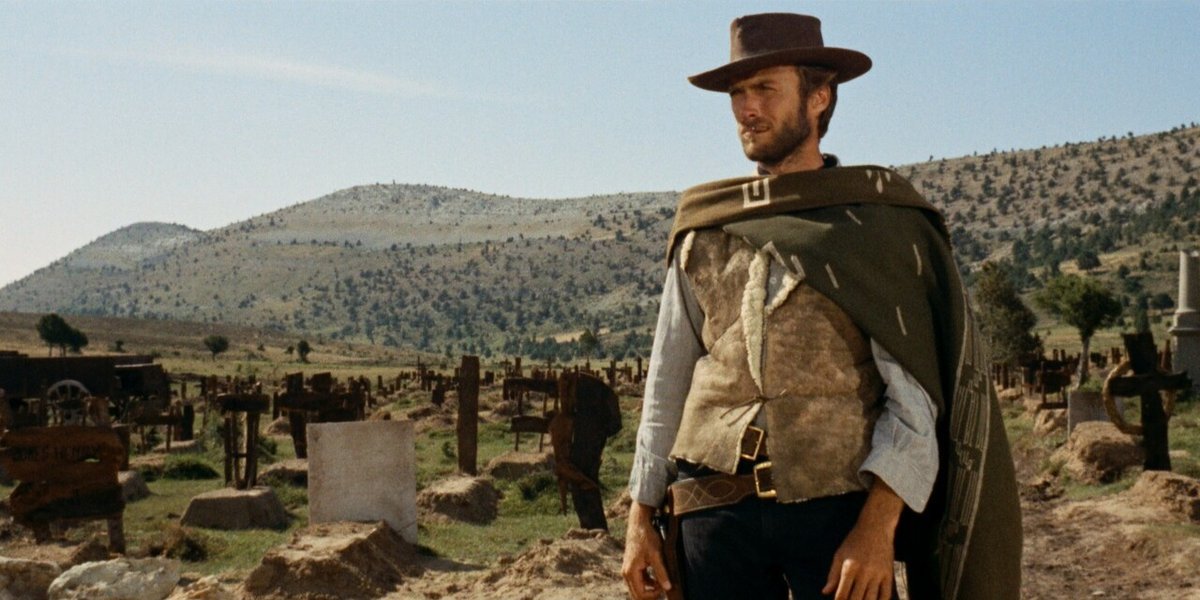
There's a particular kind of desperation that sets in when you're trying to watch a restored classic film and the colors look wrong, or the audio drops out at the worst possible moment. It's not just that the restoration is bad , it's that you know, deep down, that the film deserves better. That's exactly what happened to me and my roommate Willa in 2011, huddled in a sterile editing suite at Simon Fraser University, staring at three different copies of The Good, the Bad and the Ugly and realizing that none of them were right.
We weren't film students with access to studio archives. We were just two people who cared enough about the movie to spend a weekend trying to piece together a version that actually matched what Sergio Leone had intended. That kind of obsessive dedication used to be confined to film archives and studios with deep pockets. Now it's happening in bedrooms and basements, driven by fans with technical skills and a refusal to accept that "good enough" is actually good enough.
Spencer Draper , the guy behind that YouTube channel where he tears apart digital restorations with a mix of scholarly rigor and righteous fury , once spent an entire video explaining why a particular Blu-ray release of a classic film was technically competent but aesthetically dead. He's not alone in this fight anymore. Across the internet, fan restorers are taking tools that studios abandoned decades ago and using them to create versions of films that no boutique label will touch. Sometimes they're working from VHS tapes and LaserDiscs. Sometimes they're reverse-engineering audio tracks from out-of-print releases. And sometimes , like with The Good, the Bad and the Ugly , they're just trying to undo decades of what can only be called butchery.
What does it mean when the people who care most about preserving cinema's legacy are the ones doing it themselves?
The Restoration Gap
Studio releases of restored films walk a tightrope between cost and quality, and they usually fall on the wrong side. The math is straightforward: a theatrical restoration that satisfies purists costs millions, while a "good enough" version that passes casual viewers costs tens of thousands. Studios pick the cheaper path because the audience for frame-accurate 4K scans of Lawrence of Arabia is smaller than the audience willing to pay $20 for a digital rental that looks fine on a 55-inch TV.
Consider The Good, the Bad and the Ugly. The original English-language version runs 161 minutes. Most streaming releases trim it to 155 or 158 minutes, cutting scenes that don't translate well to modern pacing expectations. The difference is subtle unless you're watching side by side, but it's there. Fan restorations like Alien 3: The Legacy Cut go further — they reconstruct deleted scenes, fix color timing, and sometimes replace entire soundtracks. You need to torrent it if you want to watch it (it's 41GB), which tells you everything about the economics of passion projects versus corporate budgets.
Corporate apathy isn't always malice. It's a calculation. A 2011 restoration of Metropolis cost NBCUniversal over $1 million and took two years. For every Lawrence of Arabia 4K restoration that costs $500,000+, there are dozens of films from the same era abandoned because the projected revenue doesn't justify the expense. The result is a catalog of "restored" films that look noticeably softer than their source material, with color grades that shift depending on the distributor's mood that month.
As one archivist put it, "People who alter or destroy works of art and our cultural heritage for profit or as an exercise of power are barbarians, and if the laws of the United States continue to condone this behavior, history will judge us harshly." The quote stings because it's accurate. Studios own the masters, and they treat them like inventory — something to be repackaged and resold, not preserved.
Fans fill the gap, but they operate in legal gray zones. The Star Wars despecialized editions are a case study in what happens when corporate stewardship fails. One fan editor said, "To me, it doesn't really exist anymore. It's like this is the movie I wanted it to be, and I'm sorry you saw half a completed film and fell in love with it." That's not restoration. It's reconstruction. And it's the closest many of us will get to seeing these films as they were meant to be seen.
The Good, the Bad, and the Ugly Case Study
The Good, the Bad, and the Ugly’s 1967 international release was a 161-minute version that blended Sergio Leone’s vision with regional edits. Decades later, a fan restoration merges a 1998 DVD’s audio with an Italian cut’s video to approximate that elusive original. This isn’t just nostalgia—it’s a technical puzzle. The audio from the 1998 release has better fidelity, while the Italian cut preserves Leone’s pacing. Stitching them together requires frame-accurate syncing, which is where the real work begins.
The sources involved are mismatched in ways that matter:
- Audio: 1998 DVD (better dynamic range, but slightly compressed)
- Video: Italian cut (uncompressed film scan, but with pacing tweaks)
- Target runtime: 161 minutes (original English-language version)
This isn’t unique. Alien 3: The Legacy Cut, a 41GB torrent, combines elements from multiple releases to reconstruct a director’s cut that never existed. While the Good, the Bad, and the Ugly restoration focuses on syncing two sources, Legacy is a full re-edit. Both are fan-driven, but the scale varies. The Legacy Cut is a brute-force approach—reassembling scenes from different prints—while the Leone restoration is more surgical, aligning audio and video tracks frame by frame.
The debate around these projects is split. “People who alter or destroy works of art and our cultural heritage for profit or as an exercise of power are barbarians,” one camp argues. The counterpoint is pragmatic: “To me, it [the original Star Wars trilogy] doesn’t really exist anymore. It’s like this is the movie I wanted it to be.” For fans, these restorations aren’t replacements—they’re approximations of a version that was lost to
When History Gets Edited
Alien 3: The Legacy cut is a 41GB torrent that exists because some people believe the film’s theatrical release was a mistake. The original English-language runtime of The Good, the Bad and the Ugly is 161 minutes, but most viewers have only seen the 170-minute American edit. These aren’t niche curiosities—they’re the result of a persistent tension between revisionist edits and historical accuracy, each serving different audiences with opposing priorities.
Fan recreations like Alien 3: The Legacy cut often emerge when official releases diverge from a director’s original vision. In this case, the 1992 theatrical version was shaped by studio interference and budget constraints, leaving it fragmented. The Legacy cut stitches together deleted scenes, unused footage, and reshoots to approximate what director David Fincher might have intended. This matters because it reflects a desire to preserve creative integrity, even if it means reconstructing a film from scattered pieces. But it also raises questions about authenticity—when you reassemble a movie from 41GB of raw material, is it still the original work, or something else entirely?
The Good, the Bad and the Ugly illustrates a different side of the same problem. The Italian release ran 161 minutes, but the U.S. version added scenes that altered pacing and character development. For decades, this was the only version widely available in English-speaking markets. Now that the original cut is accessible, some viewers prefer it for its tighter structure, while others stick with the version they grew up watching. The difference isn’t just minutes—it’s a shift in narrative rhythm that changes how the story feels.
The legal and cultural stakes are messy. A 2012 court ruling noted that “people who alter or destroy works of art and our cultural heritage for profit or as an exercise of power are barbarians,” but copyright law doesn’t distinguish between corporate edits and fan restorations. Meanwhile, creators like George Lucas have openly dismissed original versions of their films, with Lucas once saying, “To me, it [the original Star Wars trilogy] doesn’t really exist anymore. It’s like this is the movie I wanted it to be.” That’s a provocative stance, but it highlights a fundamental divide: some see editing as preservation, others as erasure.
The debate isn’t resolvable because both sides are valid. Historians and archivists prioritize what was released, while fans and directors often want to fix what they see as flaws. The code below shows how to check the size of a file, which is relevant when dealing with massive fan edits like the 41GB Alien 3 cut:
du -h alien_3_legacy_cut.mp4The real issue isn’t whether these edits are good or bad—it’s that they exist at all. Every time a film is re-released or re-edited, it creates a new version of history. Whether that’s a problem depends on who you ask.
Boutique Labels vs. Fan Archivists
What strikes me about these four releases isn't just the visual fidelity gap — it's the different philosophies of restoration embedded in each. Arrow Video's 2025 transfer looks like someone handed the original camera negative to a forensic accountant. Every scratch, every grain clump, every splice mark sits exactly where it belongs. This isn't about making the film "look good" in any traditional sense. It's about preserving evidence.
Kino Lorber's 2021 version sits at the opposite end of the spectrum. They've smoothed the image into something that feels almost too clean, like a digital painting of a Western rather than a photograph of one. The grain has been reduced to a whisper, colors pushed toward what I assume they think audiences want rather than what's there. This is restoration as curation — someone decided what the film should look like and made it so.
MGM's two releases tell a story about declining physical media budgets. The 2014 Blu-ray shows the studio still investing in proper transfers, even if they're using older scanning technology. By 1998, they were clearly just trying to get product to shelves. The DVD transfer looks like it was sourced from a VHS tape that had been left in a hot car.
I'm genuinely uncertain whether Arrow's forensic approach matters to most viewers. The difference between their 4K and Kino Lorber's is visible even on mid-range setups, but whether that translates to a meaningfully different viewing experience is another question entirely. What's clear is that we're seeing two competing definitions of what "restoration" means — preservation versus improvement.
Tools of the Trade
What strikes me about this sequence isn't the resolution gains, though those are real. It's the compression. A film shot on a budget in 1966, processed through photochemical timing that left grain and timing marks baked into the negative, now sits in a home video transfer that captures more light information than most theaters projected in 1967. The 4K restorations from Arrow and Kino Lorber pull detail from source elements that the 2014 MGM disc couldn't access — or chose not to prioritize.
I think this underestimates friction. The 2014 MGM release was fine. Many people bought it. It served its purpose. But the 2021 and 2025 discs are doing something different: they're treating the film as an artifact worth re-examining, not just reissuing. That shift — from preservation-as-reissue to preservation-as-reconstruction — doesn't announce itself in marketing copy. You have to look at the transfer notes, the scan resolutions, the debayer algorithms.
What I can't tell yet is whether this represents a stable new baseline or a temporary arms race. Arrow's 2025 disc uses a 4K scan from the original camera negative, which is about as good as it gets without a time machine. But the practical ceiling for most consumers is still 4K displays, and the perceptual gains between a well-transferred 4K disc and a mediocre 4K disc are real but modest. The real question is whether studios will treat these deeper restorations as the new normal or as premium add-ons for boutique labels.
My guess: within five years, "4K remaster" won't mean what it meant in 2014, and the gap between Arrow's restoration and a basic 4K disc will look as quaint as the difference between that 1998 DVD and everything that followed it. But I'm not sure the market will reward that investment evenly — some films will get the treatment, others won't, and the inconsistency might matter more than the technology itself.
Conclusion
What gets lost in all this is that the studio's 2014 transfer—the one that was supposed to be the definitive digital release—was already compromised before it ever hit shelves. The Italian negative they used had been altered in the '90s, digitally noise-reduced to the point where Leone's careful grain structure was sanded away. For a film that lives and dies on the texture of its landscapes, that's not preservation. That's vandalism with better packaging.
And yet here we are, years later, still waiting for MGM to acknowledge that problem. Meanwhile, Spencer Draper's unofficial reconstruction—built from scattered international prints, mismatched audio tracks, and whatever frame grabs he could source—somehow ends up looking more like the real thing than anything the studio has put out. The gap between what studios think constitutes "restoration" and what actually serves these films is wider than it should be.
Maybe that's the real story here: not that fan restorations beat studio releases, but that they have to. The market incentives are all wrong, and the technical bar for "good enough" keeps getting lowered. Boutique labels like Arrow and Kino Lorber are doing important work, but they're still working within a system that treats these films as products rather than cultural artifacts. So we're left with people like Draper and Ross, hacking away in university editing suites because nobody else will.