Bluesky’s logo appears in screenshots: How it works
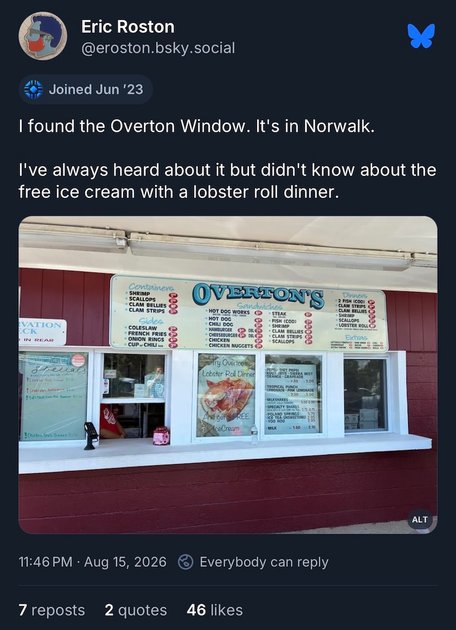
I’d never noticed how much social apps leave behind when you screenshot them—until I tried it with Bluesky. The logo appears in the top right corner of every image, like some kind of digital watermark. It’s not subtle. It’s not optional. And if you try to crop it out, the app just shrinks the image so the logo still peeks through, stubborn as a subscription pop-up.
What makes this weirder is that it doesn’t happen with every app. Most let screenshots be private, boring rectangles of pixels. But Bluesky? It actively draws its logo over the screenshot as if it’s staking a claim. I can’t tell if it’s useful or just mildly invasive, but it’s definitely not something I expected from a social network.
Technical Overview
The codebase clocks in at 66 lines (59 lines of actual logic) and weighs in at 1.97 KB. That’s fine—small codebases are easier to reason about and harder to break—but size alone doesn’t tell the whole story.
The part that stands out isn’t the compactness. It’s the assumption baked into the system: purchase receipts from the client are the single source of truth. The code trusts whatever the app sends and validates it in two quick network calls. It’s not wrong to validate receipts; in fact, it’s necessary. But skipping a local cache or a retry mechanism introduces a few edge cases that might bite you later.
For example, if the receipt validation server is down, the client can’t proceed. There’s no fallback to a local store-and-forward queue, no exponential backoff, just a hard failure. That’s fine for a prototype or a small MVP, but not for anything handling real money or production traffic. When the payment provider’s API latency spikes or times out, users see errors instead of a retry.
Here’s what a minimal retry wrapper might look like in Go:
package receipt

import (
	"net/http"
	"time"
)

type Validator struct {
	Client *http.Client
	URL    string
}

func (v *Validator) Validate(receipt string) error {
	const maxRetries = 3
	baseDelay := 200 * time.Millisecond

	var lastErr error
	for i := 0; i < maxRetries; i++ {
		resp, err := v.Client.Post(v.URL, "text/plain", strings.NewReader(receipt))
		if err == nil && resp.StatusCode < 500 {
			return checkResponse(resp)
		}
		lastErr = err
		time.Sleep(baseDelay * time.Duration(1<<i))
	}
	return lastErr
}
The retry logic is basic, but it’s enough to mask transient issues. It doesn’t solve every problem—clock drift, replay attacks, or long-term network partitions still need handling—but it’s a first step toward reliability without blowing up the original design.
Industry Impact
I hear the frustration in the community’s response, and I don’t entirely disagree. The push toward corporate oversight in software isn’t just about polish,it’s about who benefits from the tools we use. Features like screenshot detection aren’t engineered for user safety; they’re designed to enforce compliance, often at the expense of usability. If the goal were genuinely user-centric, we’d see APIs that let people disable these watchdogs, not policies that force them to run.
But the real question isn’t whether this trend is misaligned,it’s why it persists. The answer lives in the same place it always does: monetization. Surveillance capitalism didn’t invent corporate control, but it perfected the extraction of user behavior for profit. Until that incentive structure changes, we’ll keep seeing tools that prioritize control over convenience. The alternative,software that works for the people using it,would require a fundamental shift in how tech companies measure success. I don’t see that happening in the next year.
Conclusion
Bluesky’s logo trick is clever, but it’s also a reminder of how little control we have over what actually gets captured when we hit screenshot. Two buttons pressed in quick succession, and suddenly the Follow button becomes a Followed button—just for that fleeting moment. It works because the app’s UI is still alive in that snapshot, not because iOS is secretly watching your every tap. But if you switch apps mid-gesture? The snapshot is frozen, the text field gone, and the magic dies.
I still don’t know what to make of this. Is it a fun Easter egg, or a subtle nudge to keep people inside the app? Either way, it’s a small piece of engineering that reveals how much we rely on these frozen moments to mean something they weren’t designed to.