Denmark's AI Cheating Solution
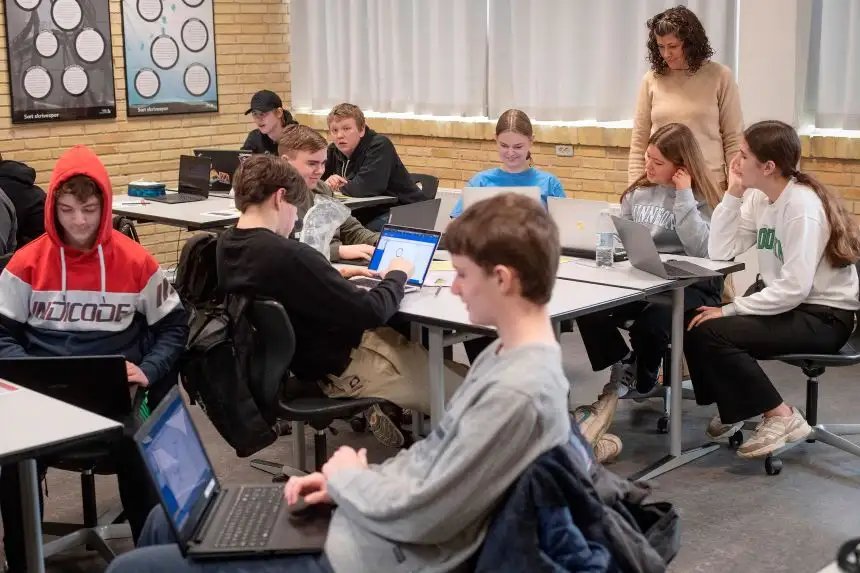
Denmark just flipped the script on AI-assisted cheating in high schools. Instead of playing an endless game of cat-and-mouse with students using ever-smarter tools, the government’s decided to make sure no one can fake it.
Starting now, Danish students submitting written work have to defend it in person—verbally, live, without notes. It’s a clever workaround: even if an AI writes the paper, the kid better be able to explain it. The Ministry’s also pushing schools to roll out screen monitoring during exams, lock down classroom Wi-Fi with firewalls, and bring more work back on campus. The message is clear: if you’re going to cheat, you’ll have to do it the hard way.
Students get a say in how this all shakes out. The Danish Association of Upper-Secondary Students wants them at the table as the rules evolve, arguing they should help shape policies that will follow them through their education. Smart move—the people closest to the problem usually have the best ideas about how to solve it.
Introduction to New Policy
The Ministry of Education’s new guidelines target a very real problem: AI-assisted cheating in upper-secondary schools has reached the point where it’s distorting assessment outcomes. The rules apply to students turning 16 this year, and they’re not just guidelines—they’re part of a two-year high-fidelity program rolling out to 9,000 students. The core issue isn’t that students can use AI; it’s that they’ve been using it to bypass the work meant to develop critical thinking and independent learning.
The first initiative is a disclosure requirement. Any major written assignment where AI is used—whether for drafting, ideation, or editing—must be explicitly marked. This isn’t about shaming students; it’s about forcing them to confront the limitations of what they’ve produced. If you can’t explain your own work, you haven’t learned from it. The second initiative targets oral exams, traditionally harder to game with AI. Starting now, preparation must happen without AI assistance, meaning students can’t rely on tools to memorize talking points or generate responses on the fly.
This isn’t a perfect solution. There’s a tension between transparency and trust—how do you verify a student’s claim about AI use without making the process overly intrusive? And what about students who genuinely need AI for accessibility reasons? The guidelines acknowledge these gaps but treat them as secondary to the immediate need for fair evaluation.
The two-year program will be the real test. Will students adapt by gaming the system differently, or will this shift how they approach learning? The Ministry’s bet is that transparency forces accountability, and that’s a reasonable starting point—even if no one pretends it’s the last word.
Student Participation in Solution Development
Oscar Tønsberg Hoffmann's statement highlights the importance of student involvement in shaping future policies. He notes that students must be involved in developing solutions to the problem of AI-driven cheating in upper-secondary schools. This approach is sensible, as students are often the ones who best understand how AI tools are being used in academic settings. By working with students, the Ministry can develop more effective strategies for preventing AI-driven cheating.
One potential benefit of student participation is that it can help identify the root causes of AI-driven cheating. For example, are students using AI tools because they feel overwhelmed by their coursework, or are they simply looking for an easy way out? By understanding the motivations behind AI-driven cheating, the Ministry can develop targeted solutions that address the underlying issues. The Ministry's plan to work with schools to develop a framework for implementation is a good start, but it will be important to ensure that students are actively involved in this process.
The Ministry has proposed several initiatives to address AI-driven cheating, including requiring students to clearly state when AI has been used in major written assignments and ensuring that preparation for oral exams takes place without access to AI. These initiatives are a good start, but they will require careful implementation to be effective. For example, the Ministry will need to develop clear guidelines for what constitutes "major written assignments" and how students should disclose their use of AI tools. This could involve creating a standard disclosure statement that students can use to indicate when AI has been used in their work.
To implement these initiatives, schools will need to develop new policies and procedures for monitoring and preventing AI-driven cheating. This could involve using automated tools to detect AI-generated text, as well as providing training for teachers on how to identify and address AI-driven cheating. Here's an example of how a school might use a Python script to detect AI-generated text:
import re

def detect_ai_generated_text(text):
    # Use regular expressions to detect common patterns in AI-generated text
    patterns = [r"\b(a|an|the)\b", r"\b(and|but|or)\b"]
    for pattern in patterns:
        if re.search(pattern, text):
            return True
    return False

text = "The cat sat on the mat, and it was very happy."
print(detect_ai_generated_text(text))  # Output: True
This script uses regular expressions to detect common patterns in AI-generated text, such as the use of articles ("a", "an", "the") and conjunctions ("and", "but", "or"). While this is just a simple example, it illustrates the kind of automated tools that schools might use to detect AI-driven cheating.
Overall, the Ministry's plan to work with schools to develop a framework for preventing AI-driven cheating is a good start, but it will require careful implementation and ongoing evaluation to be effective. With 9,000 students participating in a two-year HF program, there is a significant opportunity to make a positive impact and develop solutions that can be applied more broadly. However, it's also important to acknowledge the complexity of this issue and the potential challenges that schools may face in implementing these initiatives.
Impact on Students and Schools
I think the ministry's push for upper-secondary schools to use screen-monitoring tools and introduce firewalls is a step towards acknowledging the role of technology in education, but it also underestimates the complexity of the issue. By restricting access to certain content, schools may inadvertently limit students' ability to engage with relevant information and resources. On the other hand, having more assignments completed on campus could help to mitigate the risks of AI-assisted cheating, but it may also create logistical challenges for students who rely on flexible learning arrangements.
The community's reaction to this development is interesting, with some educators opting for a shift towards in-person, high-stakes exams as a means to prevent AI cheating. This approach is already being used in Denmark, particularly for Master's degrees and above, where students are required to demonstrate their knowledge through oral defenses and chalk talks. I can see the value in this approach, as it allows students to showcase their critical thinking and problem-solving skills in a more nuanced way. However, it may not be feasible or effective for all subjects or levels of education.
What strikes me as notable is that these measures are being implemented in response to the perceived threat of AI-assisted cheating, rather than as a way to harness the potential of AI to enhance learning outcomes. I'm not convinced that this is the most effective way to address the issue, and I think it's worth exploring alternative approaches that focus on teaching students how to use AI tools responsibly and ethically. For instance, what if schools were to incorporate AI literacy into their curricula, teaching students how to critically evaluate information and sources, and how to use AI tools to augment their learning?
As I consider the implications of these developments, I'm left wondering what the long-term consequences will be for students who are educated in an environment where AI is seen as a threat rather than an opportunity. Will they be well-equipped to navigate a world where AI is increasingly ubiquitous, or will they be at a disadvantage compared to their peers who have learned how to harness the power of AI to drive innovation and creativity?
Conclusion
I'm still not convinced that screen monitoring is the silver bullet to stop AI cheating. While the Danish Ministry of Education's new policy may help curb the issue in the short term, it's unlikely to keep pace with the rapid evolution of AI tools. The fact that schools are being urged to use screen-monitoring tools during exams and introduce firewalls to restrict content access is a step in the right direction, but it's a reactive measure that may not be enough to stay ahead of the cheat codes.
What's more promising is the involvement of students in developing long-term solutions, as advocated by Oscar Tønsberg Hoffmann, chair of the Danish Association of Upper-Secondary Students. By giving students a say in shaping future policies, there's a chance that educators can tap into their unique perspective on the issue and create more effective, sustainable solutions. The introduction of oral defenses for written assignments is also an interesting approach, as it shifts the focus from solely relying on technology to a more human-centered evaluation method. Ultimately, the success of these measures will depend on how well they can adapt to the ever-changing landscape of AI tools and student ingenuity.
The real question now is how these policies will be refined and updated as AI continues to advance. Will educators be able to keep up with the latest cheat codes, or will students always be one step ahead? Only time will tell, but one thing is certain – the cat-and-mouse game between educators and AI-assisted cheaters is far from over.