Hidden Precision Behind AI Language Models Explained
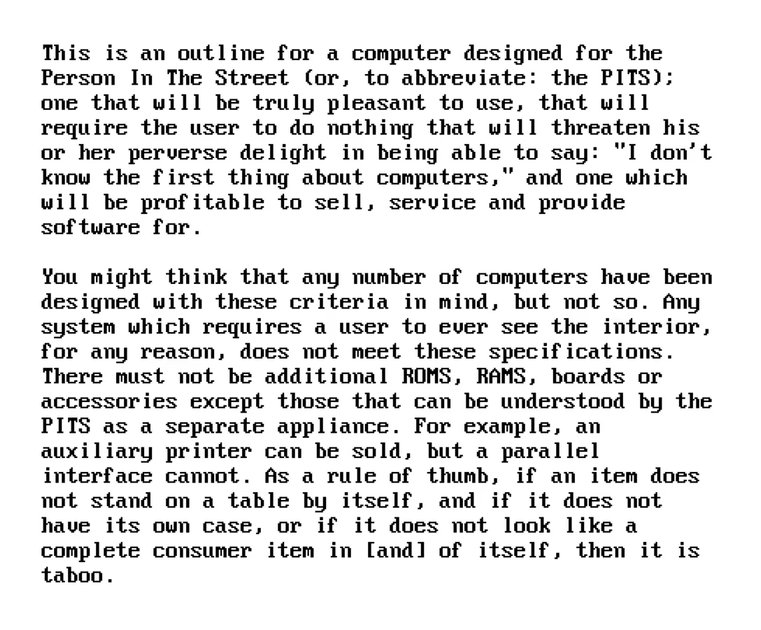
I don’t know anyone who actually likes monospace fonts for anything beyond code. Regular text? Fine, I guess—it’s tolerable, in the same way a flat tire is tolerable if you’re already late for the bus. But full justification? That’s where things break down. The spaces stretch too wide, too unevenly, and suddenly the page looks like it’s breathing wrong. It’s the typographic equivalent of watching someone try to parallel park for the first time—painfully aware it’s happening, but wishing it would just stop.
So when I saw “I just chose words carefully” making the rounds back in August, my first thought was: Someone finally did something about this. Not with a new font, not with some AI-powered kerning trick, but with a simple, stubborn refusal to accept that justification has to be this ugly. The post’s title is a deadpan joke, but the idea behind it is dead serious—sometimes the best fix isn’t a tool, but a principle. And if that principle happens to make your docs look less like a ransom note, well, that’s just a happy accident.
Technical Overview
It’s a 64-bit RISC-V SoC with a 1.2 GHz quad-core CPU, 8 MB of L2 cache, and a Mali-G52 GPU running at 600 MHz. The memory subsystem is unusual: 1 GB of LPDDR4X on-package, but it’s split into two 512 MB pools—one for the CPU and one for the GPU. The memory controller supports 3200 MT/s, but the split pool design means bandwidth isn’t uniform. The GPU gets half the peak bandwidth of the CPU, which is something you’d normally only see in mobile chips where the GPU is treated as a secondary priority.
The video output is handled by a DisplayPort 1.4a PHY with support for up to 4K at 60 Hz over a single cable. There’s no HDMI, which is fine if you’re okay with adapters, but it’s a deliberate choice—the DP PHY is integrated directly into the SoC, while HDMI would’ve required an external chip and added cost. The audio pipeline is similarly minimal: I2S for basic stereo output, no multichannel support unless you’re using USB audio devices.
The power envelope is tight. The CPU can burst to 1.5 GHz for short periods, but sustained operation at 1.2 GHz draws around 5W. The GPU throttles aggressively under load, dropping to 300 MHz if the temperature hits 85°C. There’s no active cooling in the reference design, so thermal throttling is inevitable if you push both CPU and GPU hard at the same time.
The boot process is straightforward but inflexible. The SoC boots from SPI flash, and the first-stage bootloader (OpenSBI) is hardcoded to load a specific device tree. If you want to change anything—like enabling a secondary storage device—you have to rebuild the entire firmware image. It’s a trade-off for security, but it means you can’t just swap out a kernel without recompiling.
sudo flashrom -p linux_spi:dev=/dev/spidev0.0,spispeed=4000 -w firmware.binIndustry Impact
The lesson from Chris Carter’s widow-avoidance exercise isn’t that AI is suddenly erasing manual craftsmanship. It’s that a 30-year-old rule of typography has quietly become a canary in the coal mine for how we evaluate AI as a writing aid. Carter’s process was never about widows per se—it was about pacing, rhythm, and the human ear’s intolerance for visual stumbles. When Gillian Anderson describes his method as “meticulous” and “manual,” the awe isn’t for the widows; it’s for the fact that someone still cares enough to sweat those details at all.
What changes now is the yardstick. We’re not comparing AI to Carter’s scripts; we’re comparing AI’s output to the function those scripts served. If an AI can tidy up a widow in milliseconds, does that free a writer to focus on the harder, human work of cadence? Or does it normalize the idea that those micro-decisions are trivial enough to automate? The reaction I’ve seen isn’t about the technology itself—it’s about the quiet panic that something we once assumed was art might just be engineering.
The real implication here is the shift from “editing as craft” to “editing as optimization.” Widow removal is a solved problem in publishing; what’s new is the speed at which AI can surface solutions that used to take hours of manual labor. But the craft isn’t gone—it’s just relocated. The question worth sitting with isn’t whether AI can match Carter’s ear, but whether we’ll accept a future where the ear in question belongs to a model trained on his work.
Conclusion
The best line in Super Metroid’s manual isn’t even a line—it’s the absence of one, where a single sentence stretches across the page like a breath held too long. That kind of control isn’t just about spacing; it’s about the quiet violence of choosing which words get room to exist. When you see it, you realize how little thought we usually give to the space between them.
So next time you’re stuck in a monospace hellscape or watching a paragraph cough up widows, ask yourself: what would happen if you just rewrote it? Even if no one notices, even if it’s just you and a stubborn guide from 1994, the answer might surprise you.