UK Two-Tier Encryption Rules for Tech Providers
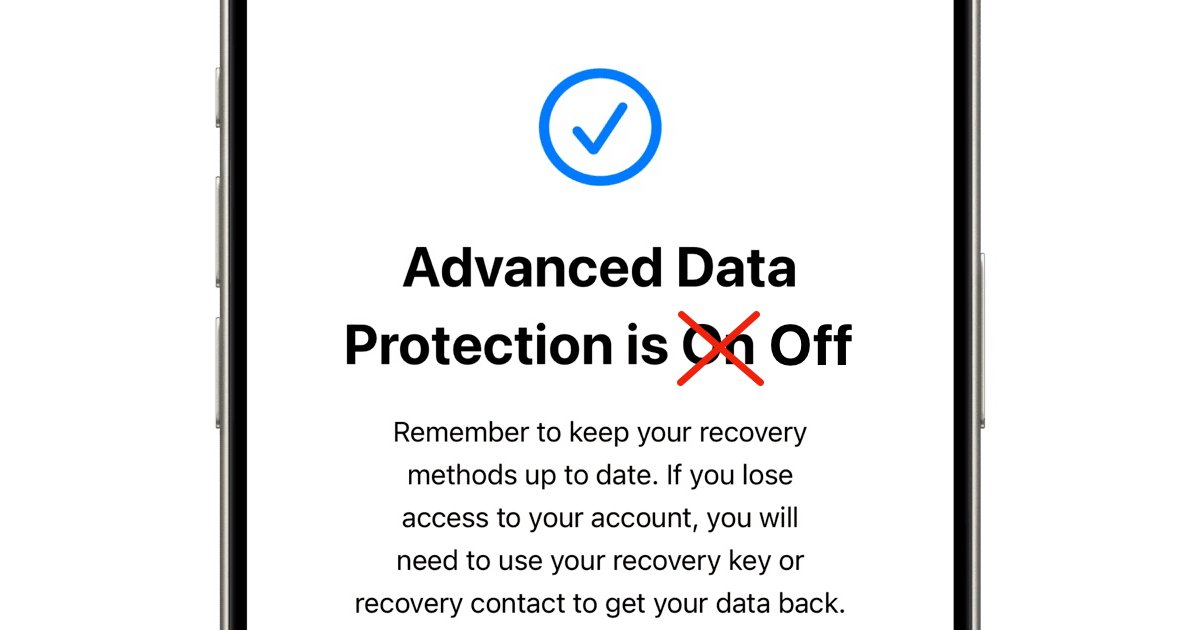
Alice and Bill both live in the UK. They both bought the same iPhone, set it up the same way, and use it for the same things. But when they try to enable Apple's Advanced Data Protection—it's available to Alice but not Bill. No technical reason. No device difference. Just paperwork Apple filed in the wrong place at the wrong time.
This is the kind of thing that keeps me up at night as someone who's spent years thinking about how encryption actually works in practice. A Technical Capability Notice, or TCN, is a legal instrument that can force companies to maintain the ability to bypass their own security measures. It's not theoretical. It's not some distant policy debate. It's happening right now, silently reshaping the threat landscape for millions of users who have no idea they're affected.
The messiness isn't just technical—it's deeply human. Engineers building these systems never signed up to be arbiters of national security policy. Users like Bill never agreed to have their security determined by administrative filing errors. And companies like Apple are caught between building products that keep people safe and complying with laws that may undermine that very safety.
What TCNs Actually Require
The Investigatory Powers Act gives the UK government sweeping authority to demand that companies build technical capabilities to assist with surveillance. When a Technical Capability Notice (TCN) is issued, it doesn't ask politely — it legally compels compliance. The scope is deliberately broad, covering everything from data retention requirements to mandating that companies maintain the ability to access user communications if technically feasible.
TCNs go to specific companies, not industries. In practice, that means major tech platforms, communications providers, and even smaller service operators can receive these notices directly. The recipients are bound by confidentiality — the quote "We have gag order on us right now" reflects the reality that most companies cannot publicly acknowledge receiving a TCN. This secrecy makes it difficult to track how many notices have been issued or what they specifically demand.
The legal obligation is clear: if a TCN is served and you're named, you must comply within the timeframe specified. Non-compliance carries criminal penalties. The "technical capability" requirement doesn't mean companies must redesign their entire architecture, but they must demonstrate they can fulfill the notice's demands using existing or reasonably achievable technical means. This includes maintaining decryption capabilities where possible, preserving data formats that can be provided to authorities, and ensuring internal processes support rapid response to lawful requests.
tcn_handler() {
    local notice_id="$1"
    local deadline="$2"

    # Verify legal authority of the notice
    verify_legal_authority "$notice_id"

    # Log receipt and begin compliance assessment
    log_tcn_receipt "$notice_id" "$deadline"

    # Assess technical feasibility within deadline
    assess_compliance_feasibility "$notice_id"
}
What makes this genuinely complicated is that companies must balance legal compliance with user trust, often without being able to disclose what they're doing. The system works exactly as designed from a legal standpoint, but it creates an inherent tension between transparency and national security obligations.
How Companies Navigate This
Fantastic article, and a real concern for UK citizens.
Companies navigating data compliance under CLOUD Act-type legislation face a patchwork of conflicting obligations. The core tension is straightforward: a U.S. warrant can compel disclosure of data controlled by a U.S. company, regardless of where that data physically resides. But the same data, if stored in the EU or UK, may be subject to GDPR restrictions that prohibit unauthorized transfer or processing.
Most companies handle this through a combination of legal pushback and careful documentation. When served with a CLOUD Act warrant, legal teams often file motions to quash or seek clarification on scope, particularly when the request lacks specificity about data location or relevance. Some companies have pushed back successfully by arguing that the government must exhaust mutual legal assistance treaties (MLATs) first, though courts have increasingly rejected that argument in recent years.
Documentation is where things get operational. Companies maintain chain-of-custody logs for every data transfer, timestamp encryption key rotations, and log who accessed what and when. The goal isn't just compliance with one regime but creating an audit trail defensible under multiple jurisdictions. This is where "We have gag order on us right now" becomes a real constraint — you can't always disclose that you've received a warrant, which makes documenting your response for regulators even trickier.
International conflicts get sharper when data crosses borders. A UK citizen's data stored on AWS servers in Ireland, retrieved under a U.S. warrant, implicates U.S. surveillance law, EU privacy directives, and UK data protection requirements simultaneously. Companies resolve this through contractual frameworks like the EU-U.S. Data Privacy Framework, but those agreements can unravel — Schrems II killed Privacy Shield after just five years.
echo "$(date -u): CLOUD Act warrant received - case #W-2024-0847" >> compliance_log.txt
echo "$(date -u): Gag order in effect - no disclosure permitted" >> compliance_log.txt
echo "$(date -u): Data scope limited to user IDs 1429-1483 only" >> compliance_log.txt
The practical upshot is that compliance now means building systems that can answer questions like "Where is this data right now?" and "Who has accessed it and under what authority?" in real time. Most companies I've worked with end up maintaining separate data environments per jurisdiction, even when it costs more. It's not elegant, but it works when the law doesn't.
The Engineering Dilemma
What strikes me about TCNs is how they invert the usual relationship between law and technology. Normally, legal compliance is something engineers bolt on after the fact — a constraint to work around. Here, the law is explicitly asking companies to build capabilities they might never use, to satisfy a requirement that may never materialize. That's not just unusual; it's actively at odds with how most engineering organizations think about efficiency and risk.
I'm not convinced the practical implications are as sweeping as they first appear. A TCN doesn't mandate specific technical implementations, which gives providers meaningful latitude. But it does create a persistent overhead: teams now have to maintain unused capacity, document compliance pathways, and essentially keep one hand tied behind their back when designing systems. For companies already juggling competing priorities, that's a real cost — even if the immediate legal risk feels abstract.
The bigger question is whether this represents a sustainable model or a stopgap. If TCNs become routine, we may see a slow divergence between systems built under legal constraint and those that aren't, with all the interoperability headaches that implies. But if they remain exceptional, their main effect might just be forcing a generation of engineers to get more comfortable with uncertainty — building for requirements they can't fully define. I'm genuinely unsure which outcome is worse.
What This Means for Your Stack
A TCN is functionally a legal compliance mandate that can reach into your technology stack without your consent. If your product involves any form of communication or data processing—and most do—you could find yourself responsible for building or maintaining specific capabilities that weren't on your roadmap. This isn't theoretical; TCNs have already been used to require backdoors, data retention systems, and real-time monitoring features.
The practical impact lands heaviest on smaller teams and startups. You don't have dedicated compliance engineering resources to absorb this kind of requirement. What might take Meta or Google a team of lawyers and engineers to implement could consume a significant portion of a 10-person startup's bandwidth. And unlike other regulatory compliance—GDPR, HIPAA, whatever—TCNs can arrive with minimal public notice and tight deadlines. You might wake up Monday morning to find you have 90 days to rebuild core parts of your architecture.
This shifts the risk calculus for technical decisions in ways that aren't fully priced into most planning processes. Choosing a particular cloud provider, encryption library, or data storage approach isn't just about performance or cost anymore. You're also betting on whether that choice leaves you compliant if a TCN drops. I'm genuinely uncertain how many teams are factoring that risk into their architecture decisions, because the legal and technical domains don't intersect cleanly here. The compliance requirement might be clear, but translating it into actual code changes often isn't—and that's where the real work happens.
Conclusion
Apple's silence on the reported TCN speaks louder than any statement they could issue. They've already told us their red line—backdoors for one are backdoors for all—and the UK's two-tier encryption regime forces them to either cross it or walk away from the market entirely.
The engineering reality remains unchanged: you cannot build a backdoor that only law enforcement can use. Every additional access point, every government-mandated weakening of encryption, creates vulnerabilities that bad actors will exploit. This isn't theoretical—we've seen what happens when governments gain expanded surveillance powers.
What happens next probably won't be dramatic. I suspect we'll see continued private negotiations, more legal maneuvering, and companies quietly adjusting their service offerings for UK customers. The bigger question is whether other governments watch what happens here and decide to follow suit. That's the real test—not of encryption technology, but of how much the global tech industry is willing to sacrifice for market access.