Dutch Baby Recipe: Puffy German Pancake (So Easy!)
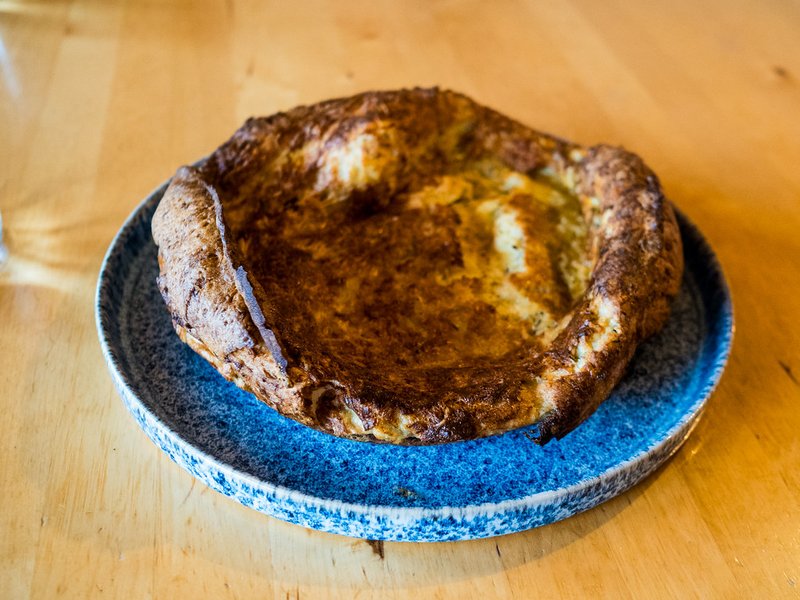
Dutch baby (German pancake)
Dutch baby (German pancake)
Ingredients
- 100g all-purpose flour
- 3 big eggs
- 150ml milk
- 1 teaspoon vanilla essence
- 3 tablespoons veg or sunflower oil
Instructions
Step 1
Grab a large mixing bowl and tip in your 125g of plain flour, then use the back of a spoon to push it around and create a deep well right in the middle — this little crater is where all the magic starts. Crack your 3 eggs straight into that well, pour in 300ml of milk and add 1 teaspoon of vanilla extract. Now grab a large balloon whisk and start beating the eggs into the milk from the centre, gradually pulling in flour from the sides as you go. Keep whisking for about 1–2 minutes until you've got a silky, lump-free batter with no streaks of flour hiding anywhere. Set the bowl aside for now — it'll thicken up slightly while you prep your tin.
Step 2
Heat your oven to 220C (200C fan, or gas mark 7). Pour a generous tablespoon of oil into a 20cm ovenproof skillet, frying pan, or tart Tatin tin — whatever you've got that can go from hob to oven. Slide it onto the middle shelf and let it heat up for a good 5 minutes until the oil is shimmering and starting to smoke slightly. If you can, remove the top shelf now, because this pancake loves to rise up tall and you don't want it bumping its head.
Step 3
When your skillet is screaming hot from the oven, slide out the rack carefully and pour your batter straight into the center — you want to hear an immediate, satisfying sizzle the second it hits the metal. Pop the oven door shut and resist every urge to peek for a full 20 minutes; this is when the magic happens and the pancake climbs up the sides like a soufflé. You'll know it's ready when it's puffed tall, deeply golden across the top, and looks like a giant, crispy-edged Yorkshire pudding. Slide the whole pan onto a heatproof surface and let it sit for a minute so it settles slightly before you cut into it.
Nutrition Information
My Tip
Here's your tip: **Don't skip resting the batter for 10 minutes** — those few minutes let the flour fully hydrate and the gluten relax, so your Dutch baby rises tall and even instead of baking up dense and chewy.
Leftovers
Got leftovers? Pop your Dutch baby in a shallow, airtight container — the flat shape stops the puffed edges from getting squished. It'll keep in the fridge for up to 2 days. To reheat, skip the microwave (it turns the bottom rubbery). Instead, warm it in a 180°C oven for 5–7 minutes until the edges crisp up again.
Make It Your Own
Swap the plain flour for 100g spelt flour — it gives the Dutch baby a lovely nutty depth and keeps that same tender, puffy texture we all love.