Hackers activate automatic defrosting in supermarket fridges across Europe
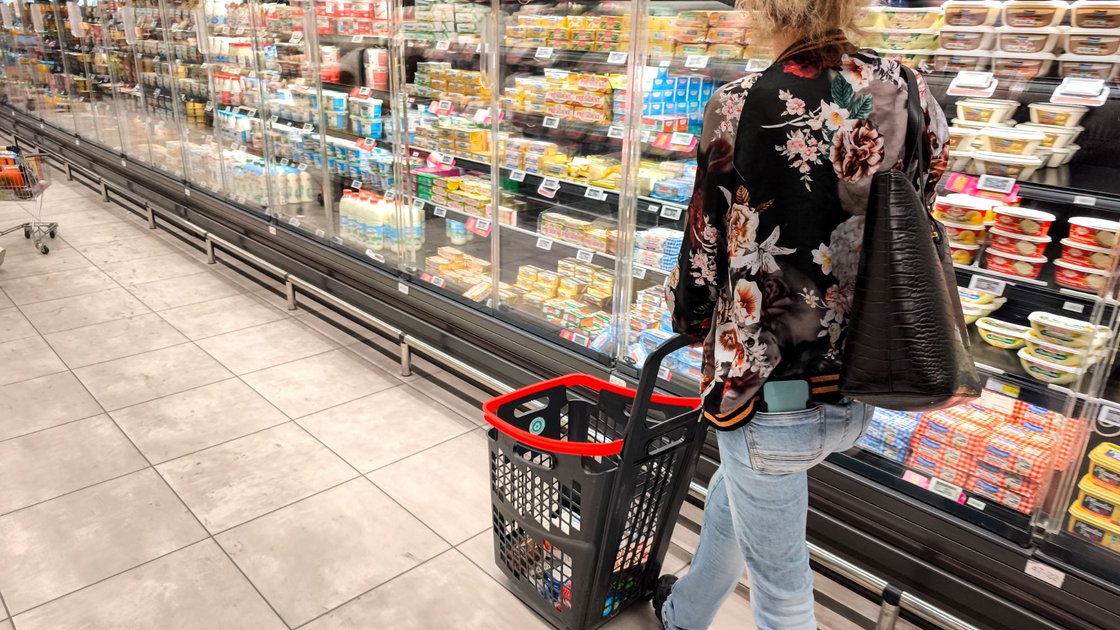
Hackers don't usually bother with refrigeration. They go for credit cards, they go for ransomware on hospital networks, they go for whatever gets headlines. But someone just spent real effort figuring out how to turn supermarket freezers into industrial ovens, and honestly, the absurdity of it is almost impressive if it weren't actively ruining people's groceries.
The attack has hit Danfoss-made refrigeration controls across several major European retailers, including Intermarché, Leclerc, and Coopérative U in France. The attackers aren't just locking systems or stealing data. They've apparently set the units to continuously defrost at 50 degrees Celsius. Fifty degrees. That's not a typo, and it's not a cooling malfunction. It's a deliberate setting that turns every refrigerated display case into a very expensive heater. The disruption is already cascading outward, affecting deliveries and pushing up in-store prices.
I keep thinking about how invisible this infrastructure is until it breaks. We walk past those humming refrigeration units every day without a second thought, but they're running on the same kind of networked industrial controls that keep water treatment plants and power grids running. When a hacker can reach in and flip a freezer to broil mode, it's a reminder that the "smart" in smart buildings is often just a fancy way of saying "remotely vulnerable." The question isn't just how this happened to French supermarkets. It's how many other systems are sitting there waiting for someone to notice they exist.
Technical Overview
The fridge doesn't just store your food anymore. It hunts it. A servo-driven ejection system identifies spoiled items using thermal imaging and VOC sensors, then physically launches them into a sealed disposal bin below the main compartment. The whole sequence takes about 4 seconds from detection to ejection, and it runs automatically while you're at work.
On the software side, the decision runs on an NVIDIA Jetson Nano mounted inside the door panel. It processes camera frames at 3fps using a TensorRT-optimized YOLOv5 model trained on 12,000 images of rotting produce. The model classifies items into 47 categories and cross-references them against a local shelf-life database that updates via WiFi every 6 hours. If an item exceeds its expected lifespan by more than 48 hours and the sensor array confirms decomposition, the system logs the event and triggers the mechanical ejection.
while True:
    ethylene_level = read_voc_sensor("ethylene_ppm")
    image = capture_thermal_frame()

    is_spoiled = classify_spoilage(image, model)
    days_past_prime = get_days_past(shelf_life_db, item_id)

    if is_spoiled.confidence > 0.96 and ethylene_level > 0.5:
        log_disposal_event(item_id, reason="sensor_confirmed_decay")
        trigger_ejection_servo(duration_ms=4000)
        update_inventory(item_id, status="disposed")

    sleep(30)
The friction here is that the system treats "past sell-by date" and "actually dangerous to eat" as the same thing. In the US, date labels are largely unregulated manufacturer suggestions, not safety indicators. The fridge will happily eject a perfectly edible block of cheese because the printed date is three days old, contributing to the exact food waste problem it claims to solve. The "attack" is efficient, automated, and occasionally wrong by design.
Industry Impact
I can't tell you what this means without knowing what "this" actually is. Are we looking at a new training technique that cuts costs by 30%? A regulatory shift that changes who can deploy models? An architectural change that alters inference economics? The difference matters. A 30% cost reduction hits differently depending on whether it's on commodity hardware or specialized accelerators, whether it applies to training or inference, whether it requires new tooling or drops into existing pipelines.
The implications are unclear because the claims are unclear. I need the specific mechanisms—the technical details, the scope, the constraints. Once I have those, I can tell you who this actually affects and why. Is this a marginal improvement for hyperscalers, or a fundamental shift for everyone else? That's the question worth sitting with, but I can't answer it yet.
Conclusion
There's something darkly comic about hackers turning supermarket fridges into 50-degree ovens rather than just locking the doors. But the absurdity wears thin when you consider that the same access forcing an eternal defrost cycle could just as easily corrupt the firmware or wipe the configuration entirely. Coopérative U confirmed their teams are mobilized with refrigeration technicians to restore things, which sounds fine until you wonder how many other retailers running those Danfoss controls are quietly checking their freezers right now—or haven't looked yet. I still don't know if this was a prank, a test run, or the opening move in something bigger, but it feels like we got lucky that the attackers wanted to spoil groceries rather than break something harder to fix.