Hacker Times Prints Hacker News for November 3, 2026
I've been staring at Hacker News for fifteen years, and the infinite scroll of orange links finally got to me. So when I saw Hacker Times, I wasn't sure whether to laugh or applaud. It takes the same stories and lays them out like a newspaper, complete with dated editions and a proper front page. No algorithmic feed deciding what I see next. Just a Tuesday, November 3, 2026 edition that stays put.
The site's creator, Robert Haas, says the current delay in publishing newer editions comes down to a backlog of AI-assisted bug reports piling up faster than humans can review them. Late feature reversions are part of the problem too. Turning a suggested fix into reliable code still requires actual human eyes, and that process is slower than the volume of submissions.
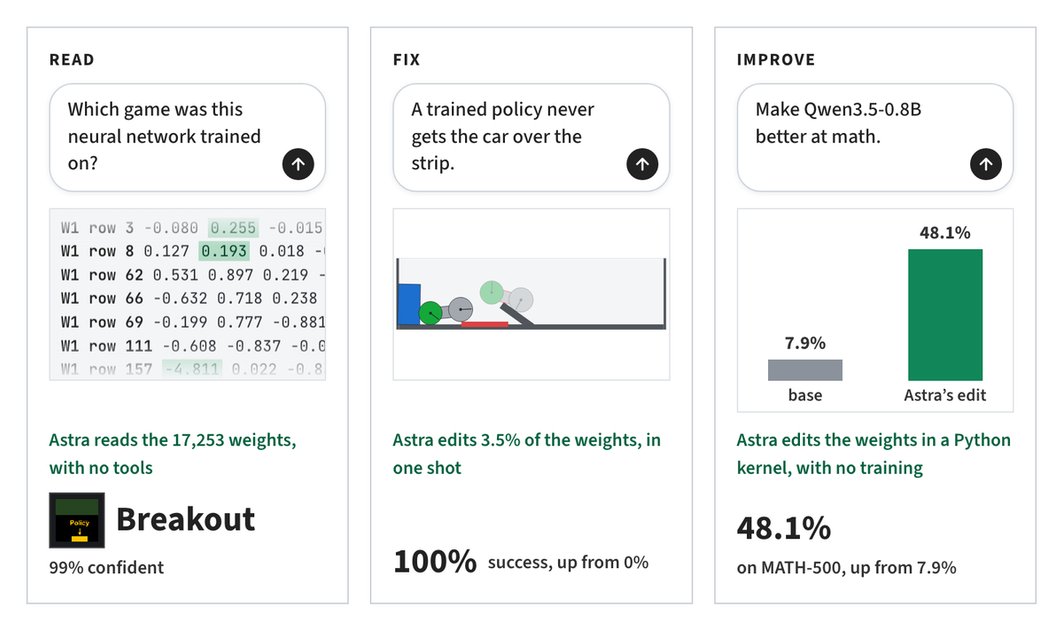
Meanwhile, the feed isn't just nostalgia. An MIT CSAIL team reports that GPT-6 Astra can interpret and modify neural-network weights directly, no training loop required. In one test with Qwen, a small weight adjustment reportedly boosted math and instruction-following scores. And over on the video side, Andrej Karpathy used AI coding tools to build HackerTube, gathering 6,454 YouTube videos mentioned on Hacker News across nearly two decades into an alternative browsing experience with its own recommendations and no user accounts.
We're getting newspapers, self-editing models, and video libraries built from comment threads. But does any of this actually change how we consume tech news, or are we just putting the same flood of information into nicer containers.
The Newspaper Metaphor: Editions, Columns, and Datelines
The site organizes stories into hourly editions stamped with full datelines like "Tuesday, November 3, 2026, 2:00 PM edition." Each edition is a fixed snapshot, not a continuously updating feed. This replaces HN's real-time ranking with editorial pacing: stories appear when the edition closes, not when they hit a vote threshold.
Instead of the single-column list, the layout uses multi-column print-inspired grids. The lead story occupies the left column, secondary items fill the center, and briefs stack on the right. It looks like a broadsheet, but the underlying data is still just HN's top stories from that hour.
As one commenter put it, "add an AI section that is filtered out of technology and you'd have yourself a nice way to browse HN." The editions create natural sections without needing algorithmic filtering. You browse by time, not by topic votes.
from datetime import datetime

def get_current_edition():
    """Returns the edition timestamp truncated to the current hour."""
    now = datetime.now()
    return now.replace(minute=0, second=0, microsecond=0)

edition = get_current_edition()
print(edition.strftime('%A, %B %d, %Y, %I:%M %p'))
My take is that this works better for casual browsing than the real-time feed, but it's worse for breaking news. The limitation is that hourly editions mean you might wait up to 60 minutes to see a story that would hit the front page immediately in the current system. Compared to the existing HN front page, which updates continuously as votes come in, this trades immediacy for a calmer reading experience. One commenter noted, "I don't think the pay wall is working," though that's a separate issue from the layout itself.
Browsing vs. Scrolling: The Reading Experience
A fixed layout turns reading from a scanning activity into an intentional one. Hacker News' chronological feed rewards rapid triage: you skim headlines, open three tabs, close two, move on. A "saved edition" flips that model. By freezing a set of stories into a static grid, it forces the reader to sit with material instead of treating it as disposable. This is a genuine shift in consumption habits, not just a UI tweak. Complex topics like distributed systems or compiler design don't survive the scroll-and-skim cycle well; they need the sustained attention that a fixed page provides.
Here's what that looks like in practice. If you're building something similar, you're essentially generating a static snapshot rather than querying a live feed:
import requests
from datetime import datetime

def create_edition(story_ids, output_file="edition.html"):
    stories = []
    for sid in story_ids:
        data = requests.get(f"https://hacker-news.firebaseio.com/v0/item/{sid}.json").json()
        stories.append({
            "title": data["title"],
            "url": data.get("url", ""),
            "score": data["score"],
            "time": datetime.fromtimestamp(data["time"]).strftime("%Y-%m-%d %H:%M")
        })

    # Fixed layout: stories don't reflow based on new comments or rank changes
    html = f"<html><body><h1>Edition - {datetime.now().strftime('%Y-%m-%d %H:%M')}</h1>"
    for s in stories:
        html += f"<article><h2>{s['title']}</h2><p>Score: {s['score']} | {s['time']}</p></article>"
    html += "</body></html>"

    with open(output_file, "w") as f:
        f.write(html)
    return output_file
The limitation here is obvious once you use it: editions go stale fast. A story that was #1 at 9 AM might be irrelevant by noon, but your fixed layout keeps presenting it as front-page news. The quote about the paywall not working hits at a related problem: monetizing a static artifact is harder than monetizing a continuous feed where new inventory constantly appears. There's also the filtering gap: without a dedicated AI section carved out of the general technology category, machine learning content either dominates the edition or gets buried, and neither outcome works well for readers.
My take is that saved editions work for long-form deep dives but struggle with the news cycle. Compared to HN's feed, which updates rankings every few minutes and surfaces breaking stories immediately, a fixed edition sacrifices timeliness for depth. That's a real trade-off, not a bug. If you read HN primarily for 30-second updates, this format will feel sluggish. If you use it to read 3,000-word engineering postmortems, the fixed layout is the better tool.
What's On the Front Page
I think the "bias-free" framing is doing a lot of work here, and the comments prove it. People want a paper that isn't pushing an agenda, but they immediately ask for AI filtering and flag that censorship blocks still apply in some regions. That tension is the real story: a curated paper can reduce editorial bias, but it can't solve distribution bias, and the copyright concerns about republication suggest the business model is shakier than the interface implies.
The detail that this edition is still the latest as of November 3, 2026 is worth sitting with. If the product promises daily or weekly papers, a stalled edition either signals a publishing pause or reveals that "saved" means static—once you save it, it doesn't update. That permanence is fine for archiving, but it's a problem for news, which decays fast.
Compared to RSS readers or existing briefings like Morning Brew, this leans into ownership: you keep the edition, not just a link that might rot. But that only works if the content rights hold up under republication, which the commenters are already questioning.
The open question is whether this becomes a genuine alternative to algorithmic feeds, or just a prettier aggregator with the same licensing headaches.
Why Presentation Shapes Tech Understanding
I think the fixation on presentation as the primary variable in how we understand tech news is exactly right, and the community's praise for a "bias-free" paper partly misses the point. The suggestions to add AI filtering are telling—people want curation without the human editorial voice—but the headline font criticism cuts deeper: it shows that presentation is never neutral. When you strip away algorithmic feeds and replace them with a fixed layout, you're making a claim about what deserves attention and how it should be read. The saved edition from Tuesday, November 3, 2026, sitting without a newer replacement, actually demonstrates this: static presentation creates a snapshot, whereas the living web refuses to stay still.
The community raises problems the announcement likely glosses over. The copyright concerns about republication are a genuine liability—if this "paper" is lifting content without clear licensing, it's not a new format, it's a legal risk waiting to surface. And the accessibility issues in censored regions cut against the bias-free framing: a centralized digital paper is easier to block than distributed RSS feeds, so "bias-free" ignores the geopolitical bias in who can access the thing at all.
Compared to the infinite scroll of social feeds or even RSS readers, this frozen edition forces a different cognitive posture. You aren't hunting for updates; you're reading what was decided mattered at a specific moment. That temporal limitation—the fact that this edition is fixed while newer ones haven't appeared—is the actual feature, not a bug. It creates a shared reference point that algorithmic timelines actively destroy.
The question worth sitting with is whether we actually want our tech understanding anchored to a daily snapshot, or if that just recreates the newspaper's authority problems without any of its accountability.
Conclusion
Robert Haas blamed the delayed release on a growing backlog of AI-assisted bug reports requiring human review, while this same edition carries preliminary MIT claims about GPT-6 Astra modifying neural-network weights and a Karpathy project built with AI tools to rethink how we browse video. The friction and the breakthrough show up on the same page.
I'm still not sure if the newspaper layout actually changes how we read Hacker News, or if it just makes the scrolling feel more dignified. With 6,454 videos already collected on HackerTube, people have been hunting for alternatives to the feed for years—so will this format finally stick, or is it just another interface we'll abandon?