Inside the FAA Ground Stop That Stranded 400,000 Travelers
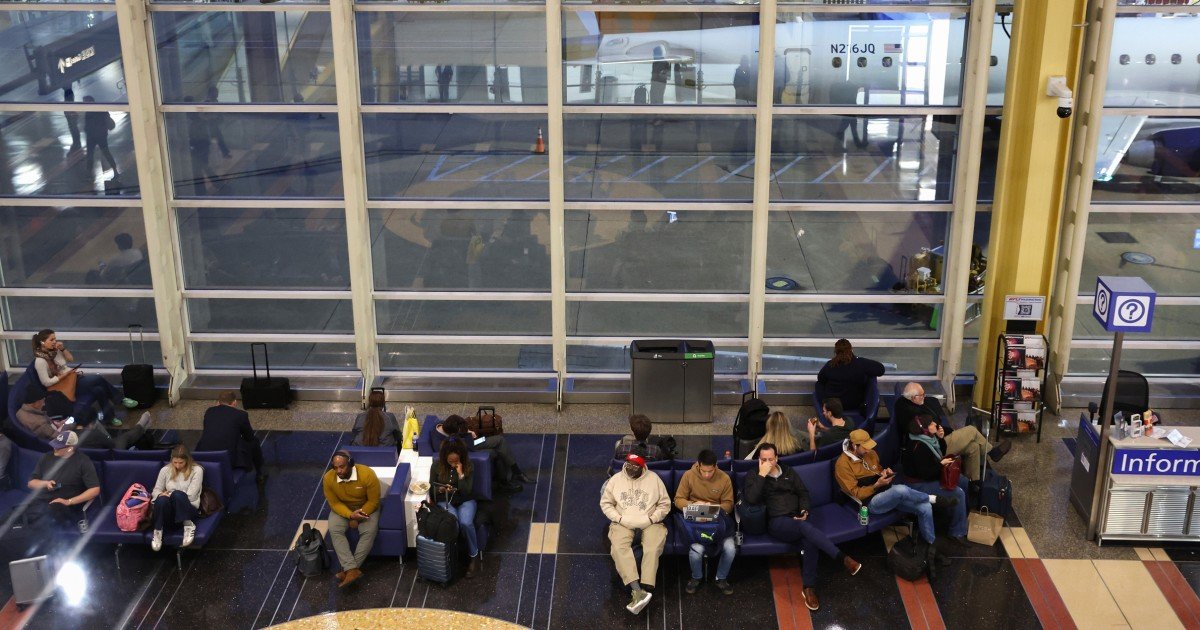
A corrupted database managed to do what no storm or security threat could: it grounded every domestic flight in the United States for more than five hours on Friday. When the FAA's NOTAM system crashed, the agency ordered the first nationwide ground stop in decades, and hours later an aviation expert estimated that 300,000 to 400,000 passengers were stranded with no clear idea when they'd move again. I think this is exactly the kind of failure that reveals how brittle our critical infrastructure really is. We've layered decades of automation onto air travel, but we're still depending on systems that can be paralyzed by a single point of failure.
While departing flights sat idle on runways across the country, inbound international traffic was being managed "on a case by case basis," which is bureaucrat-speak for improvisation at scale. The part that gets me is that this wasn't a sophisticated cyberattack. It was a routine failure in a system that runs on decades-old technology and has been waiting for a replacement that keeps getting delayed.
My take is that we got a rare look at how fragile the network is, and most people will forget about it by Monday. But when the next legacy system hiccups, will we still be surprised that it took down the entire sky?
The Morning the System Failed
The FAA's Notice to Air Missions system failed on a corrupted database file early in the morning, and because pilots legally cannot depart without checking current NOTAMs, the agency had no choice but to halt every departure in the country. The primary system went down around 6:00 a.m. Eastern, and by 7:15 a.m. the FAA issued a nationwide ground stop that lasted until roughly 9:07 a.m. While the backup system eventually came online, the backlog of flights waiting for clearance created chaos that lasted well into the afternoon.
This wasn't a cyberattack. It was a legacy system hitting a hard limit when a database file grew too large for its architecture. "people are reporting it's still going on...." captures the frustration of travelers watching the system struggle to recover even after the ground stop lifted. The FAA switched to the backup NOTAM system to process the backlog, but the failover required manual intervention, which is why recovery took nearly two hours.
Here is what a basic status check against the NOTAM feed looks like, the kind of script operations teams run to verify the system is responsive:
import requests
import sys

def check_notam_system():
    url = "https://www.notams.faa.gov/common/notamrss/feedServlet"
    try:
        response = requests.get(url, timeout=10)
        if response.status_code == 200:
            print("NOTAM system operational")
            return True
        print(f"NOTAM system returned status {response.status_code}")
        return False
    except requests.RequestException as e:
        print(f"NOTAM system unreachable: {e}")
        sys.exit(1)

if __name__ == "__main__":
    check_notam_system()
My take is that this outage shows how critical infrastructure still runs on software older than the people operating it. The real limitation is that the backup system isn't a hot standby; it's a cold switch requiring manual failover, which is why the ground stop lasted nearly two hours. Compared to restarting a modern cloud service, which takes seconds, this recovery required human coordination across multiple systems. Related: https://news.ycombinator.com/item?id=50489678
Inside the NOTAM Breakdown
The NOTAM system failed because it was a single point of failure running on aging infrastructure, and when a contractor accidentally deleted a critical database file during a routine sync between primary and backup systems, there was no isolation to contain the damage. The FAA routes all flight safety information through one monolithic pipeline. When that pipeline's database file got corrupted, the entire national airspace system halted because every departure requires a NOTAM check, and the check couldn't complete.
What actually went wrong was mundane: a file deletion during maintenance. But the architecture made it catastrophic. The system used a primary database with a backup that was supposed to take over, but the sync process itself became the vulnerability. When the file was removed from the primary, the backup mirrored the deletion or became desynchronized, leaving both copies unusable. This isn't a sophisticated cyberattack or hardware failure. It's the kind of human error that distributed systems are designed to survive, except this one wasn't.
Here's what a basic failover check looks like in a system that can actually survive this:
def get_notam_service():
    primary = connect_db("notam-primary.faa.gov")
    if primary.healthy() and primary.file_count > 0:
        return primary
    backup = connect_db("notam-backup.faa.gov")
    if backup.healthy() and backup.is_independent_of(primary):
        return backup
    raise SystemUnavailable("No valid NOTAM database available")
The FAA system didn't validate independence. The backup was a mirror that could inherit the corruption.
My take: this outage is worth studying because it shows that having a backup file isn't the same as having redundancy. The FAA had a backup database, but not a backup architecture. Compared to modern distributed systems that run multiple independent nodes with quorum consensus, their setup was closer to a single hard drive with a photocopy attached.
The limitation nobody mentions: fixing this properly means rebuilding the NOTAM pipeline as a distributed system, which takes years and costs hundreds of millions. Until then, the system remains vulnerable to the same class of error: one corrupted file grounding 30,000 flights.
400,000 Passengers in Limbo
I think the 300,000 to 400,000 figure is the real story here, not the vague safety rationale. When a single announcement strands that many people, you're looking at a system with zero slack — one decision ripples through every major hub within hours. The opacity of "extraordinary circumstances" bothers me more than the stop itself. We've seen ground stops before, but usually there's a storm or a security incident to point to. Here, hours later, pilots and passengers are still guessing, which suggests the communication infrastructure failed alongside the operational one.
The gotcha is that "safety reasons" is doing a lot of work without saying anything. Without a specific threat named — even retrospectively — this becomes a precedent for indefinite halts with no public accountability. Compare that to the January 2023 NOTAM outage, where the cause was identified within hours and the fix was concrete. Today's ground stop is slower to explain, which means the next one could be just as opaque.
My honest uncertainty: I don't know if this was a cyber event, a technical failure, or a genuine security precaution, and that ambiguity might be intentional. What I do know is that 400,000 passengers don't care about the FAA's internal reasoning when they're sleeping in terminals. The question worth sitting with is whether the agency can restore trust without ever telling us what actually happened.
When Airline Apps Couldn't Keep Up
I think this exposes a gap between how airline apps are designed and when they actually matter. These systems are built for the routine—booking, check-in, seat changes—but they buckle precisely when passengers need them most. When 300,000 to 400,000 travelers hit refresh simultaneously looking for answers, the infrastructure treats that surge like an attack rather than a cry for help.
The real limitation here isn't just latency; it's the silence. When the FAA issues a ground stop with vague "extraordinary circumstances," the apps don't just fail to scale—they fail to communicate. Passengers got push notifications about gate changes but nothing about why the sky was closed, leaving them to piece together rumors on social media. That's a design choice as much as a technical failure: these platforms prioritize transactional efficiency over crisis clarity.
The confusion in the community reaction—pilots included—shows that the problem extends beyond consumer apps to the entire information ecosystem. When the justification is unspecified, the apps become amplifiers of anxiety rather than buffers against it.
What I'm watching is whether airlines treat this as a one-off or a warning. Ground stops are rare, but climate disruptions and system outages are getting less rare. If they don't stress-test these systems for the 400,000-person scenario now, they're betting that the next crisis will be smaller.
Conclusion
The NOTAM failure didn't just delay flights; it stranded somewhere between 300,000 and 400,000 people with no clear timeline, while airline apps fumbled to keep up. Homeland Security says it wasn't a cyberattack, which is either reassuring or deeply concerning — depending on whether you think a single point of failure in 2024 is better or worse than malicious actors.
I'm still not sure what to make of that case-by-case approach for inbound international flights. It sounds orderly until you're one of the passengers trying to land. The system worked exactly as designed, which is the problem. When the next five-hour ground stop hits — and it will — I hope someone has finally decided whether to modernize the NOTAM infrastructure or just accept that we're all just waiting for the next outage.