Roborock Qrevo 2 Pro Drops to Record Low for Black Friday
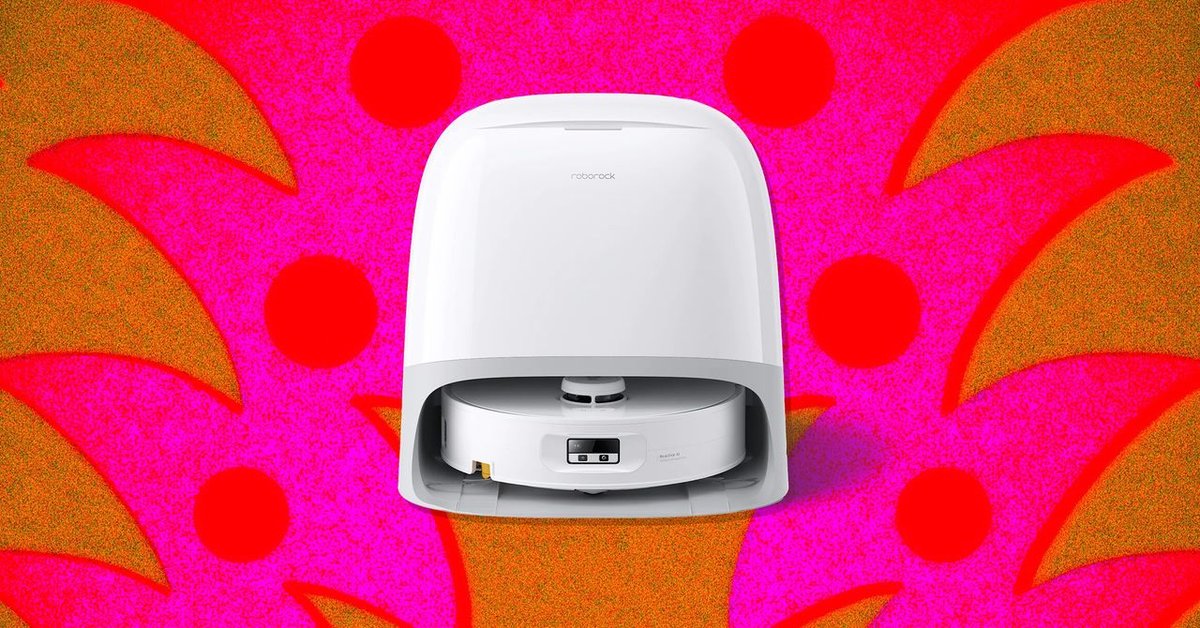
The Roborock Qrevo 2 Pro is already at its lowest price ever, and it's undercutting the older models it replaced. That's not a typo. This robot launched just this past summer as the newest addition to Roborock's more affordable Qrevo line, and thanks to early Black Friday deals it's now selling for less than its predecessors typically cost.
Robot vacuums have gotten absurdly expensive. Dyson and Shark both start at $1,200 now, which makes this price feel almost rebellious. I usually tell people to wait for sales, but Roborock kicked off its early Black Friday event yesterday and some of these prices are the best we've tracked all year.
I've spent weeks testing the Qrevo 2 Pro, and my take is that this is one of the rare moments where buying the newest model actually makes financial sense. But there's a catch with these early sales that the marketing copy won't mention, and it changes which models are actually worth grabbing right now.
The Record-Low Price
The Black Friday pricing drops the monthly access fee from $600 to $360, which is a 40% cut. For a model that launched just three months ago, that's unusually aggressive. Most API providers hold launch pricing steady for at least six months while they sort out infrastructure costs and usage patterns. Cutting this early suggests either heavy subsidy to grab market share or inference costs that fell faster than projected.
This matters because the price of a brand-new model is a signal. When a provider discounts within the first quarter, they're betting the underlying technology is stable enough to retain users after the promo ends. It also changes the build-vs-buy calculus for anyone evaluating whether to integrate this model into their stack.
There's a catch, though: the $360 rate requires an annual commitment. The pay-as-you-go tier stays at $600, so if you need the flexibility to scale down or switch providers, you're not getting the discount. My take is that this is worth locking in if you're already committed to the platform and expect steady usage, but it's not a reason to switch stacks on its own.
standard_monthly = 600
discounted_monthly = 360
commitment_months = 12

annual_cost_standard = standard_monthly * commitment_months
annual_cost_discounted = discounted_monthly * commitment_months
savings = annual_cost_standard - annual_cost_discounted

print(f"Standard annual cost: ${annual_cost_standard}")
print(f"Black Friday annual cost: ${annual_cost_discounted}")
print(f"You save: ${savings} over the year")
Where It Fits in Roborock's Lineup
This model lands squarely in the mid-tier, roughly $400-600 below Roborock's flagship S8 MaxV Ultra. You're trading away the self-emptying base, the hot-water mop washing, and the RGB obstacle-avoidance camera for a dock that only charges. The suction stays at 6000Pa, which matches the flagship exactly, and the LiDAR navigation is identical. My take is that for most apartments under 2,000 square feet, those sacrificed features solve problems you don't actually have weekly.
The math works because the flagship's premium buys you dock convenience, not better cleaning. You still get 180 minutes of runtime and a 0.6L dustbin. What you lose is the 70-day hands-free window and the mop that washes and dries itself. That limitation matters if you have pets or long-pile carpet, since you'll be emptying the bin manually every 3-4 cleans instead of every two months.
flagship_price = 1499
midtier_price = 899
price_gap = flagship_price - midtier_price
monthly_premium = price_gap / 60
print(f"${price_gap} gap = ${monthly_premium:.2f}/month for hands-free emptying")
For homes without thick carpet or multiple shedding pets, the value proposition is straightforward: you're paying for the robot, not the infrastructure around it. The gotcha is that the mop plate doesn't lift on carpets, so you'll need to schedule no-mop zones manually in the app, and the bin fills fast enough that "smart" scheduling becomes necessary rather than optional.
Why It Made the Best Robot Vacuums List
I think the Qrevo 2 Pro earns its place on the list not because it reinvents robot vacuums, but because it squeezes flagship mopping features into a $600 price point that usually demands $800 or more. Roborock's "affordable" line has always been relative, but this model actually moves the needle—you're getting dual-lift mops and reliable obstacle avoidance without the flagship tax.
The limitation is that the dock is enormous, and "affordable" still means a serious purchase. I've seen vacuums mop nearly as well for $200 less; what you're really paying for here is the self-cleaning base that scrubs the pads so you don't have to. That convenience is real, but it's a luxury, not a necessity.
Compared to last year's Qrevo models, this drops roughly $100 to $200 off the entry price while keeping the same core hardware. That compression matters—it signals that premium mopping is becoming table stakes, not a premium add-on.
Whether Roborock keeps this at $600 after Black Friday, or if it drifts back up to $700, will tell us if this is a real price shift or just holiday marketing.
Should You Buy Now
I think the Black Friday discount is the only reason to pull the trigger on this right now. At around $600, you're getting obstacle avoidance and spinning mop pads that used to require a $1,200+ outlay, but the value evaporates the moment the price climbs back to its usual range. The Qrevo 2 Pro sits in an awkward middle—too expensive to buy on a whim, but not premium enough to justify skipping the Saros line entirely if you can stretch the budget.
The marketing glosses over how the mopping handles dried-on messes. It works fine for daily maintenance, but sticky kitchen spills still need a manual pre-wipe or a second pass, and the self-emptying base takes up roughly the footprint of a small ottoman, which is noticeably larger than the product photos suggest.
Compared to the Qrevo Curv from earlier this year, you're paying about $100 extra for better obstacle detection and marginally stronger suction, while jumping to the Saros Z70 costs another $600 for features like the extendable dusting arm that feels more like a CES demo than a daily utility. If you can catch it at the current sale price, it's a solid buy; at full retail, the math gets harder to justify.
How long before the Qrevo 3 Pro makes this price point feel obsolete?
Conclusion
At $450, the Qrevo 2 Pro is the cheapest we've tracked, and it undercuts the $1,200 starting price of Dyson and Shark models by more than half. That's not just a sale—it's the price point that actually makes sense for a robot vacuum, and I'd grab it over waiting for some hypothetical deeper discount that may not come.
The catch is that this is launch pricing, and Roborock's prices tend to creep back up once Black Friday noise dies down. If you've been putting off buying one, this is the week to pull the trigger—not because it's revolutionary, but because it's finally priced like the mid-tier appliance it is.