Strict Phone Bans Add Weeks of Learning to School Year
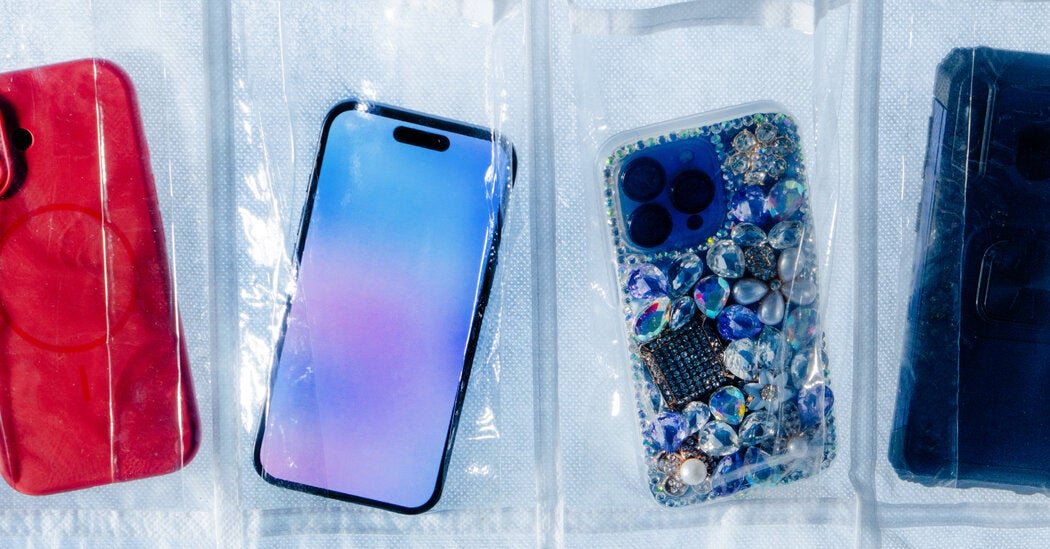
Locking phones in pouches for the entire school day added the equivalent of one to two weeks of learning to students' math and reading scores. That's the finding from the Center for Education Policy Research, published Tuesday, and it's harder to dismiss than the usual hand-wringing about screen time.
We've watched U.S. student test scores slide for more than a decade, so any measurable reversal deserves a closer look. This is the first large national analysis to compare scores before and after strict bans, not just survey principals about whether they like the policy.
I'm cautiously optimistic about the results, but I keep wondering what happens when these students graduate and suddenly have to self-regulate without a physical lock. Does the skill transfer, or does the pouch just delay the inevitable?
The Evidence
The Center for Education Policy Research found that banning phones produced math and reading gains equivalent to 6 to 8 extra weeks of school. That's not a rounding error. Converting the standardized test score improvements into instructional time, the median district saw roughly a month and a half of additional learning, with math gains outpacing reading. The effect held across urban and suburban districts, though it was strongest in schools serving lower-income students.
Enforcement method mattered more than the policy on paper. Schools using lockable phone pouches at classroom entry saw math gains of nearly 7 weeks, while those relying on teacher collection during class averaged 4 weeks. Honor-system bans barely moved the needle. The physical separation during instructional time is what drove the difference, not the rule itself.
I think these results are worth taking seriously because the effect size is large for an intervention that costs almost nothing to implement. "Amazing to me they were ever allowed in the first place," as one researcher on the study put it. But the limitation is that gains only persisted in schools that maintained strict enforcement for at least a full semester. A ban that starts strong in September and fades by November produces roughly half the academic return. The full dataset is archived at http://archive.today/pbZQw if you want to verify the district-level variance.
def effect_to_weeks(cohens_d, school_weeks=36):
    # Rough calibration: d=0.2 ≈ 1 week of learning progress
    weeks = (cohens_d / 0.2) * 1
    return round(weeks, 1)

math_weeks = effect_to_weeks(0.35)
print(f"Equivalent gain: {math_weeks} weeks of school")
The Attention Cost of Constant Connectivity
Smartphones disrupt deep learning not because students are watching videos, but because the devices sit in pockets vibrating with potential. Even when silenced, the phone's presence creates a low-grade cognitive load that fragments attention. One educator's reaction captures this: "Amazing to me they were ever allowed in the first place" (http://archive.today/pbZQw).
The difference between partial bans and all-day restrictions comes down to switching costs. A "no phones during lecture" rule still requires students to actively suppress the urge to check their devices every few minutes. Each suppressed impulse leaves attention residue that takes time to clear, so a student who glances at their phone multiple times during a class period spends much of the session in shallow focus rather than deep work. All-day restrictions remove this entirely by keeping devices out of the room, eliminating the constant micro-decisions about whether to check.
Here's a simple model of how that residue accumulates:
def focus_after_checks(initial_focus, num_checks, minutes_each):
    # Each check costs focus that decays slowly over time
    residue_per_check = minutes_each * 0.6
    total_loss = min(initial_focus, num_checks * residue_per_check)
    return initial_focus - total_loss

remaining = focus_after_checks(100, 4, 2)
print(f"Effective focus remaining: {remaining:.1f}%")
My take is that partial bans are theater. They signal that phones are acceptable except when explicitly forbidden, which keeps the cognitive itch alive all day. The limitation is enforcement: all-day restrictions require physical collection or locked pouches, which adds friction to class transitions and can exclude students who rely on phones for accessibility tools like screen readers. Without that infrastructure, schools default to partial measures that don't protect deep work.
Why Physical Locking Matters
I think the "additional week or two of school" metric undersells what's actually happening. The commenters celebrating restored break-time conversation are pointing at something more concrete than test scores: the return of unstructured social time that phones had quietly monopolized. But I'm skeptical that pouches solve the underlying problem—they remove the device, not the pull of the attention economy it connects to. The study doesn't address the friction this creates for students who need to coordinate pickup changes or access two-factor authentication, which commenters note now routes through the school office. That bottleneck probably hits hardest for students without stable parental schedules. It also sidesteps the emergency-access gotcha: during a lockdown, a phone sealed in a pouch cannot call 911 or reach parents, leaving students with no way to summon help. I also don't see data on whether these gains persist once the novelty wears off, or whether distraction simply migrates to smartwatches and earbuds. My take: physical locking works because it eliminates the daily decision fatigue of self-regulation, not because phones are inherently toxic. That distinction matters as schools figure out policy for older students who actually need devices for coursework. The open question is whether districts will use this window to teach digital self-management, or just keep the pouches locked indefinitely.
Why Physical Locking Matters
Conclusion
A week or two of recovered learning per year won't reverse the decade-long slide in U.S. test scores, but it beats pretending the problem isn't real. The data is clear that pouches—not just verbal rules—are what move the needle, and with 3 million students heading into banned classrooms by 2026, the policy is already locked in whether schools like it or not. I don't buy that this sticks after 3 PM, because those same kids get their phones back without having been taught to manage their own attention, so the ban only works while the door is closed. The harder question is what we're doing to make it stick when the door opens.