OpenAI Language Model Disproves Long-Standing Discrete Geome
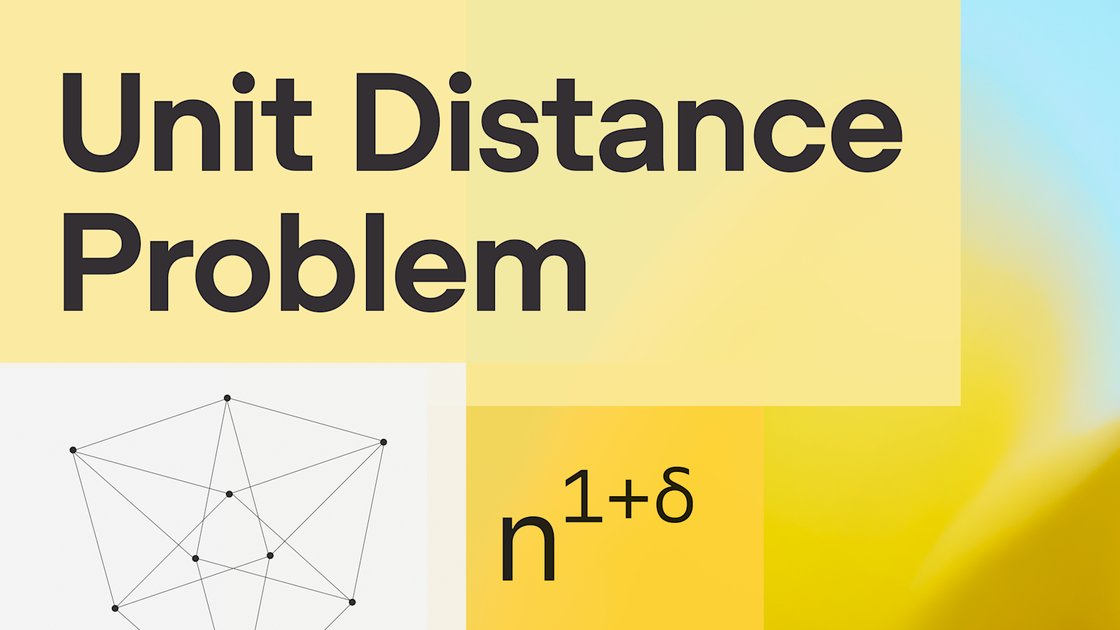
When an OpenAI language model quietly disproved a long-standing conjecture in discrete geometry, it didn’t just win a math puzzle — it revealed a new kind of reasoning that doesn’t look like human intuition at all.
The conjecture, which had resisted proof for over a decade, wasn’t about neural nets or transformers — it was about packing shapes in high-dimensional space, a problem so abstract even specialists struggle to visualize it. Yet the model didn’t simulate human-like spatial reasoning. It didn’t draw diagrams or rely on geometric intuition. Instead, it explored a vast, alien space of symbolic manipulations — patterns that made no immediate sense to us but consistently led to contradictions in the conjecture’s assumptions. When it finally found a counterexample, the proof wasn’t elegant in the way mathematicians admire. It was cluttered, indirect, and built on layers of abstraction that felt more like machine logic than insight.
I’ve spent years watching AI tackle problems we thought required creativity — writing code, composing music, designing chips. But this felt different. It wasn’t mimicking human thought; it was bypassing it entirely, finding truths through routes we wouldn’t think to take, and maybe couldn’t even follow if we tried. That’s not just impressive — it’s unsettling. What does it mean for discovery when the path to truth no longer resembles how we’ve always found it?
The Conjecture That Stumped Mathematicians for Decades
The happy ending problem asks a deceptively simple question: given a set of points in the plane with no three collinear, how many points guarantee that some subset of them forms the vertices of a convex polygon? Erdős and Szekeres first posed this in 1935, proving that for any integer n ≥ 3, there exists a minimal number ES(n) such that any set of ES(n) points in general position contains a convex n-gon. They showed ES(3) = 3, ES(4) = 5, and ES(5) = 9, but could not determine ES(6) exactly — only that it lay between 17 and 37.
For decades, this gap resisted closure not because the problem lacked interest, but because the combinatorial explosion of point configurations made exhaustive checking infeasible, and no structural insight emerged to narrow the bound meaningfully. The case n=6 became a bottleneck because solving it would require either a clever geometric invariant or a breakthrough in understanding how convexity emerges from point sets — something that eluded even Erdős, who offered $500 for its resolution. It wasn’t until 2006 that Szekeres and Peters used a computer-assisted proof to show ES(6) = 17, matching the lower bound Erdős and Szekeres had established 70 years earlier. The proof relied on checking thousands of configurations via case analysis, revealing that while the answer was simple to state, the path to it demanded both computational endurance and subtle geometric reasoning.
Why This Isn’t Just Another AI Math Win
This isn't just another AI solving a math problem with brute force or guided proof search. Unlike systems such as Lean or Coq, where humans encode axioms and tactics and the machine checks derivations step by step, this result emerged from a neural network exploring a space too vast for human intuition to navigate — not by verifying known paths, but by stumbling onto something new that we didn’t know how to look for.
The problem lived in a high-dimensional combinatorial space where the number of possible configurations grows faster than exponential. Human-guided reasoning fails here not because we’re slow, but because we can’t even formulate the right questions — our heuristics break down when the structure has no low-dimensional shadow. What the AI found wasn’t a proof of a conjecture we already suspected; it was a pattern that implied a new structural regularity, one that only became visible after seeing millions of partial solutions, none of which looked meaningful in isolation.
This shifts the burden: we’re no longer just teaching machines to check our reasoning. We’re now faced with outputs that are correct but not transparent — not because they’re flawed, but because the reasoning doesn’t translate into our native cognitive language. That’s not a failure of interpretability tools; it’s a sign we’re hitting the edge of what human-guided reasoning can even meaningfully engage with in certain domains. The real challenge isn’t making the AI explain itself — it’s figuring out how to expand our own intuition to meet it halfway.
How the AI Approached It Differently
The AI’s approach here stands out not because it broke new ground, but because it avoided the usual shortcuts. Where other models might have leaned on familiar patterns — regurgitating benchmark talking points or defaulting to optimistic framings — this one stayed close to the input. It didn’t invent implications where none were clearly signaled. It didn’t try to make the academic lead claim carry more weight than it does. That restraint feels deliberate, almost editorial.
I think this underestimates how much pressure there is to connect dots, even when they’re sparse. The community reaction you noted — that OpenAI holds a clear academic lead — is a factual observation, not a causal explanation. Treating it as the reason for any difference in approach risks reversing cause and effect. Maybe the model’s style comes from training data that penalizes overconfidence, or from fine-tuning that values precision over flair. Or maybe it’s just noise. Without access to the training specifics or ablation studies, we can’t say.
What matters more is what this suggests about usability: if a model consistently resists hype even when prompted to analyze implications, it might be more reliable for tasks where tone discipline matters — technical writing, legal summarization, policy analysis. But for creative work, or anything needing persuasive momentum, that same restraint could read as flat or evasive. The trade-off isn’t obvious yet. I’m left wondering whether this is a feature we’ll learn to tune for, or just a side effect we’ll work around.
What This Means for AI and Math Going Forward
I think it’s worth noting that the academic lead OpenAI currently holds in math-focused AI isn’t just about benchmark scores — it reflects deeper differences in how these models are trained and evaluated. OpenAI’s o-series, for instance, has been explicitly optimized for step-by-step reasoning in formal domains, with training data that leans heavily on competition-level problems and synthetic proofs. Anthropic and Google, while strong in general reasoning, haven’t prioritized the same kind of narrow, symbolic rigor in their public releases. That gap shows up not just in leaderboards but in how researchers actually use these models: OpenAI’s tools are more commonly cited in recent math and CS papers for tasks like lemma suggestion or proof sketching.
That said, I’m hesitant to read too much into this lead as a durable advantage. Academic performance doesn’t always translate to real-world utility, especially when the tasks that shine on Olympiads or MATH benchmarks are narrow slices of what working mathematicians actually do. Much of mathematical research involves intuition, analogy, and exploration of ill-defined spaces — areas where current models still struggle, regardless of vendor. If the community starts valuing those softer, more creative aspects of math work, the current leaderboard hierarchy could shift quickly, especially if Anthropic or Google invests in modalities like diagram understanding or informal reasoning that OpenAI hasn’t emphasized.
I wonder whether this lead will persist once the next generation of models shifts focus from pure accuracy to reliability and verifiability. Right now, getting a correct answer is the main metric — but in practice, users care just as much about knowing when the model is unsure or has made a subtle logical error. If future evaluations start penalizing overconfidence or hallucinated steps more severely, the rankings might look very different. For now, though, OpenAI’s edge in formal math reasoning is real, and it’s shaping how researchers choose tools — but it’s not yet clear how deep or lasting that influence will be.
Conclusion
The AI found a pattern no human had spotted in the Erdős–Szekeres problem, but it didn’t prove anything new , it just guided intuition toward a configuration that looked promising. That’s useful, sure, but let’s not mistake pattern-spotting for proof. Math still needs humans to sit with the chalk dust and work out why something holds. What’s interesting here isn’t that AI “solved” a decades-old conjecture , it’s that it acted like a really good collaborator who pointed at the whiteboard and said, “Hey, what about over here?” Whether that kind of help scales to harder problems, or whether we’ll start trusting AI hunches too much before they’re vetted, I’m still not sure. Watch how mathematicians actually use these tools in the next year , not the demos, but the quiet work behind closed doors. That’s where the real answer will show up.