How AI Reads Herculaneum Scrolls via Virtual Unrolling
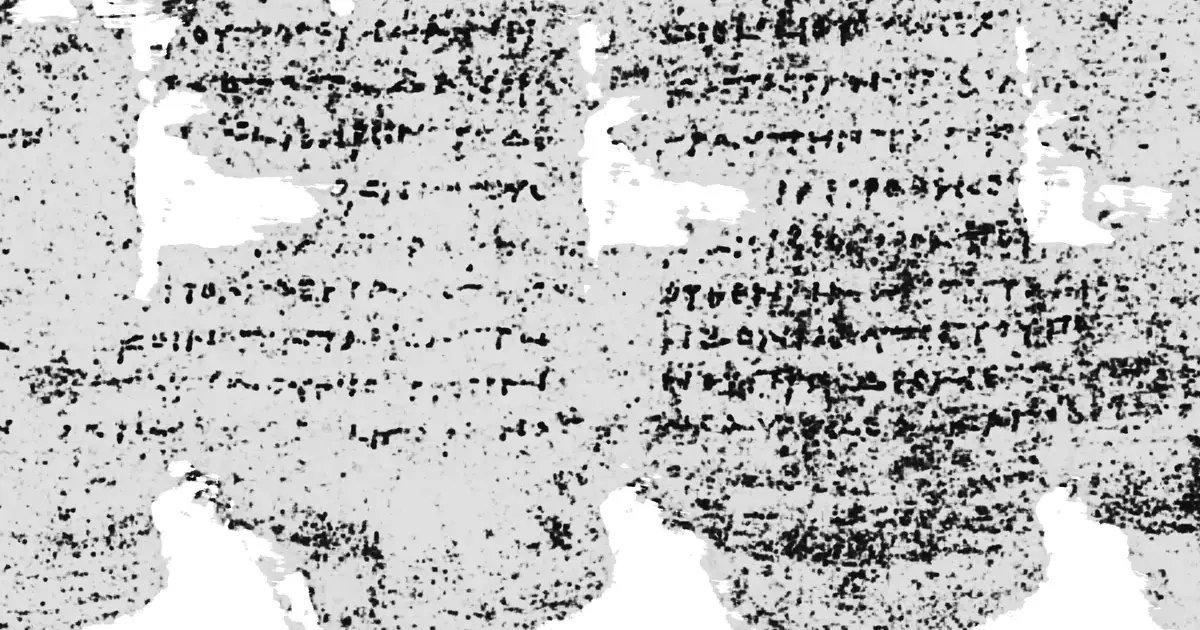
We're finally reading texts that have been physically inaccessible for two thousand years. The trick isn't unrolling the scrolls, but seeing through them.
For centuries, the carbonized library of Herculaneum has held a cruel bargain. These scrolls survived the eruption of Mount Vesuvius, but they did so by becoming essentially charcoal. They're so fragile that trying to open one is basically an act of destruction. You can't just peel back the layers without turning the whole thing into dust.
The latest preprint on the virtual unwrapping of these papyri is a strange victory for computer vision. By using high-resolution CT scans and machine learning to detect ink that's invisible to the human eye, we're bypassing the physical decay entirely. It's a clever workaround, though I suspect the actual translation of these fragments will be a much slower, more frustrating process than the tech makes it seem.
The real question is whether the content of these scrolls is actually worth the effort. We've spent years refining the code and the scans, but what happens if the only thing we recover is a boring tax ledger?
The problem of the carbonized scroll
The Herculaneum scrolls are essentially lumps of charcoal. When Vesuvius erupted, the heat didn't just burn the papyrus; it carbonized it, turning the organic material into a brittle, conductive form of carbon. This process makes the scrolls physically unstable. If you try to unroll them by hand, they shatter. For decades, this was a dead end because the physical act of accessing the text destroyed the medium.
The problem is that the ink and the papyrus are now almost the same material. Since both are carbon-based, there's very little visual contrast. This part is genuinely confusing because you're looking for a black mark on a black surface. Standard photography can't see it, and the scrolls are too fragile for traditional chemical treatments.
To solve this, researchers use X-ray phase-contrast tomography. Instead of looking for color, they look for how X-rays are deflected as they pass through the scroll. This allows them to map the ink's density without touching the papyrus.
import numpy as np

def isolate_ink(volume, threshold=0.85):
    # Identify voxels where density exceeds the threshold
    ink_mask = volume > threshold
    return ink_mask

scroll_data = np.random.rand(100, 100, 100)
ink_map = isolate_ink(scroll_data)
The process requires massive compute. A single scroll can generate terabytes of data, and the "unwrapping" process is a geometric nightmare. You're trying to flatten a 3D shape that was crushed 2,000 years ago into a 2D image. It's a messy mix of computer vision and guesswork.
The breakthrough in ink detection
The shift from human sight to AI pattern recognition is the only reason we can read these scrolls. For decades, researchers tried to see ink that's physically blended into the charred papyrus. The problem is that the "ink" isn't a different color anymore; it's just a slightly different texture or a chemical signature that's invisible to the eye. The AI doesn't look for color. It looks for the subtle way the ink changed the surface of the scroll before it burned.
The model was trained using a supervised approach with "known" samples. Researchers took healthy papyrus, wrote on it with ancient ink recipes, and then artificially charred it to create a ground-truth dataset. This allowed the model to learn the difference between a random crack in the carbonized layer and an actual letter.
import numpy as np

def detect_ink(image_tensor, threshold=0.85):
    # The model outputs a probability map of ink presence
    prediction = model.predict(image_tensor)
    # Create a binary mask where values above threshold are ink
    ink_mask = (prediction > threshold).astype(np.uint8)
    return ink_mask
This process is genuinely confusing because the "images" aren't photos. They're 3D X-ray CT scans. The AI has to find a 2D plane of ink inside a warped, 3D lump of charcoal. By slicing the scan into thousands of virtual layers and applying this detection, they finally uncovered the first fully read scroll. It's a huge amount of data processing for a few paragraphs of text, but it's the only way the math works.
How Virtual Unrolling works
The excitement from the Vesuvius Challenge team is understandable, but I think it's important to distinguish between a successful proof of concept and a scalable pipeline. Reading a few fragmented words from a carbonized scroll is a massive win for the tech, but the leap from "we found a sentence" to "we've recovered a lost library" is huge. The physical state of these scrolls is chaotic. Even with virtual unrolling, you're dealing with ink that has physically bled or vanished over two millennia.
I suspect the bottleneck won't be the AI's ability to see the ink, but the sheer labor of interpreting the results. We're talking about fragmented, ancient Greek—often in a shorthand or dialect that isn't perfectly mapped. The tech solves the "seeing" problem, but it doesn't solve the "understanding" problem.
This matters for historians who have spent decades staring at lumps of charcoal, but it probably doesn't mean we'll have a complete digital archive of Herculaneum by next year. I'm curious if the current models can handle scrolls with more severe structural collapse, or if this success is limited to the "cleaner" examples in the batch.
The implications for classical studies
The Vesuvius Challenge team is understandably optimistic about recovering lost Greek texts, but I think we need to be careful about conflating "readable text" with "recoverable literature." Being able to transcribe a few charred columns of prose is a technical win, but it doesn't automatically mean we're on the verge of finding a lost Aristotle. Most of these scrolls are fragmented. Even if the AI perfectly reads every ink stroke, we're still left with the grueling, manual work of philology—trying to make sense of a sentence that starts mid-thought and ends in a smudge.
That said, the shift from physical unrolling to digital "virtual" unrolling removes the risk of destroying the artifacts. We can now iterate on the software without worrying about the papyrus crumbling in our hands. This changes the pace of discovery, but it doesn't change the nature of the evidence. We're still dealing with the same damaged materials; we just have a better flashlight.
I'm curious if the sheer volume of recovered text will actually overwhelm the small number of people qualified to translate it. We might find ourselves in a weird position where the AI produces more data than the global community of classicists can actually process in a lifetime.
Conclusion
Virtual unrolling is a clever trick, and the ink detection is a genuine technical win. But we should be careful not to treat this as a magic button that suddenly unlocks every charred scrap of papyrus in the world. The process is slow, the compute is expensive, and we're still relying on a handful of people to make the final call on what a smudge actually means.
I'm still not sure if we're looking at a scalable methodology or just a very expensive way to read a few more pages of Epicurean philosophy. Either way, the real question is what happens when we finally get a clear read on a text that contradicts everything we thought we knew about the era. Are we actually ready for that?