Hyundai and Boston Dynamics: Automating Logistics
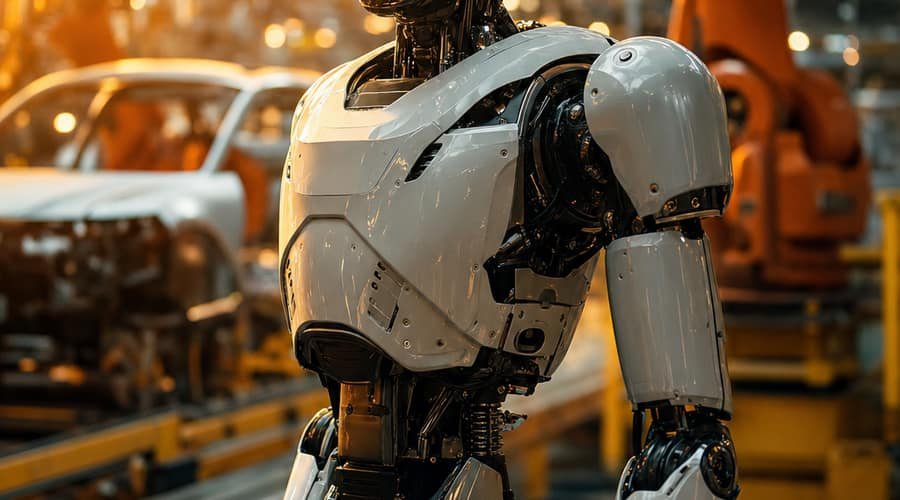
Hyundai isn't just buying a robotics company. They're betting that the future of logistics is mobile, autonomous, and humanoid. By picking up a 65% stake in Boston Dynamics for $325 million, they've finally moved from being a curious investor to owning the whole thing.
The timing is a bit too convenient to be accidental. Boston Dynamics is finally pushing Atlas into commercial deployment, and the humanoid race is getting crowded. Tesla's Optimus and Figure AI are no longer just research projects, they're actual competitors.
It's a massive gamble. Humanoids are notoriously difficult to scale, and the gap between a viral YouTube video of a robot doing a backflip and a robot that can actually move crates in a warehouse is huge. I wonder if Hyundai is buying the tech or just buying the hype.
The Shift from Cars to Robotics
The pivot to robotics-as-a-service is a move to stop treating autonomous driving as a niche car feature and start treating it as a general spatial intelligence problem. A car is just a robot that's constrained to a 2D plane. Legged locomotion is harder because it adds verticality and balance, but the core stack is the same: perception, path planning, and actuator control. If you've already solved SLAM (Simultaneous Localization and Mapping) for a vehicle at 65 mph, applying that to a quadruped moving at 3 mph is a lateral move in complexity.
This part is genuinely confusing because the business models don't align yet. Selling a car is a one-time transaction; robotics-as-a-service is a recurring subscription for labor. It's a gamble that the software orchestration layer is more valuable than the hardware itself. The goal is to build a unified "world model" that works whether the robot has four wheels or four legs.
To manage these robots at scale, you need a way to push telemetry and commands over a network. Most of these systems use ROS 2 (Robot Operating System) because it handles the distributed nature of robot nodes.
sudo apt update && sudo apt install ros-humble-desktop
source /opt/ros/humble/setup.bash
The actual logic for movement usually involves a PID controller to keep the robot stable. It's a basic feedback loop that calculates the error between the desired position and the actual position.
def compute_pid(target, actual, kp, ki, kd, prev_error, integral):
    error = target - actual
    integral += error
    derivative = error - prev_error
    # Calculate output based on proportional, integral, and derivative terms
    output = (kp * error) + (ki * integral) + (kd * derivative)
    return output, error, integral
The Synergy of Hardware and Scale
Boston Dynamics is great at robotics research, but they've always struggled with the gap between a high-performance prototype and a mass-produced product. Hyundai solves this by providing the actual factories and supply chains needed to scale. It's the difference between building one perfect robot in a lab and managing a production line that handles 10,000 units with consistent tolerances.
The manufacturing side is where things get messy. Moving from a hand-assembled unit to an automated line requires a complete rethink of how parts are sourced and fitted. Hyundai's infrastructure handles the logistics of raw materials and precision casting, which are the two biggest bottlenecks for hardware companies.
If you're trying to simulate how these scaling constraints affect a fleet of robots, you can't just copy-paste the same configuration. You have to account for variance in hardware batches.
import random

def get_motor_torque(nominal_torque=10.5):
    # Real-world hardware has a tolerance, usually +/- 2%
    variance = random.uniform(-0.02, 0.02)
    return nominal_torque * (1 + variance)

batch_torques = [get_motor_torque() for _ in range(5)]
print(f"Batch torques: {batch_torques}")
This part is genuinely confusing because people often mistake "scale" for just "making more." In robotics, scale is actually about reducing the variance of the physical components. When you move from 1 unit to 1,000, the 2% error in a motor's torque isn't a rounding error; it's a systemic failure that can make a fleet of robots behave inconsistently.
Solving the "Last Yard" Problem
The "last yard" is where most robotics projects go to die, and this update doesn't actually solve that. It just narrows the gap. Moving a robot from a controlled lab to a sidewalk is one thing; getting it to interact with a door handle or a cluttered countertop without knocking everything over is a different beast entirely. I think the current focus on "edge cases" underestimates the sheer friction of the physical world. A software bug is a ticket in Jira; a hardware failure in a customer's living room is a liability nightmare.
The community reaction reflects this skepticism, specifically the frustration over vehicle reliability and the feeling that the Boston Dynamics acquisition has stifled the raw, experimental energy that made those early videos go viral. I agree with the sentiment that we're seeing more polished marketing and fewer actual breakthroughs. When the "innovation" is mostly AI-generated imagery or highly curated demos, it's hard to tell if the hardware is actually getting smarter or if the PR team is just getting better at editing.
I'm still not seeing a clear path to mass adoption here. We can talk about autonomy all we want, but until these things can handle a spilled glass of water or a loose rug without needing a remote reboot, they aren't tools—they're expensive toys. My question is whether we've hit a plateau where the remaining gains in reliability will take longer to achieve than the initial 90% of the development.
The Risk of Corporate Integration
The community reaction here is a mess of unrelated grievances, but the frustration with the Boston Dynamics acquisition is the only part that actually maps to the technical reality. Most people are treating this as another corporate absorption where the "cool" robotics get buried under the weight of a legacy automotive supply chain. I think that's a fair concern. When a specialized lab gets folded into a giant, the priority usually shifts from pure R&D to finding a "use case" that fits the quarterly roadmap.
The real risk isn't that the tech stops moving, but that it becomes invisible. We'll stop seeing the wild, iterative prototypes and start seeing "integrated solutions" that are polished, safe, and boring. It's the classic trade-off: you get the capital to scale, but you lose the freedom to fail publicly.
I'm still not convinced that a car company is the right home for this kind of agility. It leaves me wondering if the hardware will actually improve, or if we're just going to get a few robotic arms bolted onto a warehouse floor to make a slide deck look better.
Conclusion
Hyundai isn't just buying a robotics company; they're betting that the same assembly line logic that built the Sonata can be applied to every square inch of a warehouse. It's a massive gamble on the "last yard" of logistics.
I'm still not convinced that integrating this much hardware into a single corporate ecosystem won't lead to the same kind of bloated, rigid failure we've seen in other vertical integrations. But if they actually solve the handover between the dock and the shelf, the car business becomes a side project.
Will we actually see these things in a distribution center next year, or is this just a very expensive way to keep Boston Dynamics' PR engine running?