John C. Dvorak's Impact on Tech Journalism
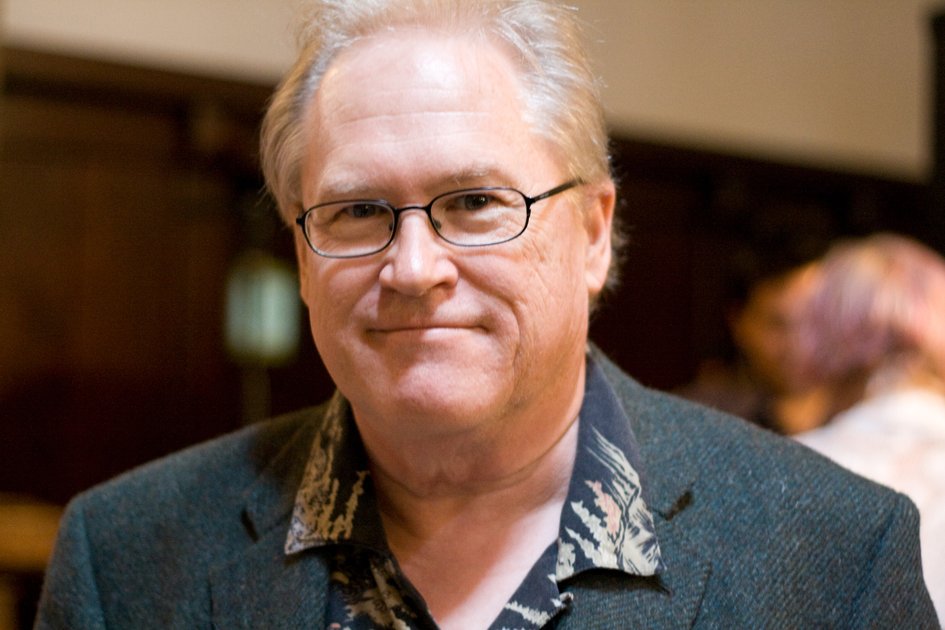
He was the tech industry's most relentless contrarian. For decades, he spent his time predicting the failure of tools and architectures that we now can't live without. It's a funny thing, watching someone be consistently wrong about the future while being technically right about the problems.
Then there's the Giant Voice System. On paper, it sounds like a fever dream from a mid-century sci-fi novel. In practice, it's a reminder that the most efficient way to solve a problem usually involves a level of absurdity we're too scared to try.
I've spent a lot of time looking at how these two things overlap. It turns out that the gap between a "failed" prediction and a working system is usually just a matter of timing and a bit of stubbornness. We should probably talk about why that happens.
The Art of the Contrarian
John C. Dvorak made a career out of being wrong. While other tech journalists tried to predict the future with cautious accuracy, Dvorak leaned into the role of the professional skeptic. He didn't just disagree with the industry consensus; he attacked it. This approach turned his InfoWorld columns into appointment reading because he provided a foil to the relentless optimism of Silicon Valley.
The appeal wasn't in his accuracy. His wrong predictions are often more interesting than the right ones because they highlight the blind spots of the era. When he dismissed the viability of certain consumer electronics, he wasn't just guessing; he was testing the logic of the product's existence. It's a rare skill to be consistently loud and frequently incorrect while still maintaining a readership.
He stayed in the game until he was 74 years old, moving from print to ZDTV. The technical side of his influence was less about the hardware he reviewed and more about the discourse he triggered. He forced developers and CEOs to defend their roadmaps against a critic who didn't care about their marketing slides.
If you want to simulate that kind of contrarian logic in a modern context—say, building a simple bot to play devil's advocate for a product feature—you can use a basic prompt wrapper to force a skeptical perspective.
def contrarian_critique(feature_description):
    # This forces the AI to find a flaw rather than agree
    prompt = f"Argue why the following feature is a waste of time: {feature_description}"
    return prompt

feature = "AI-powered automatic email sorting"
print(contrarian_critique(feature))
A Career of Bold Predictions
John C. Dvorak spent decades predicting the collapse of technologies that ended up defining the modern world. He was 74 when he died, and for a long time, his InfoWorld columns were appointment reading because he took stances that felt visceral. He didn't just disagree with a trend; he bet against it. He famously predicted that the internet would be a niche tool for academics and that the "information superhighway" was a fantasy.
The tension here is that Dvorak's skepticism often ignored the compounding nature of software. He viewed hardware as the only real constraint. If a device was bulky or a connection was slow, he assumed it would stay that way. It's a common mistake for people who think linearly about a world that moves exponentially. To see how that logic fails, you can look at how we handle basic network requests today compared to the dial-up era he dismissed.
import requests

response = requests.get('https://api.github.com')
print(f"Status: {response.status_code}")
His legacy is a mix of genuine insight and loud misses. Some people remember him as a contrarian for the sake of it, while others saw him as the only person in the room pointing out the obvious flaws in a product. Whether he was right or wrong usually depended on whether the engineers managed to shrink the hardware fast enough to make his objections irrelevant.
Influence on Tech Journalism
The fondness for Dvorak's early run reveals a specific kind of nostalgia for the "personality" era of tech writing. Back then, a writer could be a provocateur or a contrarian and still be respected as a primary source of truth. Today, we've largely traded that kind of individual flair for a sterilized, SEO-driven consensus. I think we've lost something in that trade. We get more accuracy now, but we get fewer writers willing to take a swing at a prediction and be spectacularly wrong about it.
The confusion over Dvorak's age at the end is a small but telling detail. It suggests that for many, the persona of the tech pundit mattered more than the actual biography of the person. He was a character in the narrative of the PC boom.
I'm left wondering if the current era of tech journalism is too cautious. We spend so much time avoiding being "wrong" that we've stopped being interesting. Is it possible to have a modern version of that personality-driven analysis without falling into the trap of just being another loud voice on X?
Conclusion
Dvorak spent his career treating predictions like a volume knob, cranking it to ten just to see who would flinch. Whether he was right or wrong mattered less than the fact that he was loud. He turned the tech critic into a professional contrarian, proving that a bold, incorrect guess often gets more mileage than a cautious, correct one.
I'm still not sure if that's a legacy worth mimicking. We've traded the eccentricities of one man for an entire industry of "hot takes" designed for the algorithm. If the goal was to move tech journalism away from dry product reviews and toward actual personality, he won. But looking at the state of the discourse now, you have to wonder if we're better off.