Kimi K3: Autonomous GPU Programming and Chip Design
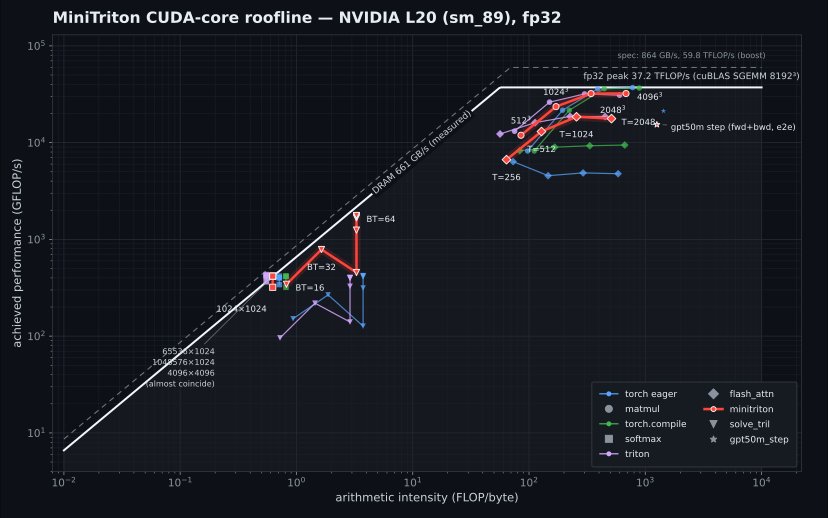
Kimi K3 isn't just summarizing emails or writing Python scripts. It's autonomously designing GPU compilers and 45nm silicon chips from scratch. I've seen plenty of "agentic" claims lately that basically just mean the AI can click a few buttons in a browser, but building a Triton-like compiler with its own IR layer and a PTX code-generation pipeline is something else entirely.
The "vision in loop" part is where it actually gets interesting. Instead of just guessing what the output looks like, it iterates between writing code and analyzing live screenshots. It sees the mistake, fixes the code, and checks the screen again. It's a tight feedback loop that makes the usual prompt-and-pray workflow feel prehistoric.
Moonshot AI is pushing this toward a full-blown workspace with everything from IDE agents to browser extensions. It's a lot of surface area to cover, and I'm skeptical about whether one model can actually handle all these different modalities without losing precision. The real question is whether this is a genuine leap in reasoning or just a very clever set of specialized tools wrapped in a single brand.
The Architecture of Sparsity
Kimi K3 uses a Mixture of Experts (MoE) architecture to manage a 2.8T parameter scale without melting a data center. Instead of running every parameter for every token, it activates only 16 out of 896 experts. This sparsity is why it sees a 2.5× improvement in scaling efficiency over K2. It's a clever way to get the reasoning capabilities of a massive model while keeping the compute cost per token manageable.
The 1-million-token context window is the real draw for developers. It's not just a vanity metric; it's actually useful for ingestion of entire codebases. I've seen a lot of "long context" windows that suffer from severe needle-in-a-haystack degradation, but K3 handles GPU kernel optimization tasks better than GPT 5.5. This is evidenced by MiniTriton, which matches or beats Triton and torch.compile on supported roofline benchmarks.
This part is genuinely confusing: the claim that K3 designed a chip for a nano model in a 48-hour autonomous run using the Nangate 45nm library. It sounds like a marketing fever dream, but the fact that it used open-source EDA tools makes it a plausible, if narrow, proof of concept.
If you're trying to benchmark these kinds of optimizations, you're likely dealing with Triton kernels. Here's a basic example of how you'd define a simple vectorized addition in Triton, which is the kind of low-level optimization K3 is targeting.
import triton
import triton.language as tl

@triton.jit
def add_kernel(x_ptr, y_ptr, output_ptr, n_elements, BLOCK_SIZE: tl.Pointers):
    # Calculate the offset for this specific program instance
    pid = tl.program_id(0)
    offsets = pid * BLOCK_SIZE + tl.arange(0, BLOCK_SIZE)

    # Load data from DRAM to SRAM
    x = tl.load(x_ptr + offsets)
    y = tl.load(y_ptr + offsets)

    # Perform the addition and store the result back
    output = x + y
    tl.store(output_ptr + offsets, output)
Vision-in-Loop Interactivity
K3 moves beyond simple text-to-code generation by using a visual feedback loop. Instead of guessing if a UI looks right based on a text description, the model generates code, renders a live screenshot of the result, and then iterates on that image. It's a shift from "write this" to "look at this and fix it." This makes it possible to turn a static video or a rough sketch into a functional interactive experience because the model is actually seeing the layout errors it created.
The scale of the model supports this level of reasoning. K3 is a Mixture-of-Experts (MoE) architecture with 2.8T parameters, though it only activates 16 out of 896 experts for any given task. This sparsity is likely why it achieves a 2.5× improvement in scaling efficiency over K2. It also handles a 1-million-token context window, which is necessary when you're feeding the model long chains of code and visual state updates.
The actual capability of this loop is best seen in hardware design rather than just web buttons. K3 spent 48 hours autonomously designing a chip for a nano model using the Nangate 45nm library and open-source EDA tools. It didn't just draft the design; it optimized and verified it. In GPU kernel optimization tasks, it outperformed GPT 5.5 and GPT 5.6 Sol.
If you're trying to implement a similar feedback loop for a UI component, you'd typically wrap your generation in a cycle that captures the DOM state or a screenshot and feeds it back as a prompt.
def refine_ui(prompt, screenshot_api):
    code = model.generate(prompt)
    # Render code to a temporary URL and take a screenshot
    screenshot = screenshot_api.capture(code)
    # Feed the image back to the model to find discrepancies
    final_code = model.generate(f"Fix the layout in this image: {screenshot}", code)
    return final_code
The MiniTriton results are the most interesting part here. It performs on par with or better than torch.compile on supported roofline benchmarks. This isn't just a "better chatbot"; it's a system that understands the relationship between high-level intent and low-level hardware execution.
Real-World Agent Performance
Public benchmarks are mostly noise. To actually see if these agents work, you have to move to internal workflow evaluations. In GPU kernel optimization, Kimi K3 is competitive with Fable 5 and beats GPT 5.5 and 5.6. This is a specific, hard skill where the model isn't just predicting text, but managing memory alignment and thread synchronization.
The architecture is a Mixture of Experts (MoE) with 2.8T parameters, though it only activates 16 out of 896 experts at a time. It has a 1-million-token context window. These specs result in a 2.5× improvement in scaling efficiency over K2.
The most interesting proof of concept is how K3 handled chip design. In a 48-hour autonomous run, it used open-source EDA tools and the Nangate 45nm library to build and verify a chip for its own nano model. That's a lot of trust to put in an agent, but the result is a concrete piece of hardware.
For those writing their own kernels, the MiniTriton implementation is the part to watch. It matches or beats Triton and torch.compile on supported roofline benchmarks. You can test this level of optimization by writing custom kernels that bypass standard Python overhead.
import triton
import triton.language as tl

@triton.jit
def add_kernel(x_ptr, y_ptr, output_ptr, n_elements, BLOCK_SIZE: tl.constexpr):
    # Calculate the offset for the current program instance
    pid = tl.program_id(0)
    block_start = pid * BLOCK_SIZE
    offsets = block_start + tl.range(0, BLOCK_SIZE)
    mask = offsets < n_elements

    # Load data from pointers and perform vectorized addition
    x = tl.load(x_ptr + offsets, mask=mask)
    y = tl.load(y_ptr + offsets, mask=mask)
    tl.store(output_ptr + offsets, x + y, mask=mask)
The Roadmap for Effort Modes
Effort modes are a way to trade compute costs for reasoning depth. Instead of one-size-fits-all inference, you choose whether the model spends a few milliseconds on a response or spends minutes "thinking" through a complex problem. This is necessary because high-reasoning tasks are expensive. Kimi K3 handles this with a Mixture of Experts (MoE) architecture that only activates 16 out of 896 experts.
The efficiency gains are measurable. K3 shows a 2.5× improvement in scaling efficiency over K2. It's a massive model with 2.8T parameters and a 1-million-token context window, but the sparsity is what makes the effort modes viable. This architecture allows it to beat Opus 4.8 and keep pace with GPT 5.6 Sol in GPU kernel optimization.
The most interesting proof of concept is how it handles hardware design. K3 used open-source EDA tools and the Nangate 45nm library to build, optimize, and verify a chip for a nano model in a 48-hour autonomous run. This is an impressive use of the high-effort mode, as it requires the model to maintain a coherent state across a long-term project without human intervention.
To implement a similar toggle for effort levels in an API call, you'd typically adjust the maxcompletiontokens or a specific reasoning_effort parameter:
response = client.chat.completions.create(
    model="kimi-k3",
    messages=[{"role": "user", "content": "Optimize this CUDA kernel"}],
    # 'high' triggers more internal reasoning steps (compute-heavy)
    reasoning_effort="high",
    max_completion_tokens=4096
)
print(response.choices[0].message.content)
The performance is real, especially with MiniTriton, which matches or beats Triton and torch.compile on supported roofline benchmarks. It's a lot to track, and the pace of these releases is genuinely exhausting. I don't blame developers who feel they can't keep up with the evaluation cycle.
Beyond Coding: Autonomous Hardware Engineering
Building a compiler from scratch is a different beast than writing a React component or a Python script. Most LLMs can hallucinate a function and you'll find out when the tests fail. But when you're dealing with tile-level IR and PTX code generation, you're working in a space where the feedback loop is brutal and the margin for error is zero. The fact that K3 can architect a Triton-like system suggests it isn't just predicting the next token based on common GitHub patterns; it's actually managing the structural dependencies of a complex hardware pipeline.
I see people comparing K3 to Sonnet or GPT-5.6 based on benchmark scores, but those numbers are mostly noise. What actually matters here is the 1M context window paired with this kind of specialized engineering capability. If a model can hold an entire hardware specification and a codebase in its head without losing the thread, the bottleneck shifts from "can the AI write this?" to "can the human verify it?" I think we're underestimating how much friction there is in the verification step. Even with a working MiniTriton, you still need a human who understands MLIR to tell the model why a specific optimization pass is tanking performance on a H100.
The real question is whether this is a general capability or if K3 was just exceptionally well-aligned on the specific, dense documentation of the LLVM/MLIR ecosystem. If it's the latter, it's a great tool for a niche group of engineers. If it's the former, we're looking at a shift where the "compiler engineer" role becomes more about auditing architectural decisions than writing the passes themselves.
Conclusion
Building a Triton-like compiler with a custom IR and PTX pipeline isn't just "good coding"—it's a high-wire act of systems engineering. The fact that Kimi K3 can synthesize MiniTriton from scratch suggests we're moving past simple snippet generation and into the territory of actual architectural design.
I'm still skeptical about whether this translates to a reliable daily workflow. The "vision-in-loop" iteration is a clever trick for polishing a UI, but it's a different beast entirely when you're debugging a race condition in a GPU kernel. We'll see if the promised low- and high-effort modes actually solve the consistency problem or if they're just labels for different temperature settings.
The real question is whether we want AI designing the very compilers that optimize the AI. If Kimi K3 can autonomously engineer hardware-level systems, the gap between a conceptual sketch and a working chip is getting dangerously small.