Scaling Robot Foundation Models: Xiaomi-Robotics-1 Analysis
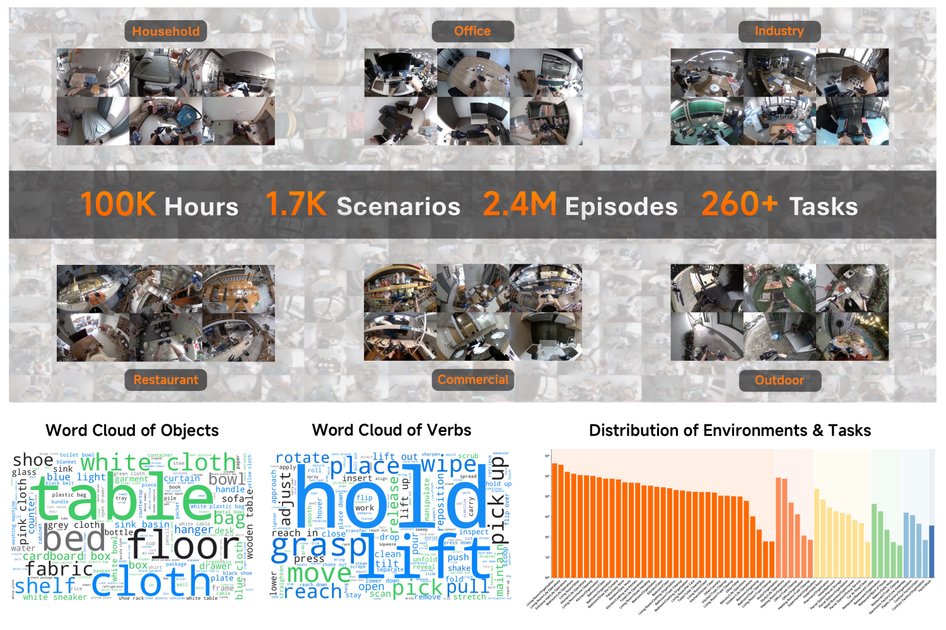
The biggest problem with robot foundation models isn't the compute or the architecture. It's the data. We've hit a wall because collecting high-quality, real-world robot trajectories is slow, expensive, and frankly a nightmare to scale. Most companies are just trying to scrape more videos and hoping for the best.
Xiaomi is taking a different bet with Xiaomi-Robotics-1. Instead of obsessing over robot-specific data from the start, they're using embodiment-free pre-training. They basically trained the model on a massive amount of general manipulation data before bothering with the specifics of the hardware. It's a gamble on the idea that "how to move" is a general skill that can be learned before you even know what your "body" looks like.
The results in simulation are actually surprising. They're hitting state-of-the-art marks across four different benchmarks. It suggests that the bottleneck we've all been complaining about might not be a lack of robot data, but our insistence that the data has to come from a robot.
The real question is whether this translates to the physical world. Simulation is one thing, but a robot that's "generally smart" still has to deal with the friction and unpredictability of a real living room.
The Robot Data Bottleneck
Robot learning is slow because physical data is expensive. You can't scrape the real world like a LLM scrapes the web; you need a physical arm, a controlled environment, and hours of manual teleoperation for every single task. This creates a massive bottleneck where the model is starving for diverse examples of how to actually move in 3D space.
The workaround is "embodiment-free" pre-training. Instead of training a model on a specific robot's joint angles, you train it on videos of humans doing things. The model learns the visual logic of a task—like how to unscrew a cap—without needing to know the exact dimensions of the robot's gripper. This is a bit of a gamble because it's not always clear how well these models generalize to robots they weren't trained on.
UMI (Universal Manipulation Interface) tries to solve this by decoupling data collection from the hardware. It uses a camera-based system to record demonstrations that can be re-targeted to different robots. It's essentially a way to scale knowledge without needing a fleet of physical robots running 24/7.
To get a basic UMI-style environment running for data processing, you'll need the core dependencies:
pip install torch torchvision omegaconf
pip install numpy opencv-python
If you're handling the data, you'll likely use a YAML config to define the robot's workspace and camera offsets so the model knows where the "hand" is in relation to the video frame.
robot_config:
  name: "ur5_mimic"
  camera_offset: [0.5, 0.0, 1.2] # X, Y, Z in meters
  gripper_width: 0.08
  sampling_rate: 20 # Hz
Benchmark Performance
The model's performance across the four mainstream simulation benchmarks is high, but the real question is whether these scores translate to the physical world. High marks in these specific environments matter because they prove the model can handle basic spatial reasoning and physics constraints without collapsing. If a model can't solve a simulated pick-and-place task, it'll never survive a messy warehouse.
The gap between simulation and reality is where things get confusing. A model might score in the 90th percentile on a benchmark but fail the moment the robot's arm is 2cm longer than the training data specified. This is the generalization problem: the model isn't learning "how to move," it's often just memorizing the specific geometry of the simulator.
To test this yourself, you can use a basic physics wrapper to see how a model handles varying object masses. If the model can't adjust its grip force when an object's weight changes from 100g to 500g, the benchmark score is mostly vanity.
import simulation_env as env

robot = env.Robot()
for mass in [0.1, 0.5]:
    obj = env.Object(mass=mass)
    action = robot.predict_grasp(obj)
    print(f"Mass: {mass}kg | Applied Torque: {action.torque}")
Generalizability to new robot embodiments is still a struggle. Most models are overfit to the specific joint limits and sensor noise of the simulation they were born in. Until we see scores that stay consistent across different arm lengths and camera angles, these benchmarks are just a baseline, not a guarantee of real-world utility.
From Simulation to Physicality
SOTA results on simulation benchmarks are a start, but they aren't the finish line. I've seen too many models "solve" a simulated environment only to struggle with the unpredictability of a real living room—where lighting changes and dust gathers on sensors. The gap between a clean simulation and a physical robot is usually where the actual engineering happens, and we haven't seen the real-world telemetry yet.
The community is already asking about generalization and cooperation, and I think that's where the focus should be. A robot that can perform a specific set of tasks in a controlled digital space is useful for research, but it doesn't tell us if the model can handle a messy kitchen or work alongside another bot without colliding. Most of the chatter is about household automation, but there's a massive difference between "performing a task" and "being reliable enough to leave alone in a house."
I'm skeptical that simulation leads directly to physical utility. The real question is whether these benchmarks are actually measuring the skills needed for a home environment, or if they're just measuring the model's ability to solve the simulation itself.
Conclusion
Xiaomi-Robotics-1 proves that the "robot data bottleneck" isn't an immovable wall, but it is still a massive hurdle. Using 100K hours of real-world trajectories and embodiment-free UMI pre-training to hit state-of-the-art results across four benchmarks is a legitimate technical win. It shows that we can actually borrow the LLM playbook—pre-train for general representations, then align for specific tasks—and have it actually work in physical space.
Still, I'm not convinced we've solved the scaling problem. Simulation benchmarks are one thing, but the gap between a controlled lab environment and a messy living room is where these models usually fall apart.
The real question is whether this approach scales linearly. Does the jump from 100K hours to 1 million hours actually yield a "smarter" robot, or are we just hitting a ceiling of diminishing returns with current UMI data?