Understanding Indoor Air Quality and CO2 Levels
Did you know that even a tiny uptick in CO2 levels can leave you feeling foggy and less productive? It's wild to think our surroundings, something we often overlook, can have such an immediate effect on how we think and collaborate. Imagine gathering your top talent to make crucial decisions, only to find that after a couple of hours, the room's air quality is slowly sabotaging your efforts.
Mike Bowler, known for his insights on agile practices and team dynamics, dives into the psychology and neuroscience of why teams often hit a wall just when they need to be at their sharpest. Anxieties can bubble up, focus can drift, and all of a sudden, those smart, creative minds are struggling to keep pace. The science around this is fascinating and a bit unsettling. How can something so seemingly mundane as air quality derail high-stakes conversations?
As we peel back the layers, it becomes clear that our environments play a critical role in our productivity and well-being. What are the implications for how we design our workspaces and meetings? Let’s explore this connection and see what we can do to keep our teams operating at their best, even when the air might be working against them.
The Science of CO2 Levels
Understanding CO2 levels in indoor environments is crucial for maintaining good air quality and overall health. Carbon dioxide (CO2) is a natural component of the air we breathe, but its concentration can have significant implications for cognitive function and well-being. A baseline level of 400 parts per million (ppm) is generally accepted as a standard for outdoor air. When indoor levels exceed this baseline, it raises concerns about air quality and health effects.
Research has shown that CO2 levels above 1,000 ppm can start to impair cognitive abilities, leading to issues such as decreased focus and increased fatigue. In fact, even levels above 400 ppm can be problematic. At 1,430 ppm, studies suggest that cognitive performance can decline noticeably, making it essential to monitor indoor air quality, especially in crowded or poorly ventilated spaces.
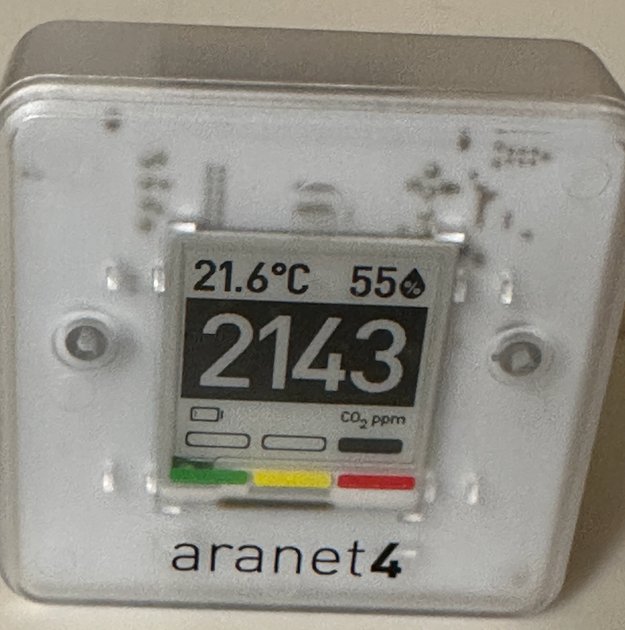
Devices like the Aranet4 can help you keep track of CO2 levels in real time. This gadget can measure concentrations up to 5,000 ppm, allowing users to identify when ventilation is necessary to maintain a healthy indoor environment. Many users have reported improvements in their cognitive function and overall alertness after addressing high CO2 levels. One user even noted, “Buying one of these gadgets killed my brain fog,” highlighting the tangible benefits of being aware of CO2 concentrations in living and working spaces.
Monitoring CO2 levels isn't just about improving comfort; it’s about safeguarding our health. As indoor environments become increasingly insulated and energy-efficient, ensuring adequate ventilation to keep CO2 levels in check will be more important than ever. The challenge is clear: we need to be proactive about air quality to avoid potential health risks associated with elevated CO2 levels.
The Impact of Elevated CO2 on Performance
Increased CO2 levels can significantly impact mental performance and productivity. Research has shown that as CO2 concentrations rise, cognitive function tends to decline. For instance, a concentration of 143 ppm (parts per million) can lead to noticeable reductions in cognitive abilities, while levels around 1,000 ppm are often considered the threshold for poor indoor air quality. This isn't just a trivial detail; it has real consequences for workplace productivity and overall mental clarity.
One study highlighted that at 1,000 ppm, tasks requiring complex decision-making suffer. You might find yourself struggling to focus or to think critically. It's akin to trying to solve a puzzle in a dimly lit room—your environment directly affects your ability to perform. Conversely, CO2 levels below 1,000 ppm are generally seen as acceptable, and many people report improved focus and clarity of thought in these conditions. Anecdotal evidence also backs this up; one user remarked, "Buying one of these gadgets killed my brain fog," emphasizing the difference better air quality can make.
While this area of study might seem niche, it matters in our increasingly indoor-centric lives. Workplaces, schools, and homes should consider CO2 monitoring tools, such as the Aranet4, which provides real-time data on indoor air quality. By keeping tabs on CO2 levels, we can take proactive steps to maintain an environment that supports, rather than hinders, our cognitive performance.
Measuring Indoor Air Quality
The ongoing discussion about measuring indoor air quality reveals a range of perspectives that underscore the complexities of this issue. On one hand, there's a clear acknowledgment of the need for better decision-making in spaces where people gather, like offices and meeting rooms. Many community members contend that the typical indoor environment often leads to diminished mental clarity, which can be exacerbated by poor air quality. This points to a significant gap in how we design and utilize our workspaces. I find it concerning that many organizations remain unaware of the impact indoor air quality has on productivity and overall well-being.
The idea of outdoor meetings as a solution is intriguing. They can offer immediate benefits of fresh air and improved mental focus. However, this is not always practical or feasible for every organization. It highlights an existing friction between traditional meeting practices and the growing awareness of air quality impacts. This is where the call for CO2 monitoring in everyday devices comes in. Such monitoring could help raise awareness about indoor air quality, but I’m skeptical about how effectively this will be adopted in practice. Awareness doesn’t guarantee action, and without clear incentives, it may remain low on the priority list for many.
The availability of affordable air quality monitors is a positive development that could empower individuals and organizations to take charge of their environments. However, widespread adoption will depend on how effectively these devices can be integrated into existing workflows and whether their data can be interpreted meaningfully. Ultimately, my sense is that while there’s momentum around understanding indoor air quality, translating that into actionable change remains a significant hurdle. As we move forward, I question how institutions will balance these considerations against the inertia of established practices.
Practical Solutions for Better Air Quality
The ongoing conversation about air quality solutions reveals a significant gap in how we approach indoor environments. Many people acknowledge that decision-making in meetings can be inefficient, and the air quality during these gatherings often goes unnoticed. Holding meetings outdoors might not only improve mental clarity but also provide a tangible benefit to participants by significantly lowering CO2 levels. Yet, this isn't a blanket solution; weather and location constraints still impose limitations.
The introduction of CO2 monitoring in everyday devices could be a game-changer for awareness, but I wonder if the average person will truly engage with this information. There’s a risk that without clear, actionable insights derived from these readings, users may not change their behavior. On the other hand, the increasing availability of affordable air quality monitors could democratize access to this critical data, potentially pushing more people to take their indoor air quality seriously.
The community reaction suggests a burgeoning recognition that air quality is intertwined with productivity and well-being, yet I question whether this awareness will translate into actual change in behavior or infrastructure. What tangible steps will organizations take to integrate this understanding into their work environments? How will individuals incorporate this information into their daily lives? These are questions that remain open as we navigate the complexities of improving air quality.
Conclusion
As it turns out, the air we breathe indoors can significantly impact our decision-making and productivity—often without us even realizing it. When CO2 levels creep up to 1,000 ppm or beyond, cognitive performance can slip, leading to poorer decisions in those critical meetings we often hold in stuffy rooms. It's unsettling to think that the most important discussions might be happening in an environment that is subtly sabotaging our effectiveness.
So what’s next? If you’re responsible for team environments, consider investing in air quality monitors like the Aranet4. Staying aware of CO2 levels could be a straightforward step toward better outcomes—though it may also mean facing the uncomfortable reality that just because you can’t feel the air getting worse doesn’t mean it isn’t. What will you do the next time your team gathers to make a tough call?