Diátaxis Framework
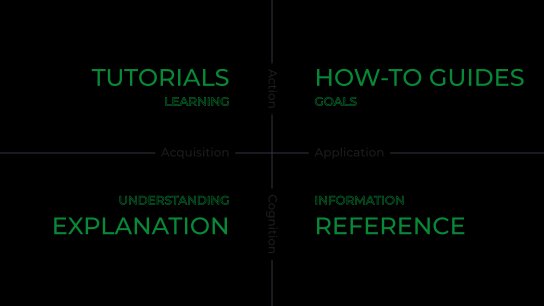
I've been writing tech docs for years, and I've seen my fair share of frameworks and methodologies come and go. But Diátaxis, a documentation framework that's been gaining traction lately, has really caught my attention. What sets it apart, in my opinion, is its focus on creating user-centered content - it's not just about writing clear instructions, but about understanding what users actually need to know.
The idea behind Diátaxis is simple: it's a framework that helps tech writers create documentation that's tailored to the user's journey. It's based on four main principles: tutorials, which help users get started; explanations, which provide context and background information; reference materials, which offer detailed technical specs; and troubleshooting guides, which help users resolve common issues. I've been exploring Diátaxis for a while now, and I'm impressed by its potential to streamline the documentation process - but I'm also curious to see how it holds up in real-world scenarios.
As I dug deeper into Diátaxis, I started to notice that it's not just about following a set of rules or guidelines - it's about understanding the nuances of user behavior and adapting your documentation strategy accordingly. For example, what happens when users don't follow the expected learning path? How can we create documentation that's flexible enough to accommodate different learning styles and preferences? These are the kinds of questions that I think Diátaxis can help answer, and I'm excited to explore them further.
One thing that's still unclear to me, though, is how Diátaxis will scale in complex, large-scale documentation projects. Will it become too cumbersome, or too rigid, when dealing with multiple authors and stakeholders? I'm not sure yet, but I'm looking forward to finding out - and to sharing my thoughts on how Diátaxis can be applied in real-world scenarios, with all its potential benefits and challenges.
Introduction to Diátaxis
Diátaxis is a documentation framework that's gaining traction, and for good reason. At its core, Diátaxis is about creating documentation that's tailored to the user's needs, rather than just dumping information. It's based on four core principles: tutorials, how-to guides, reference materials, and explanations. This structure is designed to help users achieve their goals, whether that's learning a new skill or troubleshooting an issue.
What sets Diátaxis apart from traditional documentation approaches is its focus on the user's journey. It's not just about listing features or providing a glossary of terms; it's about creating a narrative that guides the user through the process. This approach has several benefits, including reduced frustration and increased user engagement. As Greg Frileux from Vonage notes, "Diátaxis has allowed us to build a high-quality set of internal documentation that our users love, and our contributors love adding to." This quote highlights the value of Diátaxis in creating documentation that's both useful and maintainable.
One of the key benefits of Diátaxis is its flexibility. It can be applied to a wide range of documentation types, from technical guides to user manuals. It's also relatively easy to implement, as it doesn't require a significant overhaul of existing documentation. To get started with Diátaxis, you can begin by identifying the different types of content you need to create, such as tutorials or reference materials. For example, you might create a tutorial that walks the user through a specific task, like setting up a new project:
import os

project_name = "my_project"
project_path = os.path.join(os.getcwd(), project_name)

os.makedirs(project_path, exist_ok=True)

print(f"Project '{project_name}' created successfully.")
This code example demonstrates how Diátaxis can be used to create practical, step-by-step guides that help users achieve their goals.
In terms of benefits, Diátaxis offers several advantages for both users and writers. For users, it provides a clear and concise way to learn new skills or troubleshoot issues. For writers, it offers a structured approach to creating documentation, which can help reduce the time and effort required to produce high-quality content. Overall, Diátaxis is a valuable framework for anyone looking to create effective and user-friendly documentation.
Diátaxis in Context
Diátaxis is often discussed in the context of other documentation frameworks and methodologies, but it's not necessarily a replacement for them. It's more of an approach that can be used alongside existing methods to create comprehensive documentation. For instance, Diátaxis can be combined with the FMCD framework, which focuses on creating a clear information architecture, to create a robust documentation system.
One of the limitations of Diátaxis is that it can be time-consuming to implement, especially for large and complex projects. It requires a significant amount of effort to create high-quality documentation that meets the Diátaxis principles. However, as Greg Frileux from Vonage notes, "Diátaxis has allowed us to build a high-quality set of internal documentation that our users love, and our contributors love adding to." This suggests that the benefits of Diátaxis can outweigh the costs, especially in the long run.
To get started with Diátaxis, you can begin by assessing your existing documentation and identifying areas where the Diátaxis principles can be applied. For example, you can use the following bash command to create a new documentation directory and initialize it with a basic structure:
mkdir docs && cd docs && mkdir tutorial && mkdir reference && mkdir explanation && mkdir howtoThis will create a basic directory structure that can be used to organize your documentation according to the Diátaxis principles.
It's also worth noting that Diátaxis is not a one-size-fits-all solution, and it may not be suitable for all types of projects or organizations. For example, projects with very simple documentation needs may not require the level of complexity that Diátaxis provides. On the other hand, large and complex projects may benefit from the structured approach that Diátaxis offers. Ultimately, the decision to use Diátaxis should be based on the specific needs and goals of the project.
In terms of combining Diátaxis with other approaches, there are several options available. For example, you can use Diátaxis to create a comprehensive documentation system, and then use other frameworks or methodologies to fill in the gaps. Alternatively, you can use Diátaxis as a starting point and then add additional structure or complexity as needed. The key is to find an approach that works for your project and your team, and to be willing to adapt and evolve as needed.
Overall, Diátaxis is a powerful approach to documentation that can help create high-quality, user-friendly documentation. While it's not without its limitations, it can be a valuable tool for projects and organizations that are looking to improve their documentation and communication.
Applying Diátaxis in Practice
I've been thinking a lot about what it means to apply Diátaxis in practice, and I'm still not convinced that it's a straightforward process. On one hand, the idea of creating documentation that is structured around the needs of the user, rather than the structure of the product itself, makes a lot of sense. It's an approach that acknowledges that users have different goals and levels of expertise, and that documentation should be tailored to meet those needs.
But when I think about how this would play out in real-world scenarios, I start to get a little skeptical. For example, how do you balance the need for concise, easy-to-follow documentation with the need for comprehensive, detailed information? I think this is an area where Diátaxis could potentially fall short, especially for complex products or systems that require a lot of context to understand. I'm not saying it's impossible, but I do think it's a challenge that would require some careful consideration and planning.
One thing that I do think is interesting about Diátaxis is the way it emphasizes the importance of understanding the user's workflow and goals. This is something that I think is often overlooked in documentation, which can sometimes focus too much on the features and functionality of the product, rather than how the user will actually be using it. By taking a more user-centered approach, Diátaxis has the potential to create documentation that is more effective and more engaging for the user.
As I consider the potential implications of Diátaxis, I'm left with a question: how will this approach scale for large, complex products or systems? Will it be possible to create documentation that meets the needs of a wide range of users, or will it become too cumbersome and difficult to maintain? I'm not sure I have the answer to that question yet, and I think it's something that will require further exploration and experimentation to fully understand.
Conclusion
I'm still not sure what to make of the Diátaxis Framework, despite its promise of user-centered documentation. The idea of structuring docs around the four modes of tutorials, how-to guides, reference materials, and explanations sounds intuitive, but it's hard to shake the feeling that this is just another framework in a long line of attempts to systematize the inherently messy process of writing good documentation. The fact that Diátaxis has already gained significant traction, with translations into multiple languages and a dedicated community, suggests that it's onto something - but I'd like to see more concrete examples of how it's improved documentation in real-world projects before I'm fully convinced.
One thing that does resonate with me is the emphasis on context and understanding the user's needs. In an era where documentation is often treated as an afterthought, it's refreshing to see a framework that prioritizes the reader's experience. Whether or not Diátaxis ultimately becomes the standard for user-centered documentation, its focus on empathy and clarity is a step in the right direction. As I finish writing this, I'm left wondering: will Diátaxis become a widely-adopted standard, or will it fade into the background as just another documentation fad? Only time will tell.