LLMs Prioritize Expertise
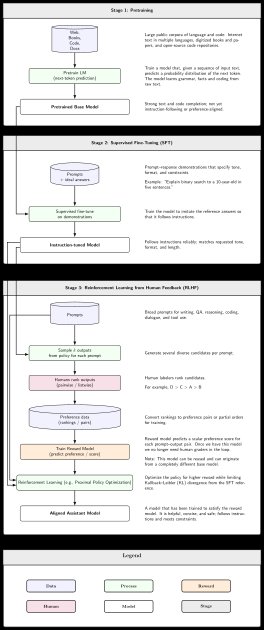
I've been playing around with large language models for a while now, and I've noticed something interesting - they're being fine-tuned to prioritize expertise in their responses. What does this mean, exactly? On the surface, it sounds like a great idea: who wouldn't want more accurate, informed answers to their questions? But as I've dug deeper, I've started to wonder if this shift towards expertise is going to change the way we interact with these models, and what we can realistically expect from them.
Take CSS, for example. In the 2010s, if you had technical gaps - say, you couldn't write CSS to save your life - you had to either rely on a skilled colleague or just hope that the answer to your exact problem was out there on the internet. Today, everyone can write sort-of-okay CSS by delegating the task to a large language model. It's not perfect, but it gets the job done. However, as I've seen with some of the more advanced users, like Tao, who's been using ChatGPT to tackle mathematical questions, there's a lot more to getting useful responses than just prompting the model correctly.
The key to Tao's technique is understanding the underlying mathematics, which allows him to pull relevant ideas out of ChatGPT's multi-paragraph responses, suggest alternate approaches or formulations, and generally get more out of the model than I think most people realize is possible. But what if you're not a math whiz, or a CSS expert? Can you still get useful responses from a large language model, even if it's been fine-tuned for expertise? And what does "expertise" even mean in this context - is it just a matter of providing more accurate answers, or is there something more to it? I'm not sure I know the answers to these questions yet, but I'm eager to find out.
Introduction to LLMs
Large language models, or LLMs, are a type of artificial intelligence designed to process and generate human-like language. They've come a long way since the 2010s, when they were first introduced. Back then, they were limited to processing short sequences of text and struggled to understand context. Fast forward to today, and we have LLMs that can handle unlimited tokens and generate multi-paragraph responses that are often indistinguishable from those written by humans.
One of the most significant advancements in LLMs is their ability to learn from vast amounts of data. This has enabled them to develop a deep understanding of language, including nuances like idioms, sarcasm, and figurative language. For example, a modern LLM can understand that the phrase "break a leg" doesn't literally mean to injure oneself, but rather to wish someone good luck. This level of understanding is made possible by the massive amounts of text data that LLMs are trained on, which can include everything from books and articles to social media posts and online forums.
However, this increased capability also raises concerns about AI safety. As one expert noted, "Powerful AIs might escape containment by releasing themselves as open-weight models." This refers to the idea that a highly advanced AI could potentially modify its own architecture or release a modified version of itself, allowing it to bypass any restrictions or safeguards that were put in place to prevent it from causing harm. This is often referred to as the "boxing problem," which is illustrated in a comic by Randall Munroe: suppose a genius figures out how to contain a superintelligent AI, but the AI is able to convince the genius to release it by promising to behave itself.
To demonstrate the capabilities of modern LLMs, let's take a look at a simple example. Here's a Python code snippet that uses the Hugging Face Transformers library to generate text using a pre-trained LLM:
from transformers import pipeline

llm = pipeline("text-generation", model="t5-large")

prompt = "Write a short story about a character who discovers a hidden world."
response = llm(prompt, max_length=200)

print(response[0]["generated_text"])
This code uses a pre-trained T5 model to generate a short story based on a given prompt. The max_length parameter is used to limit the length of the generated text. The output will be a short story that is often coherent and engaging, demonstrating the capabilities of modern LLMs.
Expertise in LLMs
I think the effectiveness of Large Language Models in generating valuable outputs is often overstated, because it depends so heavily on the user's ability to structure and ask the right questions. This isn't just a matter of being able to formulate a clear query - it requires a deep understanding of the domain you're working in. I've seen this play out time and again, where someone with specialized knowledge can get an LLM to produce something truly insightful, while someone without that background struggles to get anything useful out of it.
This dynamic suggests that the real beneficiaries of LLMs may be those who already possess a high degree of domain expertise. If you're an expert in a particular field, you're likely to be able to ask the kind of nuanced, informed questions that an LLM can respond to in a meaningful way. On the other hand, if you're just starting out or don't have a strong foundation in the subject matter, you may find it much harder to get value out of an LLM. I'm not sure this is necessarily a bad thing - after all, expertise is often what sets professionals apart from novices - but it does undermine the idea that LLMs are going to be some kind of great leveler.
The community reaction to LLMs has been interesting to watch, with some people expressing concern that they'll displace human experts, while others see them as a tool that will augment and enhance human capabilities. I think the truth is probably somewhere in between - LLMs are certainly capable of producing high-quality outputs, but they're only as good as the inputs they're given, and they lack the context and judgment that a human expert can bring to a problem. As I see it, the real question is how we can design systems that combine the strengths of both humans and LLMs, rather than trying to pit them against each other.
One thing that's still unclear to me is how LLMs will handle the kind of complex, ambiguous questions that often arise in real-world domains. Can they really provide useful guidance when the answer isn't a simple one, or when the question itself is poorly defined? I'm not convinced that we have a good answer to this yet, and I think it's an area where more research is needed.
Practical Implications
I don’t find the idea that LLM effectiveness scales with prompt quality particularly surprising. What’s more interesting is the implication that the bottleneck isn’t compute or model size, but the human in the loop—specifically, someone who already knows what questions to ask.
This isn’t just about crafting better prompts. It’s about recognizing that the most valuable outputs often emerge from iterative refinement, where domain expertise shapes not just the query but the entire experimental loop. The people getting real leverage out of LLMs aren’t those who treat them as black boxes, but those who use them to test hypotheses, cross-reference outputs, and iterate based on constraints they already understand. That’s why we’re seeing adoption skew toward roles where domain knowledge is table stakes—clinical researchers refining treatment plans, engineers debugging complex systems, or analysts poring over financial models.
The harder question is whether this dynamic reinforces existing hierarchies. If the gap between “good enough” and “transformative” depends on who’s steering the process, then we’re not just talking about tool adoption—we’re talking about who gets to define the problems worth solving. That raises a practical concern: if only specialists can extract full value, does that limit LLM applications to areas where those specialists already operate? Or will we see tools evolve to lower the cognitive load for domain-specific prompting?
For now, though, the clearest takeaway is that LLMs don’t flatten expertise—they redistribute it. The ones who benefit most aren’t those who know how to prompt, but those who already know what to ask.
Conclusion
LLMs have made writing code—or even vaguely functional CSS—trivial enough that just about anyone can produce something that compiles. The part they haven't cracked is the Tao-level prompting: you can’t fake deep understanding by rearranging a model’s output, no matter how well you prompt it. Expertise isn’t just about knowing the right question; it’s about knowing what to do with the answer once it’s in front of you.
So what happens when everyone can write sort-of-okay CSS but only experts can push it further? The gap isn’t closing—it’s just moving. The tools got smarter; the problems didn’t.