Building a Physical Distraction Blocker for Writers That Actually Works
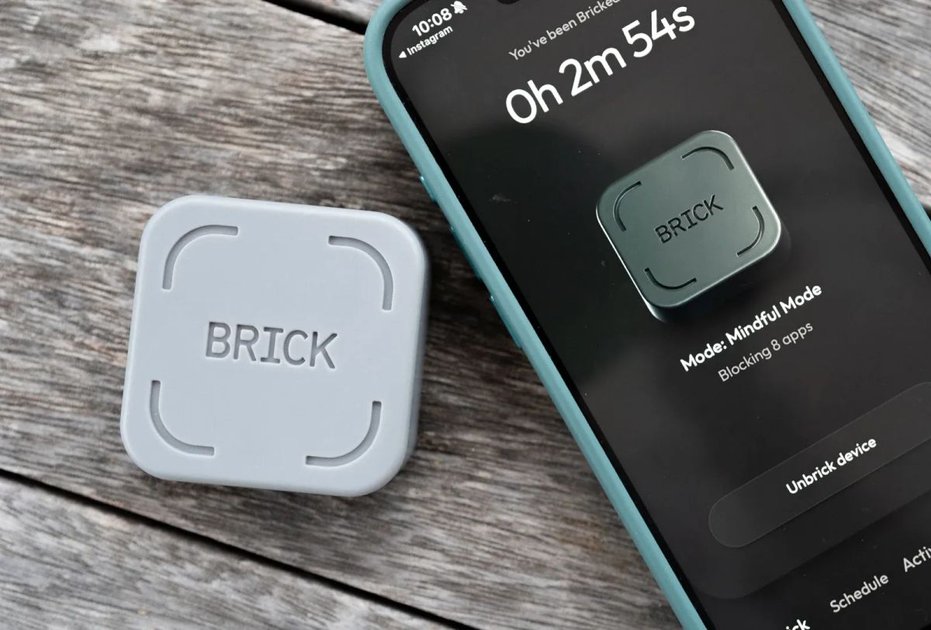
After months of fighting digital distractions with apps that failed, I built a simple hardware device that finally let me write without interruption.
Most digital wellness tools still live inside the same device they’re trying to tame, and in my experience, that’s usually why they fall apart. The problem isn’t that our phones lack settings — it’s that those settings rarely create enough resistance in the moment that matters. You can toggle focus mode a dozen times a day, but when the urge hits, it’s just one tap away from undoing all your good intentions.
So I stepped outside the screen. A physical switch. A separate device. Something that doesn’t rely on willpower or software nudges. It sounds almost too simple to work — and honestly, I wasn’t sure it would. But it did. And now I’m wondering: if the solution to digital overload isn’t more software, but less of it — what else have we been overcomplicating?
Why Software Solutions for Distraction Blocking Keep Failing
Software solutions for distraction blocking keep failing because they operate within the same environment they’re trying to protect you from. An app that blocks social media or games is still running on a device where you can open Task Manager, kill the process, or install a different browser. It’s not a barrier , it’s a suggestion wrapped in a modal dialog. Most users disable these tools within days, not because they lack willpower, but because the friction is too low to override. When the tool lives inside the system it’s meant to regulate, evasion becomes trivial.
This isn’t just about technical loopholes , it’s about cognitive load. Constantly switching between tasks, even to dismiss a blocking notification, fractures attention. Research shows it takes over 20 minutes to fully regain focus after an interruption, and most focus apps generate multiple interruptions per hour just by prompting you to reauthorize access or confirming you still want to block Twitter. The cure becomes part of the disease: you’re trading deep work for micro-decisions about whether to stay focused. Over time, this erodes the very habit of sustained attention these tools claim to build.
Physical barriers work better because they change the context, not just the interface. Leaving your phone in another room, using a dedicated e-reader with no internet, or working in a space where distracting devices aren’t present creates a behavioral cue that’s harder to ignore. You don’t rely on willpower to resist temptation , you remove the option entirely. Digital tools can’t replicate this because they lack spatial and temporal separation. Until focus software operates at the firmware or network level , think DNS filtering on a router, or a hardware kill switch , it will remain a placebo for productivity, easily dismissed when motivation dips. The most effective block isn’t an app; it’s the absence of choice.
Designing a Simple, Effective Hardware Distraction Blocker
I’ve been thinking a lot about how we design tools for focus, and honestly, most of what’s out there feels like a band-aid on a bullet wound. You slap on a website blocker, maybe turn off notifications, and call it a day , but the real distraction isn’t always the app or the site. It’s the habit of reaching for your phone when you’re stuck, the urge to check email when a task feels hard, the way your brain latches onto anything that feels easier than deep work. A hardware distraction blocker , something physical you flip or press , doesn’t just block signals; it creates a ritual. That’s what makes it different. It’s not about what it stops you from doing; it’s about what it helps you start doing instead.
I don’t think this needs to be complicated to work. A simple toggle switch that cuts Wi-Fi and Bluetooth when flipped, paired with a soft LED that glows when focus mode is on , that’s enough. No apps, no accounts, no firmware updates to worry about. The power is in the friction it adds to distraction and the clarity it gives to intention. When the act of focusing requires a physical motion , something you have to do with your hand , it becomes a decision, not a default. And decisions, especially small repeated ones, shape behavior over time.
What I’m curious about is whether this kind of tool works best in isolation or as part of a larger environment. If you’re using it in a noisy open office, does it help, or are you just fighting a losing battle against ambient distractions? And what happens when the thing you’re trying to avoid isn’t external at all , when the distraction is internal, like anxiety or boredom? A hardware blocker can’t fix that. It can only create the space where you might notice it. That feels honest, not overpromising. It’s not a solution to distraction; it’s a tool for designing better conditions for attention. And sometimes, that’s all we need to start.
The Real Impact: What Changed When I Went Analog for Focus
I spent a month using only paper notebooks and a mechanical pencil for deep work , no digital tools allowed during focus blocks. The most immediate change wasn’t in output volume, but in the quality of attention. Without notifications, autocomplete suggestions, or the low-grade anxiety of switching tabs, I noticed I could hold a single thread of thought for longer stretches. It wasn’t that I became smarter or more creative; it was that the friction of digital environments had been silently eroding my ability to stay with a problem long enough to see its shape.
What surprised me was how much mental energy I’d been allocating to managing the tools themselves , deciding which app to use, organizing files, worrying about backups, even choosing the right font for a note. Analog removed that layer of meta-work. The trade-off was slower capture and harder searchability, but during the act of thinking, the reduction in cognitive overhead was palpable. I’m not arguing for a full return to pen and paper , that would ignore real advantages of digital in collaboration and iteration , but I do think we underestimate how much of our focus budget gets siphoned off by the infrastructure of thinking, not the thinking itself.
If there’s a takeaway, it’s this: the tools we use for focus aren’t neutral. They shape not just how we work, but what we’re able to work on. Digital tools excel at scaling and connecting, but they often do so by fragmenting attention in ways we’ve normalized. Analog doesn’t scale, but it protects depth. For tasks that require sustained, unbroken concentration , early-stage design, complex debugging, writing first drafts , I now intentionally start analog, then migrate to digital only when I need to share, edit, or scale. The shift isn’t about nostalgia; it’s about matching the tool’s inherent rhythms to the cognitive demands of the task. I still don’t know if this approach holds at team scale, but for individual deep work, the boundary between tool and thought is thinner than we admit.
Lessons for Anyone Trying to Reclaim Focus
I’ve seen a lot of advice on focus over the years — from Pomodoro timers to digital detox retreats — and most of it treats attention like a muscle you can just train harder. But what’s becoming clearer is that focus isn’t just about willpower or habit stacking; it’s about the architecture of your environment and the invisible costs of context-switching that we’ve normalized. The real lesson isn’t to try harder to concentrate, but to redesign the conditions that make sustained attention possible in the first place.
What’s different now is that the tools meant to help us focus — notification managers, focus modes, app blockers — often add another layer of cognitive load. You’re not just fighting distraction; you’re managing the managers. I think we’re underestimating how much mental energy goes into maintaining these systems, especially when they’re brittle or require constant tuning. For many people, the effort to stay focused ends up being more draining than the work itself.
That said, there’s a quiet shift happening in how some teams and individuals are approaching this: not by adding more tools, but by subtracting expectations. Turning off Slack after hours isn’t radical anymore in some circles — it’s baseline. Scheduling deep work blocks and treating them like unmovable appointments is spreading, not because it’s trendy, but because people are noticing the tangible difference in output and fatigue when they stop pretending they can be everywhere at once. The implication isn’t that focus is solvable, but that it’s increasingly seen as a systemic design problem, not a personal failing. I wonder if the next step isn’t better tools, but better norms — ones that protect attention without requiring heroic individual effort.
Conclusion
I’m still not sure whether we need another gadget to fix the problems our last gadget created. But I do know this: after weeks of using a physical box that simply cuts the Wi-Fi and Bluetooth when I flip a switch, my deep work sessions feel less like a negotiation with my willpower and more like showing up to a room where the distractions aren’t even invited. It’s not elegant, it’s not smart, and it doesn’t track my focus score — but it works. Maybe the lesson isn’t that we need better software, but that sometimes the most effective tool is the one that refuses to be updated, hacked, or talked back to. Try unplugging the router for an hour. See what happens. You might not like the silence at first. But you’ll notice what rushes in to fill it.