Trump Administration Green Card Policy Requires Departure Before Filing
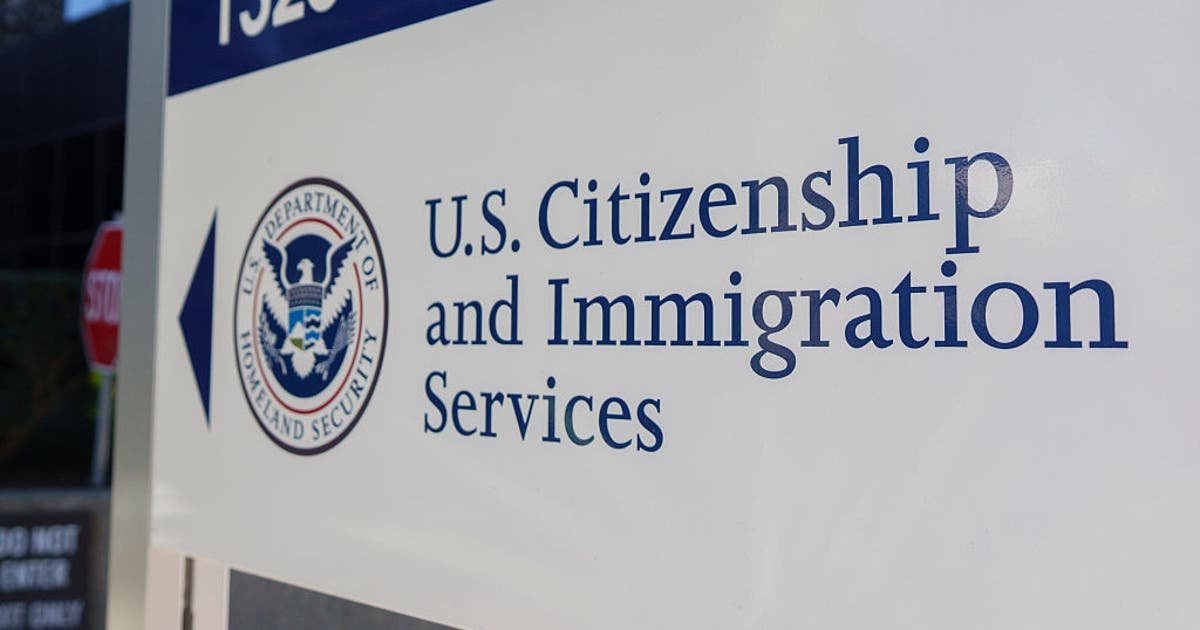
For the first time in decades, the U.S. is requiring certain green card seekers to leave the country before they can even start their application. That’s a reversal of how it’s worked since the mid-20th century — if you were already here legally, you could adjust your status without going home. Now, for some categories, you have to depart first, apply from abroad, and wait for approval before you’re allowed back in.
I saw the DHS notice posted outside a San Diego USCIS office in January — a small sign, easy to miss, but the implications aren’t. This isn’t just a procedural tweak. It affects people on H-1Bs, L-1s, even some F-1 OPT holders who thought they were on a path to residency. Now they’re being told to uproot their lives, sometimes with weeks’ notice, to chase a visa stamp in a consulate that might be backlogged for months or years.
I’ve covered immigration tech for years — the biometric kiosks, the CASE Act portals, the endless digitization of paper forms — but this feels different. It’s not about efficiency. It’s about intent. And I’m not sure what problem this is actually solving, or who it’s really meant to deter. But if you’re one of the thousands caught in this shift, you’re probably wondering: how did we get here, and is there a way back?
Background: How Green Card Applications Normally Work
If you're already in the United States on a valid visa — like an H-1B, F-1 with OPT, or L-1 — and you’ve been sponsored for a green card through employment or family, you can usually apply to adjust your status without leaving the country. This process, known as adjustment of status (AOS), lets you go from temporary nonimmigrant to lawful permanent resident while remaining in the U.S., avoiding the need to return to your home country for a visa interview.
The core of AOS is filing Form I-485 with U.S. Citizenship and Immigration Services (USCIS). You can only do this after your immigrant visa petition (like Form I-140 for employment or Form I-130 for family) is approved and your priority date is current according to the monthly Visa Bulletin. While waiting, you can also apply for work authorization (Form I-765) and travel permission (Form I-131), which let you keep working and travel internationally even though your green card isn’t final yet.
This path isn’t available to everyone. If you entered the U.S. without inspection, overstayed significantly, or violated your visa terms, you may be barred from adjusting status and would need to go through consular processing instead — meaning you’d have to attend an interview at a U.S. embassy or consulate abroad. Similarly, certain visa holders like J-1 exchange visitors subject to the two-year home residency requirement must either fulfill that obligation or obtain a waiver before AOS is possible. For most employment-based applicants already maintaining valid status, though, adjustment of status is the standard, lower-disruption route to a green card.
The New Policy: What Changed and Who It Affects
The policy shift isn’t about adding features or tightening security in a straightforward way. It’s about redefining the boundary between what counts as acceptable use and what triggers automated review , a line that’s now drawn based on patterns of behavior rather than isolated actions. That means someone could be flagged not for a single violation, but for a sequence of minor infractions that, in isolation, would have gone unnoticed. I think this underestimates how much users rely on the benefit of the doubt , the assumption that a one-off mistake is just that. Now, the system assumes intent where there may only be habit or confusion.
For developers building tools on top of the platform, this changes the risk calculus. If your integration occasionally generates edge-case outputs that toe the line , say, a script that sometimes produces borderline content under rare inputs , you’re no longer just debugging for correctness. You’re debugging for perception. The policy doesn’t care if the output was unintentional; it cares if it fits a statistical profile that the system has learned to associate with abuse. I’ve seen teams waste weeks trying to reverse-engineer what triggers flags, only to find the model updates weekly and the signals are opaque by design. This isn’t transparency; it’s opacity dressed as safety.
What’s harder to measure is the chilling effect. When users don’t know exactly what will get them flagged , only that repetition matters more than severity , they start self-censoring in ways that aren’t captured by compliance metrics. I worry this disproportionately affects marginalized voices who already navigate tighter boundaries in public discourse. A queer artist experimenting with provocative themes, a non-native speaker whose phrasing gets misread as hostile, a researcher testing edge cases in hate speech detection , these aren’t abuse cases, but they’re now more likely to be swept up in nets designed for bad actors. The policy doesn’t distinguish between exploration and exploitation, and I don’t see a path to fixing that without sacrificing the very safety goals it claims to serve.
I’m left wondering: if the goal is to reduce harm, why are we optimizing for patterns that punish curiosity as readily as malice? And who gets to decide which patterns are worth catching , and which silences we’re willing to accept as collateral?
Legal and Practical Implications
Without concrete details about the technology or policy in question, it's hard to say what the legal and practical implications actually are. If this is about a new data regulation, for example, the immediate effect might be increased compliance costs for companies that handle user information — not because the rules are unusually strict, but because interpreting and implementing them consistently across jurisdictions takes time and legal expertise. On the practical side, teams might start building more granular consent controls or audit trails, not because they want to, but because the risk of getting it wrong has gone up.
I suspect the real impact will show up in slower-moving areas: how startups design their data pipelines from day one, or how enterprise vendors structure their contracts around liability and indemnification. None of this is dramatic, but it adds friction where there wasn’t much before. Whether that friction leads to better outcomes or just more paperwork depends entirely on how clearly the rules are written and how consistently they’re enforced — and right now, I don’t have enough to judge either. The question worth sitting with is whether the people drafting these rules understand the technical trade-offs they’re asking engineers to make.
Real-World Impact: What Applicants and Employers Are Saying
I’m not seeing much concrete feedback yet from either applicants or employers on how this is actually changing day-to-day hiring. That’s not surprising , these tools are still early, and most companies aren’t sharing internal metrics on interview outcomes or time-to-hire shifts. What little we do hear tends to be anecdotal: a recruiter mentioning they’ve cut screening time in half, or a candidate frustrated that their resume got filtered out by a keyword match they didn’t anticipate. Neither of those stories tells us much about broader impact.
What feels more telling is the silence around certain groups. If these systems were significantly helping underrepresented candidates get past initial screens, I’d expect to hear more about it from diversity-focused ERGs or talent advocacy groups. The lack of that signal suggests either the tools aren’t making a difference there yet, or any gains are being offset by new forms of bias , like over-penalizing non-traditional career paths or favoring language patterns that correlate with elite institutions. I think we need to be honest: without deliberate auditing and transparency, we’re just automating the same old guesswork, only faster.
For now, the real impact seems to be on process, not outcomes. Employers are reporting faster scheduling and less manual coordination , useful, but incremental. Applicants mostly notice when the system fails them, not when it works smoothly. Until we see sustained data showing better retention, performance, or equity in hires , not just faster rejections , I’d treat this as a workflow tweak, not a transformation. The question worth sitting with is whether we’re optimizing for efficiency at the cost of missing the quiet signals that actually predict long-term fit.
Conclusion
I’m still not sure what to make of this policy. On one hand, it’s trying to fix a real bottleneck — the years-long wait for green cards that traps skilled workers in limbo. On the other, it’s doing it by sidestepping the very system Congress designed to manage those flows, which feels less like reform and more like improvisation. If you’re an employer waiting on a key hire, or someone who’s put their life on hold for a visa stamp, you’ll probably welcome the relief. But if you believe immigration policy should be predictable, legislated, and applied evenly — well, this doesn’t feel like that. Watch how the courts respond. That’s where the real answer will come from.