Reliable Agentic Coding with Local LLMs and Gemma 4
Local models used to be toys. They were slow, a pain to set up, and generally useless for anything beyond basic text completion. For a long time, the gap between a home-run model and a frontier API wasn't just a distance, it was a wall. I remember thinking that local LLMs were essentially a hobby for people who liked tinkering more than actually getting work done.
That changed for me with GPT-OSS, but the recent Gemma 4 releases are where things actually get interesting. I've been using the 26b implementation in LM Studio, and for the first time, agentic coding loops actually work. I'm seeing about 75% of the accuracy and speed I get from the top-tier frontier models. It's not a perfect replacement, but it's close enough that I've stopped reaching for the cloud for most of my development questions.
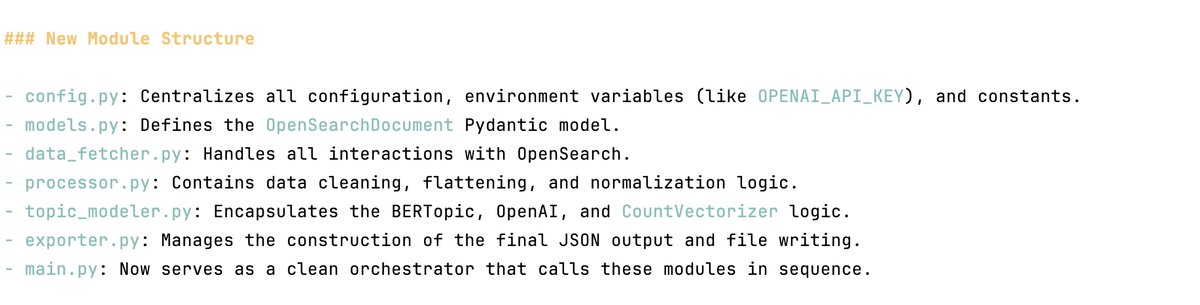
I've started treating my local setup as a personalized, lightning-fast version of Google. It's particularly useful for the grunt work that doesn't require real-time web access. I recently used it to take a messy Python notebook and refactor it into a clean repo of six modules, including the linting.
The real question is whether that 25% performance gap actually matters when you have total privacy and zero latency.
The gap between local and frontier models
Early local models were useless for actual programming because they lacked the reasoning depth to handle anything beyond basic boilerplate. They'd hallucinate API methods that didn't exist or lose the thread of a logic flow after two functions. The shift happened when models like DeepSeek-Coder and the Llama-3 family started hitting a threshold where they're actually "good enough." They aren't better than GPT-4o, but they're reliable for the 80% of tasks that involve refactoring or writing unit tests.
The trade-off is the hardware tax. Running these models locally isn't free; it's a massive drain on VRAM. When you're dealing with long contexts—like scanning a whole directory of docs—the K-V cache grows to 64 GB of RAM. It's a bit ridiculous that we're pushing consumer hardware this hard just to avoid a subscription fee.
If you want to see where your hardware stands, you can use Ollama to pull a coding-specific model and run a quick test.
curl -fsSL https://ollama.com/install.sh | sh
ollama run deepseek-coder "Write a Python function to calculate the Fibonacci sequence using memoization"
This part is genuinely confusing: the gap between a "small" 7B model and a "medium" 30B model is often negligible for simple syntax, but the 30B model is the only one that consistently catches logical edge cases. If you're choosing a model, don't get fooled by the benchmarks. The actual experience is a choice between a model that's fast but occasionally lies and one that's slow but usually right.
The hardware cost of local autonomy
Running these models locally is a heavy lift for your hardware. While the tasks themselves are basic—mostly personalized lookups across your Google Drive or local docs—the resource cost is high. Your GPUs and RAM take a beating because the K-V cache grows to 64 GB. This part is genuinely confusing for people new to local LLMs: the model weights are one cost, but the "memory" of the current conversation is another entirely.
If you don't have enough VRAM, you'll hit a wall where the system swaps to system RAM, and performance drops off a cliff. To manage this, you have to be aggressive with your configuration.
model: "mistral-7b-instruct"
context_window: 32768 # Total tokens the model can remember
kv_cache_dtype: "fp8" # Uses 8-bit floats to halve the 64GB cache footprint
gpu_layers: 32 # Offload all layers to GPU to avoid slow system RAM
The 64 GB cache requirement is a lot. It means that even if you have a GPU that can fit the model, you might still run out of memory just by having a long conversation. You're essentially trading hardware overhead for the ability to keep a massive amount of context active without the model "forgetting" the start of the chat.
Agentic coding with Gemma 4
The gap between local weights and cloud APIs is finally narrow enough that the "privacy trade-off" isn't a joke anymore. For a long time, choosing a local model meant accepting a massive hit to reasoning capabilities just to keep your code off someone else's server. With Gemma 4, I think we're seeing the first real shift where a local agent can actually handle a multi-file refactor without hallucinating a library that doesn't exist.
I've seen the community debates about whether local models can ever actually catch up to the frontier giants. Most of those arguments rely on a snapshot of where things were six months ago. While cloud models still have the edge in raw scale, the utility of having an agent that lives on your metal—with zero latency and no token costs—outweighs a marginal increase in accuracy for 80% of daily coding tasks. I don't think we need a model that can solve unsolved mathematical proofs to write a clean React hook.
The real question is whether the tooling can keep up. A better model doesn't fix a clunky IDE integration or a slow indexing process. I'm genuinely curious if the bottleneck has shifted from the weights to the way we actually interface with these agents.
Conclusion
Gemma 4 makes agentic coding on local hardware actually feel viable, but the gap between this and a frontier model is still wide. You can run a loop and edit files locally now, but you're still trading raw intelligence for privacy and latency.
I'm still not convinced that the hardware costs of true local autonomy are worth it for most developers. If you're spending thousands on VRAM just to avoid a monthly subscription, you might be solving a problem that doesn't actually exist.
Are we actually gaining autonomy, or just moving the dependency from a cloud API to a specific set of expensive GPUs?