Switzerland's Internet Speed: A Global Benchmark
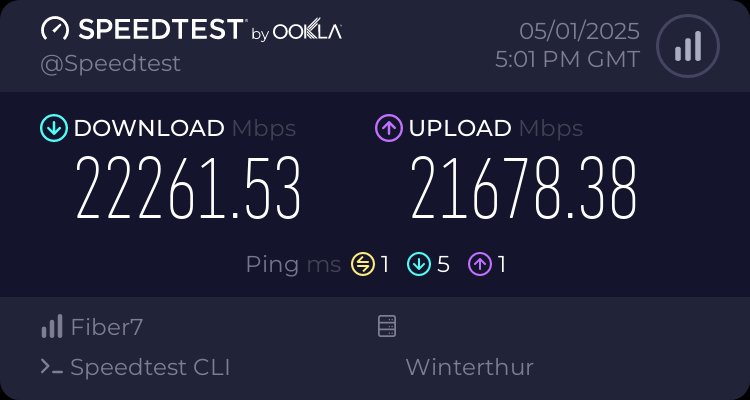
Switzerland is quietly running circles around the U.S. when it comes to internet speeds. You might have heard whispers about their impressive 25 Gbit symmetrical internet, often touted as the fastest dedicated residential connection on the planet. That's not just marketing hype; it’s a reality that seems almost unattainable for most Americans. While we’re still grappling with the high costs and patchy coverage of gigabit connections, Switzerland's approach to internet infrastructure is leaving us in the dust.
What’s their secret? It’s not just about having the latest technology; it’s also about a unique regulatory environment and a commitment to building robust infrastructure. It’s fascinating, really. The disparity isn’t just a matter of numbers; it speaks to how different policies and priorities shape our digital experiences. How is it that one country can provide such lightning-fast speeds while others struggle? As we unpack this, you might find some surprising insights into what it means to have truly high-speed internet—and why that matters more than you might think.
The Swiss Advantage
Switzerland consistently ranks among the countries with the highest internet speeds globally, boasting capabilities of up to 25 Gbit/s in some areas, with a widespread availability of 10 Gbit/s for residential users. This achievement isn't just a happy accident; it's the result of a confluence of government policies, strategic public-private partnerships, and substantial investments in infrastructure.
The Swiss government has prioritized digital connectivity as a key component of its economic strategy. Policies that promote competition among providers and encourage innovation have fostered an environment where internet service providers (ISPs) can thrive. For example, the Swiss Federal Office of Communications has implemented regulations that not only protect consumers but also incentivize ISPs to expand their networks and enhance service quality.
Public-private partnerships play a crucial role in this landscape. By collaborating with private companies, the government can leverage additional resources, expertise, and technology to improve infrastructure. These partnerships help ensure that even rural and underserved areas gain access to high-speed internet, reducing the digital divide. While the United States and Germany are also making strides in improving internet speeds, they face challenges like bureaucratic hurdles and fragmented policies that can slow down progress.
A common question arises: "Why doesn’t Switzerland have its own Starlink?" The answer lies in the country’s already robust internet infrastructure and the belief that it can provide for its citizens without relying on satellite internet solutions. Critics of other systems, like Australia's, often point out that "we should really look at the Australian system... it's not really a free market there, and the internet is awful." This comparison underscores the effectiveness of Switzerland's approach, which balances regulation and market-driven solutions to achieve high standards of connectivity.
To implement a similar model for enhancing internet infrastructure, other countries might consider the following steps:
- Streamline regulatory frameworks to encourage competition.
- Foster collaborations between public and private sectors for infrastructure development.
- Prioritize universal access to ensure even rural areas are covered.
These strategies could help replicate Switzerland's success, allowing for faster and more reliable internet access worldwide.
The Role of Competition
Competition among Swiss ISPs drives innovation and results in better service for consumers. In Switzerland, users can access internet speeds of up to 25 Gbit/s from various providers, while many in the United States are still grappling with slower connections, often capped at 10 Gbit/s or lower. This difference isn't just about numbers; it's about what competition fosters.
The landscape in Switzerland resembles a more vibrant marketplace, where ISPs must continuously improve their offerings to attract customers. This competition leads to not only faster speeds but also more reliable service and better customer support. In contrast, the American market often tilts towards monopolistic tendencies, where a few large companies dominate. This concentration can stifle innovation and result in stagnant service options, as these companies have less incentive to upgrade infrastructure or improve customer experiences.
A notable example of this disparity comes from a quote regarding the internet situation in Australia, where a lack of true market competition has led to poor service: "should really look at the Australian system... it’s not really a free market there and the internet is awful." This statement highlights the risks of insufficient competition in driving down service quality. Interestingly, one might also wonder, "Why doesn't Switzerland have its own Starlink?" The answer lies in the robust local competition that already provides high-quality services, negating the need for a satellite solution.
The effects are clear: more choices for consumers in Switzerland lead to higher standards of service and innovation in the ISP market. The contrast with the monopolistic tendencies in the U.S. and other markets is striking and serves as a reminder of the benefits that healthy competition can bring to consumers.
Comparing Global Standards
Ziply Fiber’s move to offer a 50Gbps service is noteworthy, especially given the scale of its coverage,over 15 times the size of Switzerland. This provision highlights an ongoing trend in telecom where companies are pushing for faster speeds to meet growing demand. However, the challenges they face in executing this plan,like overbuilding and navigating regulatory hurdles,underscore the complexity of deploying infrastructure effectively, particularly in urban areas like Manhattan.
The community response reflects a mix of enthusiasm and skepticism. While some users are excited about the prospect of ultra-fast internet, there’s a palpable concern about whether this level of service can be delivered consistently in densely populated regions. I think this points to a larger issue in the telecom space: speed is only part of the equation. The real test lies in maintaining reliability and managing the physical and bureaucratic obstacles that come with such ambitious expansions.
As we look ahead, it’s clear that the competition for high-speed internet will intensify. However, I wonder if the focus on raw speed might overlook the essential need for quality of service. I’m left questioning whether consumers will see tangible benefits, or if this faster service will be yet another example of marketing outpacing actual infrastructure improvements.
Lessons for the U.S.
The rollout of Ziply Fiber's 50Gbps service across a vast area presents a significant case study for the U.S. telecom landscape. On one hand, it's a bold move that highlights the growing capabilities of fiber optics and the push for faster internet access. However, the challenges that come with such an expansion — including overbuilding and regulatory hurdles — raise important questions about the sustainability of this kind of growth in urban environments.
In densely populated areas, like Manhattan, the complexities increase exponentially. The infrastructure is often outdated, and the process of deploying new fiber can be hampered by existing regulations and the logistical nightmare of navigating already congested streets. Community reactions to Ziply’s announcement have been mixed, with some applauding the ambitious speeds while others express skepticism about the feasibility of widespread deployment, especially in urban centers where demand is high but infrastructure is limited.
I think the focus on speed often overshadows the necessity for thoughtful infrastructure planning. Simply rolling out faster internet isn’t a silver bullet for the challenges many communities face. As Ziply tackles these issues, it could serve as a learning opportunity: will this initiative lead to a more cohesive approach to telecom development in the U.S., or will it highlight the fundamental disconnect between ambitious speed targets and the realities of urban infrastructure? The next steps from Ziply could very well shape how we think about telecom expansion in the coming years.
Conclusion
Switzerland’s internet offerings, particularly the 25 Gbit/s connections, highlight a stark contrast to the struggles seen in the U.S. Despite being a free-market champion, the U.S. continues to lag, plagued by stagnation and monopolistic practices. The Swiss model shows that strong regulation can coexist with competitive pricing and high performance. But there’s a nagging question: can more efficient infrastructure be replicated elsewhere, or is it unique to Switzerland's regulatory environment?
As we look ahead, it’s clear that the U.S. has a long way to go if it hopes to match the speeds and service quality that Swiss residents enjoy. It might be time to rethink what we accept as the norm in broadband access and consider how an overhaul of competition and regulation could reshape the landscape. What if the solution lies not just in technology but in a more thoughtful approach to policy?