Capital Stagnation and the Dead Economy Theory
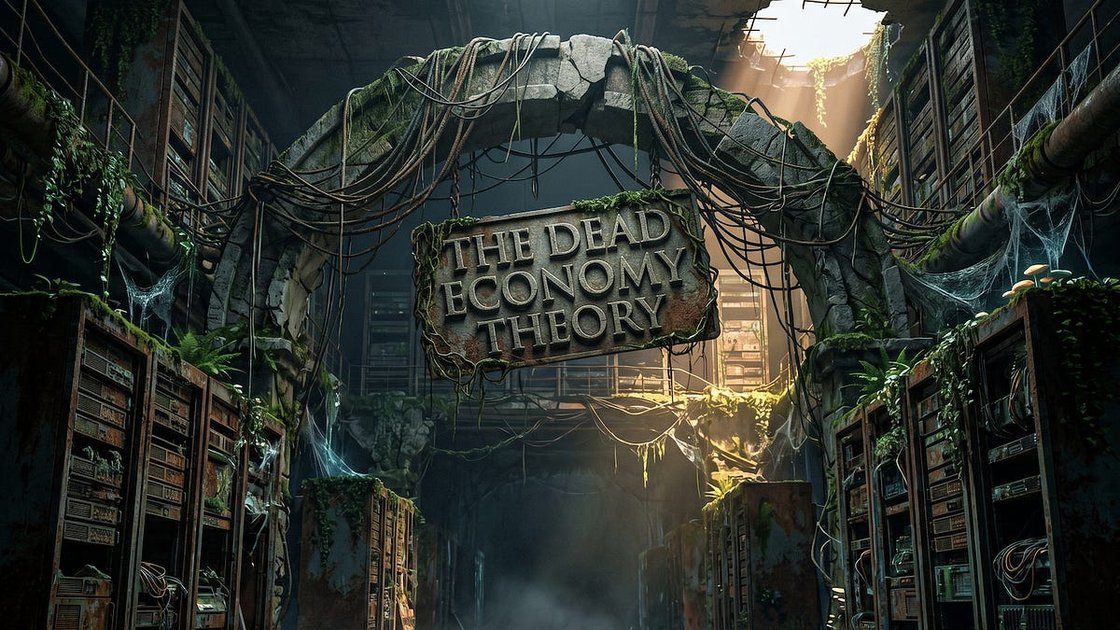
We talk a lot about capital efficiency, but we rarely talk about what happens when capital simply stops moving. If investment begins to stagnate and money stops circulating through the ecosystem, the fundamental mechanics of growth might not just slow down. They might break.
I've watched enough cycles to know that liquidity is usually the invisible engine behind every "innovation" we celebrate. When that engine stalls, you don't just get a recession. You get a permanent shift in how much risk anyone is willing to take. It's hard to build something new when the only available capital is sitting in a high-yield savings account or parked in legacy assets.
The real danger isn't a market dip. It's the possibility that we've entered a period where the cost of stagnation is higher than the cost of a crash. We need to look at where the money is actually going, because the current movement suggests a much more static future than anyone wants to admit.
The mechanics of stagnation
Economic stagnation isn't just a slowdown; it's a state where the circulation of capital stops being productive. While a recession is a sharp, often temporary drop in GDP caused by a contraction in spending or production, stagnation is a persistent lack of growth. You can recover from a recession by restarting the engine, but you can't easily fix stagnation if the fuel itself has stopped moving.
The difference lies in the velocity of money. This metric tracks how many times a single unit of currency is used to purchase goods and services within a specific timeframe. In a healthy economy, money moves quickly from person to person, creating a chain reaction of demand. In a stagnant economy, money sits in low-yield accounts or idle assets. This is what happens when the velocity of money drops toward zero.
To visualize this, you can model the relationship between money supply and economic activity using a simplified version of the equation of exchange. If the money supply stays constant but the velocity drops, the total volume of transactions—and therefore the economy—shrinks.
def calculate_nominal_gdp(money_supply, velocity):
    """
    Calculates Nominal GDP based on the Quantity Theory of Money.
    GDP = M * V
    """
    return money_supply * velocity

money_supply = 1000
velocity_high = 5
gdp_active = calculate_nominal_gdp(money_supply, velocity_high)

velocity_low = 0.5
gdp_stagnant = calculate_nominal_gdp(money_supply, velocity_low)

print(f"Active Economy GDP: {gdp_active}")
print(f"Stagnant Economy GDP: {gdp_stagnant}")
Tracking this is difficult because velocity is a lagging indicator. By the time the data shows a significant drop, the stagnation is already baked into the quarterly reports. It's frustrating to analyze because you're essentially looking at the wreckage of a crash that happened months ago.
The trap of capital hoarding
I think the real danger here isn't the lack of innovation, but the way these massive cash reserves act as a moat that prevents new architectures from even reaching the starting line. When a company has enough capital to outbid everyone for compute and talent, they aren't just winning the current race; they are effectively making it impossible for a leaner, more efficient competitor to even enter the arena. It creates a cycle where the only way to compete is to match that scale, which requires the very capital that is being hoarded.
This isn't just about market share. It changes the fundamental nature of what a startup can be. If the barrier to entry is no longer a clever algorithm but a multi-billion dollar hardware reservation, the "garage startup" becomes a historical curiosity rather than a viable business model. I don't see a way around this through organic growth alone.
We should watch to see if we see any meaningful shift in how compute is distributed—perhaps through decentralized networks or more efficient, smaller-scale models—or if we're just watching the consolidation of the entire stack into a few massive, impenetrable silos.
Indicators of a non-functional market
I see a lot of people pointing to declining VC activity in this sector as a sign of a dying market, but I think that's a shallow reading. High interest rates and a general retreat from speculative hardware bets are more likely at play here than a fundamental lack of utility. The real indicator isn't the lack of new funding rounds; it's the lack of integration. We aren't seeing these tools move into core production workflows. They are still sitting in experimental sandboxes, which suggests the friction of implementation is much higher than the initial demos let on.
The real problem is the gap between "it works in a notebook" and "it works in a distributed system with strict latency requirements." If we can't bridge that gap, we aren't looking at a market collapse, just a period of stagnation where the tech stays interesting but commercially irrelevant. I'm watching for when the first major enterprise-scale failure occurs due to these specific architectural gaps. That will tell us much more than a dry quarterly earnings report.
Conclusion
The math is pretty grim. When capital stops moving and just sits in high-yield buffers or buyback programs, the engine doesn't just slow down—it stops. We keep looking for new consumer demand or a sudden spark in productivity, but you can't manufacture velocity if the money is essentially stuck in a loop between a few massive balance sheets.
I'm still not sure if we're looking at a temporary bottleneck or the beginning of a permanent dead economy. One thing is certain: watching the velocity of money drop while market caps rise is a weird, uncomfortable way to measure "growth."
Check your local treasury data. If the movement of money is flattening while the assets are inflating, the stagnation isn't coming; it's already here.