Obscure Sorrows Rebranding and the Loss of Digital Context
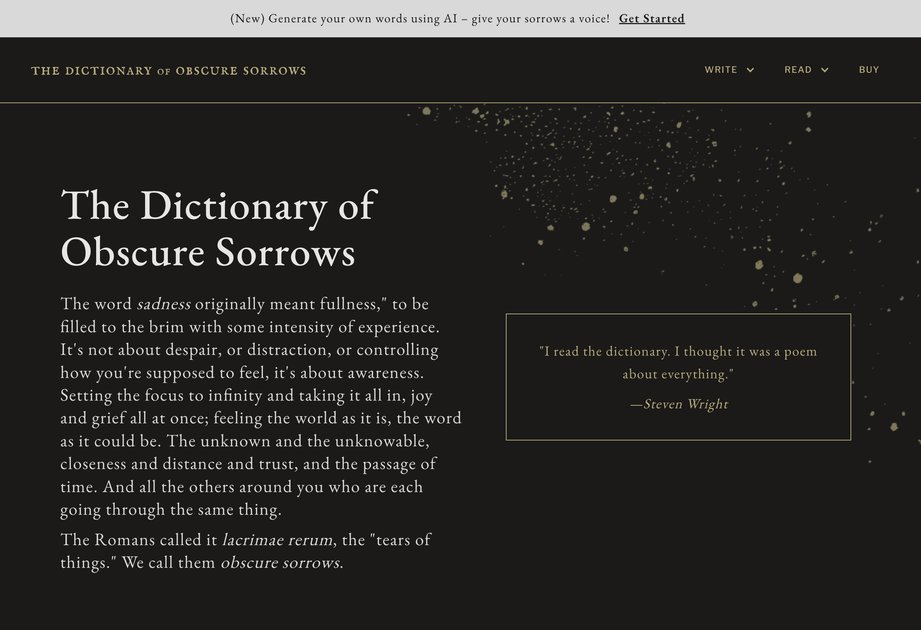
When niche digital art is stripped of its context and rebranded for mass consumption, the loss isn't just legal. It's cultural. We've seen this happen a dozen times with internet aesthetics, but the current wave of AI training sets is doing it at a scale that feels different. It isn't just "inspiration" when a model swallows ten thousand images from a specific, tiny community of artists to produce a generic "style" filter for the masses.
I've spent years watching how tools evolve, and usually, there's a period of adaptation where the humans and the software find a middle ground. But here, the gap is widening. We're trading the intent and the history behind a piece of work for the sake of a prompt that takes three seconds to run. It's efficient, sure. It's also kind of depressing.
The real problem is that the people building these models often treat the training data like a raw commodity. They see pixels and patterns, not the communities that spent a decade refining those looks in obscure forums. Once that context is gone, you can't just add it back with a better algorithm.
So where does that leave the artists who actually built the aesthetic? There are a few ways to fight back, but some of them are more effective than others.
The Mechanics of Digital Scraping
Digital scraping is just a loop that targets specific metadata tags to find high-performing, low-volume content. Most tools don't look for "quality"; they look for a high engagement-to-follower ratio. This is why niche aesthetics are prime targets. If a creator with 200 followers gets 50,000 views on a specific visual style, that style is flagged as a "growth lever" and scraped for wholesale copying.
The transition from inspiration to copying happens when scripts automate the extraction of visual markers. Instead of a human noticing a trend, a bot extracts the exact hex codes, font pairings, and composition patterns. It's an efficient way to strip the soul out of a niche and turn it into a template for a thousand mediocre accounts.
This part is genuinely confusing because the line between "algorithmic curation" and "theft" is thin. Platforms claim they're just helping users find content they like, but the underlying tech is often just a pipeline for clones.
import requests
from bs4 import BeautifulSoup

url = "https://example-art-site.com/creator-profile"
response = requests.get(url)
soup = BeautifulSoup(response.text, 'html.parser')

elements = soup.find_all(attrs={"data-style": "lofi-vaporwave"})
for item in elements:
    print(f"Scraping visual asset: {item['src']}")
The Failure of Current IP Protections
Copyright law is built for lawsuits, not for prevention. For an independent artist, the current legal framework is basically useless because the cost of enforcement is higher than the value of the stolen work. If a corporate aggregator scrapes 50 images from your portfolio to train a model, you can't realistically spend $20,000 on a lawyer to recover a few hundred dollars in lost commissions. The power imbalance is absolute.
The technical reality is that once data is in a training set, it's gone. You can't "unlearn" a specific image from a weights file without retraining the entire model, which costs millions. This part is genuinely confusing because companies claim they respect IP while simultaneously building systems that make the concept of an "original" obsolete.
If you want to protect your work today, you can't rely on the law. You have to use technical hurdles like adversarial perturbations. Tools like Nightshade modify pixels in a way that is invisible to humans but confuses the AI's latent space.
import numpy as np
from PIL import Image

def add_adversarial_noise(image_path, output_path):
    img = Image.open(image_path).convert('RGB')
    data = np.array(img)
    # Add subtle, high-frequency noise to confuse feature extractors
    noise = np.random.randint(-5, 6, data.shape, dtype='int16')
    result = np.clip(data + noise, 0, 255).astype('uint8')
    Image.fromarray(result).save(output_path)

add_adversarial_noise('art.jpg', 'protected_art.jpg')
This isn't a perfect solution. It's a desperate one. We're seeing a shift where the only way to "own" something is to make it technically difficult for a machine to read.
The Erasure of Context
The idea of "AI laundering" is a blunt way to describe a very specific technical loophole: if you feed a copyrighted library into a model and ask it to rewrite the logic in a different style, the output often lacks the specific markers that traditional plagiarism detectors look for. I think the community is right to be worried about this, but I suspect we're overestimating how quickly this actually breaks copyright law. Courts are slow, and the legal definition of a "derivative work" isn't designed for a world where a machine can synthesize a million different sources into a single function.
This matters for open-source maintainers who care about attribution, but it probably doesn't matter for the average enterprise dev who just wants a snippet that works. The friction here isn't technical—it's moral and legal. We're moving toward a state where the provenance of code is basically invisible. If you can't prove where a specific logic pattern came from, you can't enforce a license.
I'm not sure if this is a "threat" to copyright or just the final stage of its obsolescence in software. The real question is whether we'll eventually stop caring about who wrote the original line of code if the AI-generated version is "clean" enough to pass a legal audit.
Redefining Ownership in the Internet Age
The idea of "AI laundering" isn't just a legal loophole; it's a fundamental shift in how we value the act of creation. If you can feed a proprietary codebase or a copyrighted novel into a model and ask it to "rewrite this in a different style" or "implement this logic using a different pattern," you've effectively stripped the legal protections from the original work. I think the current copyright framework is completely unprepared for this. We're trying to apply 20th-century laws to a process that doesn't just copy data, but distills it into a set of probabilistic weights.
I've seen a lot of the community reaction focusing on the "theft" aspect, and while that's the emotional core, the actual technical implication is more boring and more dangerous: the devaluation of the source. When the output is "good enough" and the lineage is obscured, the incentive to maintain high-quality, licensed original works disappears. This matters for high-end engineering and specialized art, but for generic content, the transition has already happened.
I'm not convinced that "watermarking" or provenance metadata will solve this. Those are bandages on a systemic problem. If the model has already learned the underlying logic, the metadata is irrelevant.
The real question is whether we'll eventually move toward a model where "ownership" only applies to the final prompt and the specific output, effectively treating the entire sum of human knowledge as a free, communal training set. If that happens, what actually happens to the people whose work makes those models possible?
Conclusion
The legal framework for IP is still treating digital scraping like a library book being photocopied, but that's not what's happening. When a model strips the context from a niche artist's work to generate a "style," it isn't just copying; it's harvesting.
I'm still not convinced that current copyright law has a version of this problem that can actually be solved. We can keep fighting over training sets, but the reality is that once the data is ingested, the original ownership becomes a ghost.
Is it even possible to "own" a style anymore, or are we just waiting for the value of human-made niches to hit zero?