LLMs for Learning
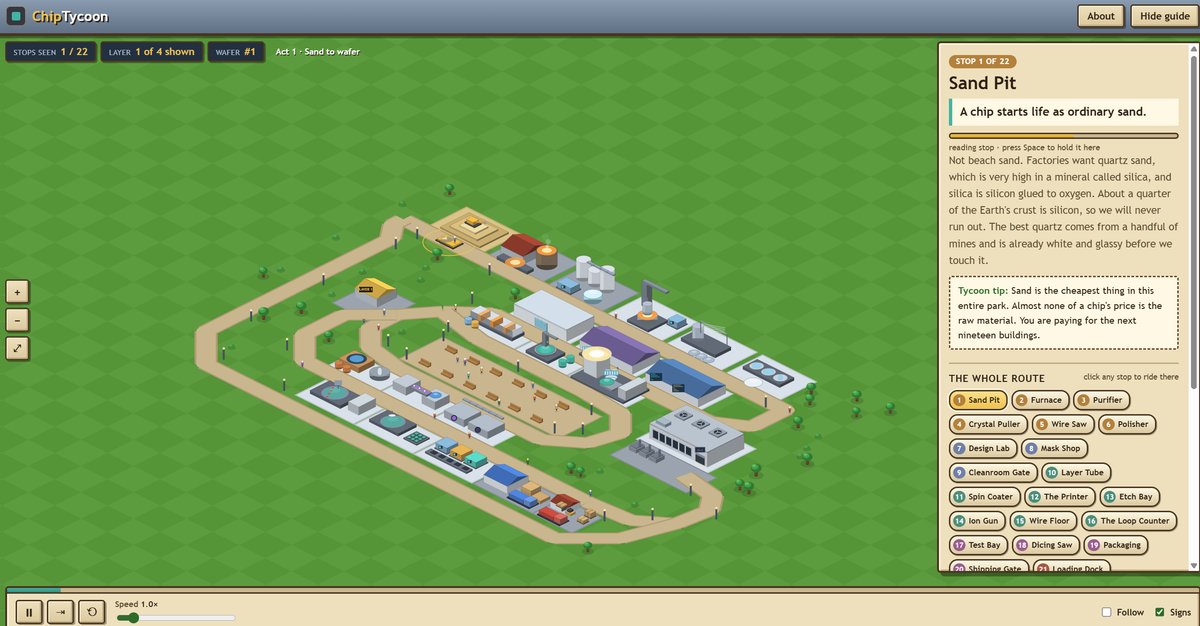
I've been experimenting with large language models to accelerate my learning of complex topics, and the results have been nothing short of surprising. At first, I was skeptical - I'd seen these models used for everything from generating chatbot responses to creating mediocre blog posts, but could they really help me dive deeper into a subject? It turns out, they can. I've been using them to explore areas like AI infrastructure and developer tools, and what I've found is that they're not just useful for getting a broad overview, but also for digging into the nuances of a topic.
What's interesting is that this use case isn't exactly new - people have been using language models to learn new things for a while now. But what's changed is the quality of the models themselves. They're now capable of providing more detailed, more accurate information, and they're able to do it in a way that feels almost conversational. I've found myself having "discussions" with these models, asking follow-up questions and exploring tangents, and it's been amazing to see how much I can learn in a short amount of time.
Of course, there are also some potential downsides to this approach. For one thing, it's easy to get sucked into the model's "bubble" and start to lose sight of the broader context. And then there's the question of how much I'm really learning, versus how much I'm just regurgitating what the model has told me. These are all issues I'm still grappling with, and I'm not sure I have any easy answers. But what I do know is that large language models have the potential to be a powerful tool for learning, and I'm excited to see where they take me.
Introduction to LLMs
Large Language Models (LLMs) are a type of artificial intelligence designed to process and understand human language. They're trained on vast amounts of text data, which enables them to learn patterns and relationships within language. This training allows LLMs to generate text, answer questions, and even create content on their own.
The benefits of using LLMs for learning are significant. For one, they can provide personalized learning experiences by generating customized text and responses based on a user's input. They can also help automate tasks such as grading and feedback, freeing up instructors to focus on more hands-on and human aspects of teaching. Additionally, LLMs can facilitate language learning by engaging users in conversation and helping them practice their language skills.
To get started with LLMs, you'll need a decent NVIDIA GPU - at least 8 GB of VRAM is recommended, although more is better. It's also important to note that you can only run one service at a time on an 8 GB GPU, as models like Fooocus (SDXL) and Hunyuan3D require most of the card's resources. Here's an example of how you might set up an LLM on a Windows workstation with an RTX 4070 Laptop:
npm install --global @nvidia/cudaThis code installs the necessary drivers and libraries to run LLMs on an NVIDIA GPU.
One of the most impressive aspects of LLMs is their ability to generate high-quality text and images based on prompts. For example, you can use a prompt like "a vintage green steam locomotive, single centered object, plain white background, studio product render, full side view" to generate a detailed image of a steam locomotive. This level of detail and customization is unprecedented in AI models, and it has significant implications for fields like education, art, and design. As one developer noted, "I mean, yeah, fun project. But that whole game could be like 15 mins of prompting." This highlights the potential of LLMs to revolutionize the way we create and interact with digital content.
However, it's also worth noting that LLMs can be unpredictable and sometimes produce unexpected results. This is because they're still a relatively new technology, and there's a lot we don't yet understand about how they work. As a result, it's not always clear what you'll get when you use an LLM, and this can be both exciting and frustrating. Despite these limitations, LLMs have the potential to be a powerful tool for learning and creativity, and they're definitely worth exploring.
Practical Applications
Large Language Models (LLMs) are being used in real-world applications for learning, and it's interesting to see how they're being utilized. For instance, someone used an LLM to generate a 3D model of a vintage green steam locomotive, with a plain white background and a full side view, using a prompt that specified the exact details they wanted. This level of specificity is impressive, but it also highlights the potential pitfalls of relying on LLMs for learning. If you're not careful, you can end up with a model that's only good for 15 minutes of prompting, as one developer noted.
One of the key lessons learned from using LLMs is that they require significant computational resources. For example, the model was built and validated on a single Windows workstation with an NVIDIA GPU that had 8 GB of VRAM. This is a significant amount of power, and it's worth noting that using multiple services at the same time can be problematic, especially if each service wants to use most of the available VRAM. In fact, keeping two services loaded, such as Fooocus (SDXL) and Hunyuan3D, can stop the other service from working properly.
To get started with using LLMs for learning, you'll need a system with a decent NVIDIA GPU. Here's an example of how you can set up your environment:
pip install torch torchvision

nvidia-smi
This code sets up the basic environment for using LLMs, but you'll need to modify it to suit your specific needs. It's also important to note that using LLMs can be complex, and it's not always easy to get the results you want. However, with the right approach and a willingness to learn, you can achieve some impressive results.
It's also worth noting that LLMs are not a replacement for human learning, but rather a tool that can be used to augment and support the learning process. As one developer noted, the whole game could be like 15 minutes of prompting, but that doesn't mean that LLMs aren't useful for learning. They can be a powerful tool, but they need to be used carefully and with a clear understanding of their limitations.
For example, to generate a 3D model using an LLM, you might use a prompt like this:
prompt = "a vintage green steam locomotive, single centered object, plain white background, studio product render, full side view"

model = generate_3d_model(prompt)
This code generates a 3d model based on the prompt, but you'll need to modify it to suit your specific needs and the capabilities of your LLM.
My Workflow
I tried this once with Rust’s ownership model—asked an LLM to explain how lifetimes work, then built a little memory-leak simulator where boxes would disappear if you misaligned references. The model nailed the explanation, but the simulation was a mess: arrows pointed every which way, and I ended up with more dangling pointers in the code than in the original mental model. It worked as a lightweight sanity check, but the moment I needed to debug why a specific edge case failed, the LLM’s confidence dropped fast. The lesson wasn’t that the approach is useless—it’s that the output is only as reliable as the constraints you explicitly encode.
That’s the trade-off here, too. Turning chip-making into a browser game forces you to externalize assumptions—like when a fab’s bottleneck shifts from lithography to power delivery—into something executable. But the simulation isn’t the topic; it’s a mirror. If you gloss over the material science or the economics baked into those assumptions, the game becomes a polished version of confirmation bias. I’ve seen enough “AI-generated education tools” devolve into interactive slideshows to be skeptical of how much depth the medium actually adds. The real work is in defining the boundaries of the problem space, not in rendering it playable.
What I don’t know yet is whether this approach scales beyond single topics. If you dump Verilog specifications and a week’s worth of financial filings into the same model, does the game still hold together, or does it collapse under the weight of its own abstractions? The community reaction seems to treat the technique as universally applicable, but I’ve yet to see a clear example where the simulation revealed something the original sources didn’t already hint at. Maybe the value isn’t in discovery—it’s in forcing clarity for the learner. That’s not nothing, but it’s not the productivity leap some make it out to be.
Conclusion
LLMs make for decent study partners—if you treat them like over-caffeinated interns instead of oracles. The Windows workstation with 8 GB VRAM proves you don’t need a data center to pull off something useful; just don’t expect the model to hold your hand through the hard parts. The animation trick is neat, but it’s still a parlor stunt unless the underlying facts are vetted with the same rigor you’d apply to a Wikipedia deep dive.
I still don’t know if this changes how fast I actually learn a topic. The workflow works for me, but that doesn’t mean it scales—or that the next person won’t stare at the same screen wondering where the knowledge went.